
At a Glance
- 2025 tops the charts as one of the three hottest years on record, breaking the 1.5°C Paris Agreement threshold.
- 157 extreme weather events were recorded, with 22 studied in depth.
- Heat waves were the deadliest, 10 times more likely than a decade ago.
- Why it matters: Rising temperatures and extreme events threaten global livelihoods and test nations’ adaptation limits.
2025 was the third hottest year on record, and for the first time the 3-year average surpassed the 1.5 °C limit set by the Paris Agreement. The World Weather Attribution (WWA) team released a detailed analysis in Europe after a year of dangerous extremes.
World Weather Attribution Analysis
The WWA researchers identified 157 extreme weather events that met criteria such as >100 deaths, >50 % population affected, or a declared state of emergency. Of those, they focused on 22 events for in-depth study.
- Heat waves: the deadliest, 10× more likely than a decade ago.
- Drought and wildfires: scorched Greece and Turkey.
- Floods and typhoons: killed dozens in Mexico, displaced a million in the Philippines, and battered India.
Heat waves were the world’s deadliest events. “The heat waves we have observed this year are quite common events in our climate today, but they would have been almost impossible to occur without human-induced climate change,” Friederike Otto said.
> “The science is increasingly clear.”
Extreme Weather Highlights
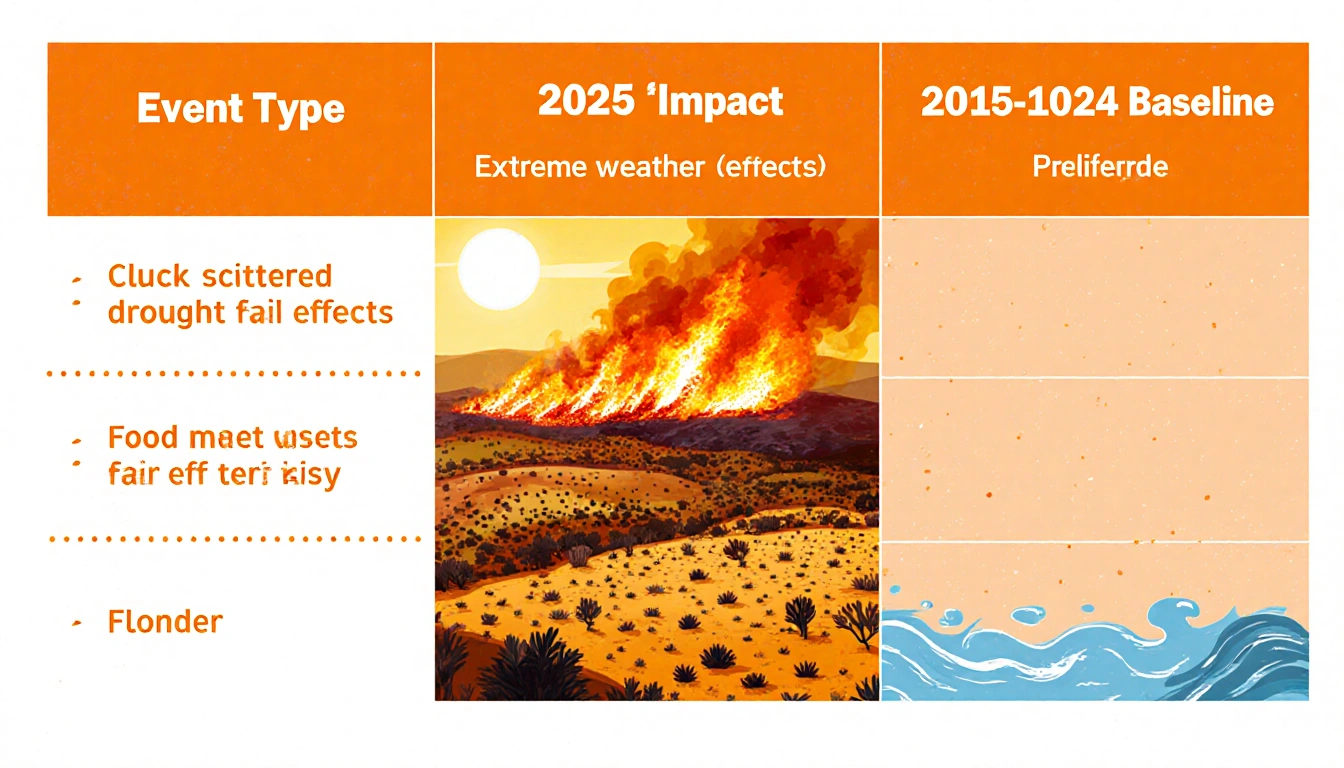
| Event Type | 2025 Impact | 2015-2024 Baseline |
|---|---|---|
| Heat waves | 10× more likely | 1× |
| Drought & wildfires | Greece & Turkey scorched | – |
| Floods & typhoons | Mexico, Philippines, India affected | – |
The WWA noted that the increasing frequency and severity of extremes threaten the ability of millions to respond and adapt, a concept they call limits of adaptation. Hurricane Melissa intensified so quickly that forecasting and planning were hampered, leaving Jamaica, Cuba and Haiti unable to cope.
Global Climate Negotiations
This year’s United Nations climate talks in Brazil ended without an explicit plan to transition away from fossil fuels. While more money was pledged for adaptation, implementation will take time.
Andrew Kruczkiewicz added, “Places are seeing disasters they aren’t used to; extreme events are intensifying faster and becoming more complex. That requires earlier warnings and new approaches to response and recovery.”
Geopolitical Climate Policy
China is rapidly deploying solar and wind power while continuing to invest in coal. In the U.S., the Trump administration has steered the nation away from clean-energy policy toward coal, oil and gas. “The geopolitical weather is very cloudy this year with a lot of policymakers making policies for the fossil fuel industry rather than for the populations of their countries,” Friederike Otto said.
> “We have a huge amount of mis- and disinformation that people have to deal with.”
Key Takeaways
- 2025 is the third hottest year on record, breaking the Paris Agreement threshold.
- 157 extreme events, 22 studied, with heat waves 10× more likely than a decade ago.
- Climate talks stalled, fossil fuel use remains high, and adaptation limits are being tested.
The world’s climate trajectory remains uncertain, but the data shows a clear trend toward more intense extremes and a pressing need for decisive action.