

At a Glance
- Family members of two Trinidadian men filed a lawsuit on Tuesday, accusing the U.S. government of wrongful death and extrajudicial killings.
- The suit challenges the Trump administration’s drug-smuggling campaign, the first case of its kind to be filed against the administration in federal court.
- The lawsuit claims the Oct. 14 strike violated the Death on the High Seas Act and the Alien Tort Statute.
—
Introduction
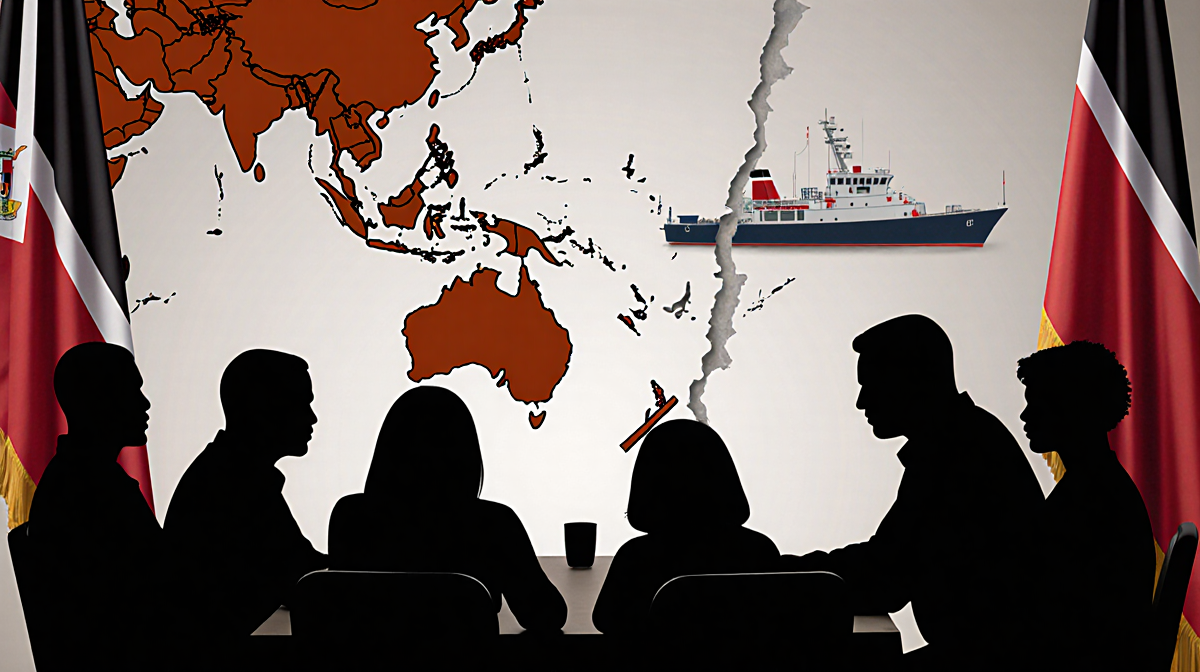
Family members of two Trinidadian men who were killed in a U.S. strike on an alleged drug-smuggling boat in October sued the U.S. government Tuesday, accusing it of wrongful death and extrajudicial killings. The lawsuit is the first of its kind to be filed against the Trump administration in federal court over its military campaign against alleged drug-smuggling vessels in the Caribbean Sea and the eastern Pacific Ocean.
—
The Lawsuit
The lawsuit was filed by attorneys from the American Civil Liberties Union, the Center for Constitutional Rights, Professor Jonathan Hafetz of Seton Hall Law School, and the ACLU of Massachusetts. It names the families of Chad Joseph, 26, and Rishi Samaroo, 41, as plaintiffs. The suit alleges that the U.S. military strike on Oct. 14 killed the two men, who were returning from work in Venezuela.
Key Allegations
- The U.S. did not notify the families before the strike.
- The families held memorial services after learning of the strike.
- The lawsuit asserts that Joseph and Samaroo were not involved in drug trafficking.
- The men were simply returning home from work.
—
Details of the Oct. 14 Strike
Defense Secretary Pete Hegseth and President Donald Trump said the strike killed all six men on the boat. Trump described them as “six male narcoterrorists” and said that the boat was “affiliated with a Designated Terrorist Organization” and that it “was trafficking narcotics.” The strike was the administration’s fifth in a campaign that has struck three dozen boats and killed at least 125 people, according to the Defense Department, since it began in early September.
> “Chad was a loving and caring son who was always there for me, for his wife and children, and for our whole family. I miss him terribly. We all do.” said Lenore Burnley, Joseph’s mother.
> “We know this lawsuit won’t bring Chad back to us, but we’re trusting God to carry us through this, and we hope that speaking out will help get us some truth and closure.”
Samaroo’s sister, Sallycar Korasingh, said: “Rishi used to call our family almost every day and then one day he disappeared, and we never heard from him again.” She added: “Rishi was a hardworking man who paid his debt to society and was just trying to get back on his feet again and to make a decent living in Venezuela to help provide for his family. If the U.S. government believed Rishi had done anything wrong, it should have arrested, charged, and detained him, not murdered him. They must be held accountable.“
—
Legal Grounds
Death on the High Seas Act
The lawsuit claims the Oct. 14 airstrike violated the Death on the High Seas Act, which allows family members to sue over wrongful deaths that occur more than 3 nautical miles from the U.S. The Act, enacted in 1974, provides a civil remedy for families of those killed at sea under circumstances the government deems unlawful.
Alien Tort Statute
The suit also cites the Alien Tort Statute, which allows foreign nationals to sue in federal court for violations of international law. The statute, dating to 1789, has been used in cases involving human-rights abuses and has been interpreted by courts to allow claims for violations of customary international law.
> “These premeditated and intentional killings lack any plausible legal justification. Thus, they were simply murders, ordered by individuals at the highest levels of government and obeyed by military officers in the chain of command.”
The lawsuit also challenges the administration’s assertion that the U.S. is in a non-international armed conflict with drug cartels, arguing that no such conflict exists and that the laws of war do not apply.
—
Family Perspectives
Joseph lived in Las Cuevas, Trinidad, with his common-law wife and their three minor children. He often traveled 20 nautical miles to Venezuela for work, sometimes staying for weeks or months. He had been working there since April and struggled to find a boat to return home after the campaign began. His last call to his wife and mother was on Oct. 12, telling them he had found a ride back home, but he never returned.
Samaroo worked in construction before spending 15 years in prison for a homicide. He also frequently traveled to Venezuela for work in construction and farming. The lawsuit notes that he shared photos of the farm he was working on with his sister before he died.
The lawsuit quotes the Trinidadian government as saying that “the government has no information linking Joseph or Samaroo to illegal activities” and that it had “no information of the victims of U.S. strikes being in possession of illegal drugs, guns, or small arms.”
—
Government Response
The U.S. government has not yet issued a formal response to the lawsuit. Defense Secretary Hegseth announced that the military carried out three strikes on Monday in the Eastern Pacific against four boats suspected of carrying drugs, killing 14 and leaving one survivor. The administration has framed the campaign as a necessary measure against drug trafficking, citing the presence of narcotics and alleged ties to terrorist organizations.
Military Statements
- Hegseth said the strikes targeted boats suspected of drug trafficking.
- The Defense Department reported 125 deaths across the campaign.
Political Statements
- Trump labeled the victims “six male narcoterrorists” and emphasized the boat’s affiliation with a terrorist organization.
—
Timeline of the Campaign
| Date | Event | Boats | Casualties |
|---|---|---|---|
| Early September | First strike | 1 boat | 0 |
| 10 Sep | Second strike | 1 boat | 0 |
| 15 Sep | Third strike | 1 boat | 0 |
| 20 Sep | Fourth strike | 1 boat | 0 |
| 14 Oct | Fifth strike (Oct. 14) | 1 boat | 6 men (Joseph, Samaroo, and 4 others) |
| 21 Oct | Third Monday strikes | 4 boats | 14 killed, 1 survivor |
The campaign has struck three dozen boats and killed at least 125 people.
—
Background of the Campaign
The U.S. began a campaign in early September to target alleged drug-smuggling vessels operating in the Caribbean Sea and the eastern Pacific. The campaign is part of the administration’s broader strategy to disrupt the flow of cocaine and other narcotics into the United States. U.S. aircraft and naval assets conduct the strikes with the objective of intercepting vessels suspected of transporting drugs to the U.S. The campaign has involved five strikes by the time of the Oct. 14 incident, with a cumulative death toll of at least 125 people.
- The campaign targets vessels identified by intelligence as drug traffickers.
- The U.S. claims vessels are linked to terrorist organizations.
- The strikes are authorized under U.S. law and international agreements.
—
Legal Analysis
The Death on the High Seas Act, enacted in 1974, provides a civil cause of action for families of those killed at sea beyond 3 nautical miles from U.S. territory. The statute allows claims for wrongful death, negligence, and intentional acts. The Alien Tort Statute, dating to 1789, has been used to bring cases against foreign corporations and individuals for human-rights violations. The lawsuit contends that the strike constitutes a violation of both statutes.
Legal scholars have noted that the lawsuit raises questions about the limits of executive power in foreign military actions. Some experts argue that the Death on the High Seas Act has rarely been invoked in cases involving U.S. military operations, making this lawsuit a novel application of the law.
—
Expert Commentary
Legal scholars and human-rights advocates have pointed out that the lawsuit challenges the extent of executive authority in conducting aerial strikes against foreign vessels. A few experts suggest that the case could prompt a review of the criteria used to classify a vessel as a drug trafficker and the transparency of the decision-making process. Others argue that the case could force the executive branch to provide more detailed evidence of the intent and legality of such strikes.
—
Potential Impact
If the lawsuit succeeds, it could set a precedent limiting the use of aerial strikes against foreign vessels, requiring greater transparency and adherence to international norms. It may also prompt a review of the campaign’s legal justification and the criteria used to classify vessels as drug traffickers. The outcome could influence how the U.S. conducts maritime interdiction operations and could lead to stricter oversight of military actions abroad.
—
Current Status
The U.S. Department of Justice has not yet filed a response. The lawsuit is pending, and the court will determine whether the plaintiffs have standing and whether the claims are actionable under U.S. law. The case is being closely watched by human-rights advocates, legal scholars, and policy analysts who are eager to see whether the executive branch can justify the use of lethal force in foreign waters.
—
Key Takeaways
- The lawsuit marks a rare legal challenge to the Trump administration’s anti-drug campaign.
- Families argue that the men were innocent, returning home from work, and that the strike violated U.S. and international law.
- The U.S. government maintains that the strikes targeted drug traffickers linked to terrorist organizations.