

Sunday marks the shortest day of the year north of the equator, a moment that many call the darkest day. Yet for those living in the northern hemisphere, it also signals the beginning of astronomical winter, a shift that will bring gradually longer days and a promise of warmer weather ahead. In the southern hemisphere, the same date is the longest day of the year, heralding the start of summer. These opposing experiences stem from the way the Earth tilts as it circles the Sun.
The phenomenon is rooted in the Earth’s axial tilt, which is about 23.5 degrees relative to its orbital plane. As the planet moves around the Sun, this tilt causes one hemisphere to lean toward the Sun while the other leans away. The result is an unequal distribution of sunlight that changes the length of day and night over the course of the year.

What is a solstice
The term solstice comes from the Latin words sol, meaning sun, and stitum, which can mean pause or stop. It marks the end of the sun’s annual march higher or lower in the sky. During the winter solstice, the Sun makes its shortest, lowest arc, and the daylight hours are at their minimum. After this point, the Sun’s path begins to climb again, and days gradually grow longer each day until the summer solstice in late June.
The solstice is also a marker for seasonal change; the winter solstice is the most extreme point of cold and darkness, while the summer solstice is the most extreme point of warmth and light. The astronomical winter and summer solstices fall between specific date ranges: the winter solstice can fall between December 20 and 23, and this year it was on the 21st. The summer solstice falls between June 20 and 22.
The equinox
The word equinox is derived from two Latin terms meaning equal and night. On an equinox, the Earth’s axis is oriented so that both hemispheres receive nearly the same amount of sunlight. Day and night are almost equal in length, though minor variations can occur depending on one’s location on the planet. The Northern Hemisphere’s fall, or autumnal, equinox occurs between September 21 and 24, while its spring, or vernal, equinox falls between March 19 and 21.
The equinoxes are the moments that divide the year into four astronomical seasons: spring, summer, fall, and winter. They serve as natural markers for the changing balance of day and night, and they have been observed and celebrated by cultures worldwide for millennia. The equinoxes also help astronomers determine the tilt of the Earth and the precise timing of the planet’s orbit around the Sun.
Earth’s tilt and seasonal calendars
The tilt of the Earth is responsible for the variation in daylight that defines both astronomical and meteorological seasons. While astronomical seasons are tied to the planet’s position relative to the Sun, meteorological seasons are a simplified calendar system used by weather professionals. Meteorologists divide the year into three‑month blocks: spring begins on March 1, summer on June 1, fall on September 1, and winter on December 1. This system aligns more closely with temperature patterns than the Sun’s exact position.
Because of this distinction, the start of meteorological winter on December 1 does not coincide with the winter solstice, which may occur a few days later. Similarly, meteorological summer begins on June 1, while the summer solstice might fall a day or two after that date. These differences are important for climate studies and for people who plan activities based on seasonal expectations.
Stonehenge celebration
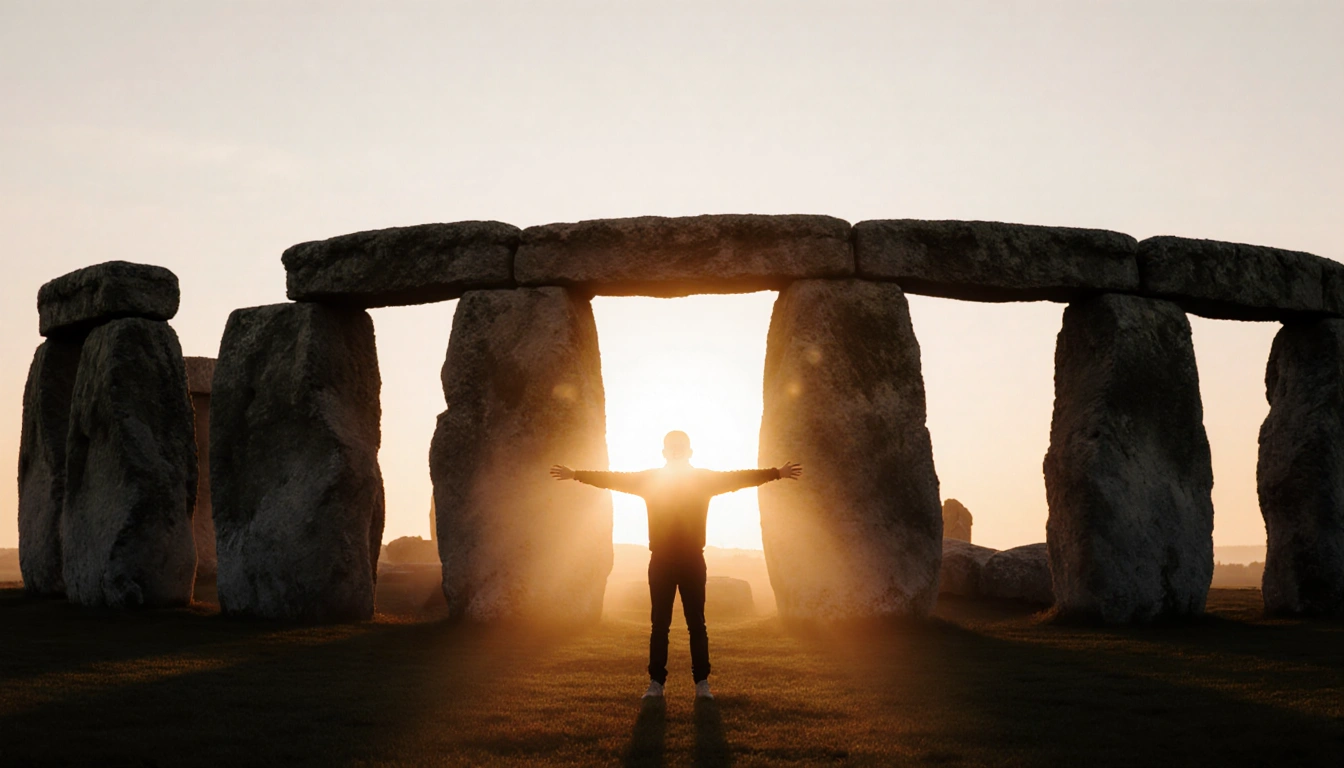
Revelers gathered to celebrate the winter solstice at Stonehenge in Britain Friday. The ancient monument, known for its precise alignment with the sun’s path, has been a focal point for solstice observances for centuries. Participants at the site walked in silence, watched the sun rise behind the stones, and shared stories about the changing seasons. The event underscored how human cultures have long used astronomical markers to structure time and ritual.
The gathering also highlighted the enduring connection between the natural world and human tradition. As the sun’s position shifts with the seasons, people have found a rhythm that links celestial mechanics to everyday life. The Stonehenge celebration served as a reminder that, even in a modern world, astronomical events continue to inspire community and reflection.
Closing thoughts
From the shortest day in the north to the longest in the south, the solstices and equinoxes remind us that the Earth’s tilt orchestrates a yearly cycle of light and darkness. By understanding the dates and the science behind these events, we can better appreciate the rhythms that govern weather, agriculture, and cultural traditions. As the sun climbs after the winter solstice, each day brings a little more daylight, hinting at warmer seasons to come.
The alignment of ancient monuments like Stonehenge with the solstices illustrates how early societies used astronomy to mark time. Today, the same celestial mechanics still influence calendars, festivals, and the planning of seasonal activities. Whether we observe the changing light or simply note the date, the solstices and equinoxes remain powerful symbols of nature’s predictable rhythm.
Associated Press Health and Science Department receives support from the Howard Hughes Medical Institute’s Department of Science Education and the Robert Wood Johnson Foundation. The AP is solely responsible for all content.