
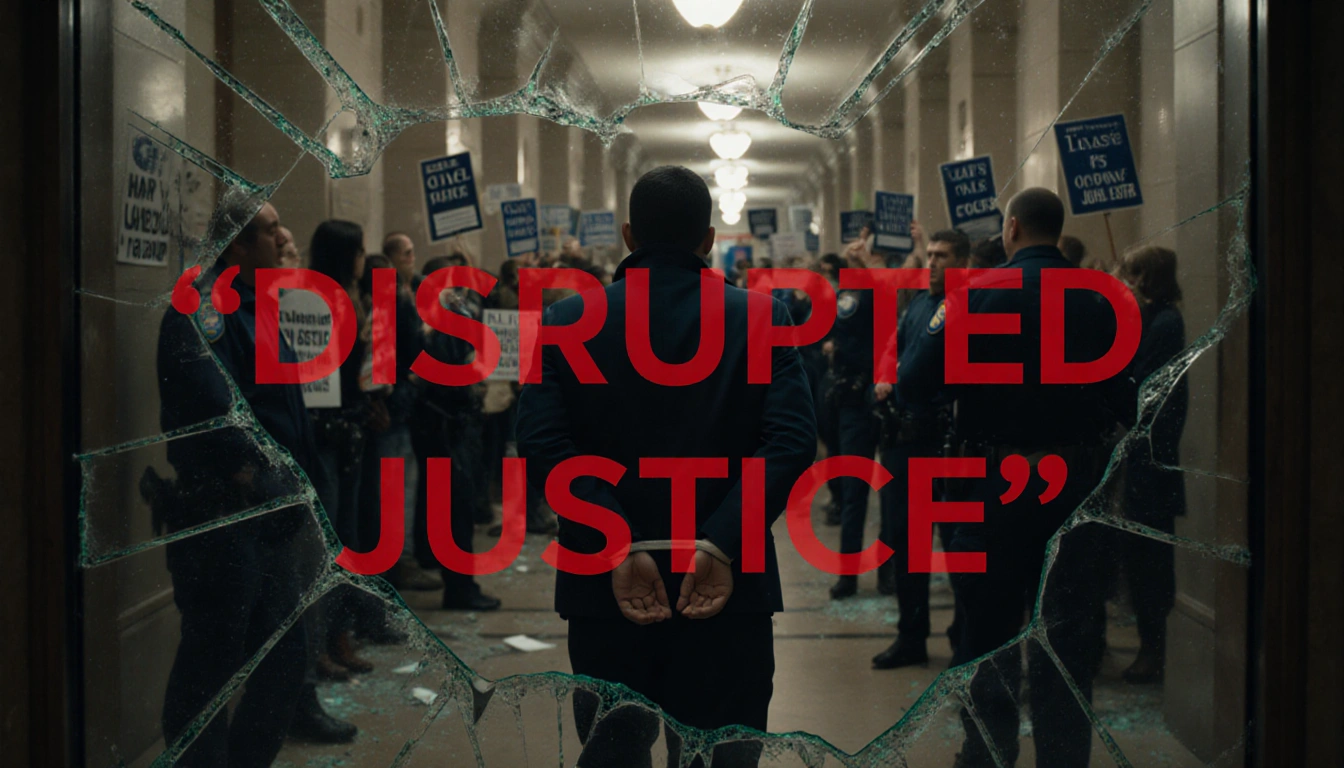
In a sweeping review of 166 federal criminal cases, the Justice Department’s hard-line approach to protester prosecutions has largely backfired. The Associated Press found that most felony assault charges were reduced or dismissed. Every misdemeanor trial ended in acquittal. The findings suggest the department’s aggressive strategy may not be delivering the intended results. This outcome challenges Attorney General Pam Bondi’s pledge that offenders would face ”severe consequences.” The report raises questions about the effectiveness of the department’s prosecutorial tactics.
The review examined cases from four Democratic-led cities that were focal points for demonstrations: Washington, D.C., Los Angeles, Portland, and Chicago. It included all criminal prosecutions brought by federal prosecutors since May. The analysis covered a range of alleged offenses, from assaulting federal agents to throwing projectiles. The data set included 166 cases, offering a broad view of the department’s actions. It allowed analysts to assess patterns in charging decisions. The scope of the investigation highlights the scale of the department’s engagement with protest-related crimes.
Attorney General Pam Bondi has vowed that people who assault or hinder federal officers will face ”severe consequences.” The Justice Department has pursued a months-long effort to prosecute such offenders. The Associated Press found that the department has struggled to deliver on Bondi’s pledge. The report indicates a mismatch between rhetoric and outcomes. Bondi’s statement was intended to signal a tough stance. The findings suggest the department’s results fall short of that promise.
The review noted that aggressive charging decisions have frequently failed to hold up in court. Prosecutors sometimes failed to win the grand jury indictments required to prosecute someone on a felony. Video evidence and testimony called into question initial allegations. Officers in many cases suffered minor or no injuries, undermining the felony assault charge’s requirement for serious bodily harm. The data show a pattern of charges that ordinarily would not be pursued. The findings question the appropriateness of the department’s charging strategy.
Mary McCord, a former federal prosecutor and director of Georgetown University Law Center’s Institute for Constitutional Advocacy, said, ”It’s clear from this data that the government is being extremely aggressive and charging for things that ordinarily wouldn’t be charged at all.” Her statement highlights concerns about over-charging. McCord’s analysis points to a chilling effect on protest activity. The quote underscores the potential impact on First Amendment rights. It also reflects broader worries about the department’s conduct. Her perspective adds weight to the report’s findings.
Of 100 people initially charged with felony assaults on federal agents, 55 saw their charges reduced to misdemeanors, or dismissed. In dozens of cases, prosecutors failed to secure grand jury indictments. Video footage and testimony weakened the initial allegations. Minor or no injuries in many incidents undermined the felony assault charge. The reduction of charges demonstrates a shift in prosecutorial strategy. The data illustrate the department’s changing stance on these cases.
Dana Briggs, a 70-year-old Air Force veteran, was charged in September with assault after a protest in Chicago. Video footage emerged of federal agents knocking Briggs to the ground. Prosecutors dropped the case that had already been reduced to a misdemeanor. Briggs was seen falling backward onto the pavement. Other protesters tried to help him up but were pushed away. The case illustrates how evidence can alter prosecutorial decisions.
Lucy Shepherd, a 28-year-old, was charged with felony assault after she batted away the arm of a federal officer outside Portland’s Immigration and Customs Enforcement facility. Her lawyers argued that video of her arrest showed she brushed aside an officer with ”too little force to have been intended to inflict any kind of injury.” The prosecution had alleged that she ignored an officer’s commands. The court record shows the video raised doubts about the alleged assault. The case exemplifies the use of video evidence. It highlights the difficulty of proving intent.
Experts were surprised that the Justice Department took five misdemeanor cases to trial, given the resources such trials consume. They were further shocked that DOJ lost all those trials. The department’s aggressive approach did not translate into convictions. The trials were brief, often lasting only a few days. The outcomes underscore the challenges of prosecuting protest-related offenses. The data suggest a need for reassessment of strategy.
Sean Charles Dunn, a Washington, D.C., man, tossed a sandwich at a Border Patrol agent he had berated as a ”fascist.” Dunn was acquitted on November 6 after a two-day trial. The case was framed as an act of protest against the Trump administration’s law-enforcement surge. The jury found him not guilty on the federal misdemeanor assault charge. The acquittal was a significant setback for the department. It demonstrates the limits of its prosecutorial power.
In Los Angeles, 32-year-old Katherine Carreño was acquitted on a misdemeanor assault charge stemming from an August protest outside a federal building. Prosecutors alleged she ignored an officer’s commands and ”raised her hand and brought it down in a slapping/chopping motion” onto the officer’s arm. Social media video shown to jurors raised doubts about that narrative. The video showed an officer striding toward Carreño and pushing her back. The case was another example of a trial loss. It illustrates the challenges of proving assault in protest contexts.
The administration has deployed troops to the four cities examined in the review. Trump and his administration have sought to justify the deployments by painting immigration protesters as ”antifa.” The term ”antifa” is an umbrella for far-left-leaning protesters who confront white supremacists. The AP’s review found a handful of references to ”antifa” in court records. No case officially accused a protester of being a ”domestic terrorist” or part of an organized effort to attack federal agents. The findings show the limited use of extremist labels in prosecutions.
Prosecutors have secured felony indictments against 58 people, some of whom were initially charged with misdemeanors. None of those indictments have yet gone to trial. The department’s record shows a backlog of pending cases. The data suggest a growing number of unresolved prosecutions. The pending indictments reflect the department’s continued focus on assault allegations. They also indicate a potential future caseload.
From the start of Trump’s second term through November 24, the Department of Homeland Security says there have been 238 assaults on ICE personnel nationwide. The agency declined to provide its list or details about how it defines assaults. Department of Homeland Security Assistant Secretary Tricia McLaughlin said, ”Rioters and other violent criminals have threatened our law enforcement officers, thrown rocks, bottles, and fireworks at them, slashed the tires of their vehicles, rammed them, ambushed them, and even shot at them.” The statement highlights the severity of the incidents. It underscores the department’s concerns about officer safety. The data provide context for the justice department’s actions.
A Justice Department spokesperson said it will continue to seek the most serious available charges against those alleged to have put federal agents in harm’s way. The spokesperson added, ”We will not tolerate any violence directed toward our brave law enforcement officials who are working tirelessly to keep Americans safe.” The statement reflects the department’s stance on protest-related violence. It emphasizes a commitment to protecting federal officers. The spokesperson’s remarks mirror the agency’s broader policy. The statement serves as a counterpoint to the review’s findings.
Key Takeaways
- The Justice Department’s aggressive prosecutorial strategy has largely failed to secure convictions in protest-related cases.
- Most felony assault charges were reduced or dismissed, and all misdemeanor trials ended in acquittal.
- The review found limited use of ”antifa” or domestic terrorist labels in court records.
The Associated Press review paints a picture of a Justice Department that is pursuing a hard-line stance on protester assaults but is struggling to translate rhetoric into convictions. The findings highlight the challenges prosecutors face when relying on video evidence and the importance of proving intent. The lack of convictions raises questions about the effectiveness of the department’s approach. It also underscores the need for a reassessment of charging practices. The department’s statements about protecting federal officers contrast sharply with the outcomes of the cases reviewed. The report serves as a reminder that prosecutorial strategy must align with evidence and legal standards.