
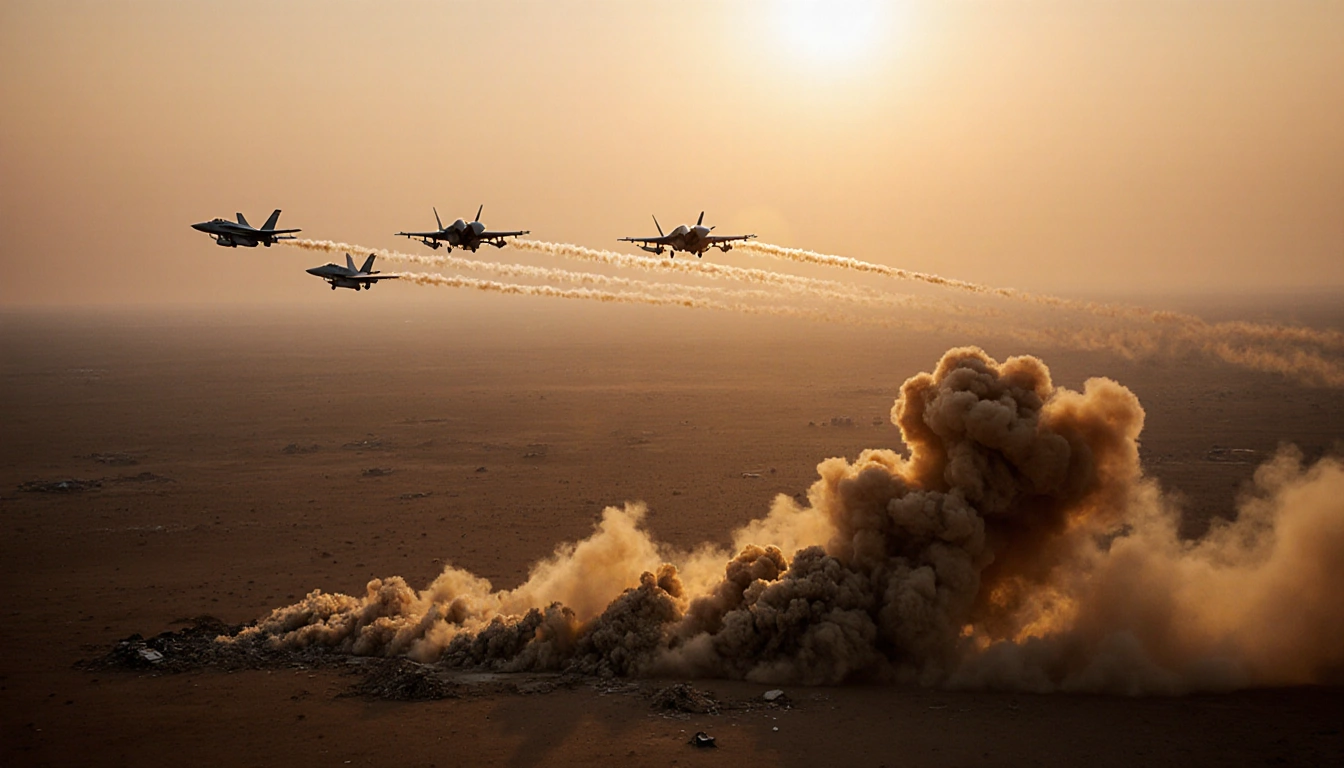

In a decisive move that marked a sharp escalation of the United States’ involvement in Nigeria’s security struggle, airstrikes were carried out on Thursday against Islamic State militants in the northwestern state of Sokoto. The attacks came amid an ongoing campaign in which the West African nation’s overstretched military has fought for years to stem the tide of violence.
US Airstrikes and International Cooperation
President Donald Trump took to social media to describe the strikes as “powerful and deadly,” adding that they targeted IS gunmen “who were targeting and viciously killing, primarily, innocent Christians.” The Associated Press could not confirm the extent of the strikes’ impact, but U.S. Defense Secretary Pete Hegseth posted on X that “More to come….” Nigerian officials said the U.S. strikes were part of an exchange of intelligence and strategic coordination between the two countries.
Islamic State Militants in Northwestern Nigeria
The armed groups operating in Africa’s most populous country include at least two affiliates of the Islamic State. The first, the Islamic State West Africa Province (ISWAP), is an offshoot of the Boko Haram extremist group that operates in the northeast. The second, the lesser-known Islamic State Sahel Province (ISSP), known locally as Lakurawa, has become prominent in the northwest.
Although officials did not specify which group was targeted, security analysts said the strikes were likely aimed at members of Lakurawa, a group that has grown more lethal in border states such as Sokoto and Kebbi over the last year. The militants frequently target remote communities and security forces.
Lakurawa’s Rise and Impact
Lakurawa has been active in northwest Nigeria since around 2017, when it was invited by traditional authorities in Sokoto to protect their communities from bandit groups. According to James Barnett, an Africa researcher with the Washington-based Hudson Institute, the militants “overstayed their welcome, clashing with some of the community leaders … and enforcing a harsh interpretation of Sharia law that alienated much of the rural population.”
Malik Samuel, a Nigerian security researcher with Good Governance Africa, said “Communities now openly say that Lakurawa are more oppressive and dangerous than the bandits they claim to protect them from.” Lakurawa controls territories in Sokoto and Kebbi states and has become known for killings, kidnapping, rape and armed robbery.
Some attacks blamed on Lakurawa are actually carried out by the Islamic State Sahel Province, which has expanded from Niger’s Dosso region to northwestern Nigeria. The U.S.-based Armed Conflict Location & Event Data Project reported that “ISSP has maintained a low profile, operating covertly to infiltrate and entrench itself along the Niger-Nigeria border, and is now also expanding its operations toward the Beninese border.”
Governance and Security Challenges
The security woes in Nigeria are more a governance problem than a purely military one. Motives for attacks differ, but gangs are often driven by the near absence of a state and security presence in conflict hot spots, making recruitment easy. Those hot spots, data show, have some of the country’s highest levels of poverty, hunger and lack of jobs.
Nigeria’s Minister of Defense Christopher Musa once said that military action is only 30% of what is needed to fix the country’s security crisis, while the remaining 70% depends on good governance. “The absence of the state in remote communities is making it easy for non-state actors to come in and present themselves to the people as the best alternative government,” said Samuel.
Strategic Importance of US Support
Thursday’s U.S. strikes are widely seen by experts as crucial help for Nigeria’s security forces, which are often overstretched and outgunned as they fight multiple security crises across different regions. In states like Sokoto, the military often carries out airstrikes targeting militant hideouts and has embarked on mass recruitment of security forces.
However, analysts say that military operations targeting the gangs are not usually sustained and the militants easily move on motorcycles to new locations through vast forests that connect several states in the north. They also often use hostages-including schoolchildren-as cover, making airstrikes difficult.
Key Takeaways
- US airstrikes on Thursday targeted Islamic State militants in Sokoto, marking a significant escalation. – The strikes were part of an intelligence-sharing partnership with Nigeria and were praised by President Trump for protecting Christians. – Lakurawa, an IS affiliate, has grown lethal in the region, engaging in killings, kidnapping and other crimes.
The strikes underscore the continued international effort to curb the influence of IS affiliates in Nigeria and highlight the complex interplay between military action and governance challenges in the country.