
At a Glance
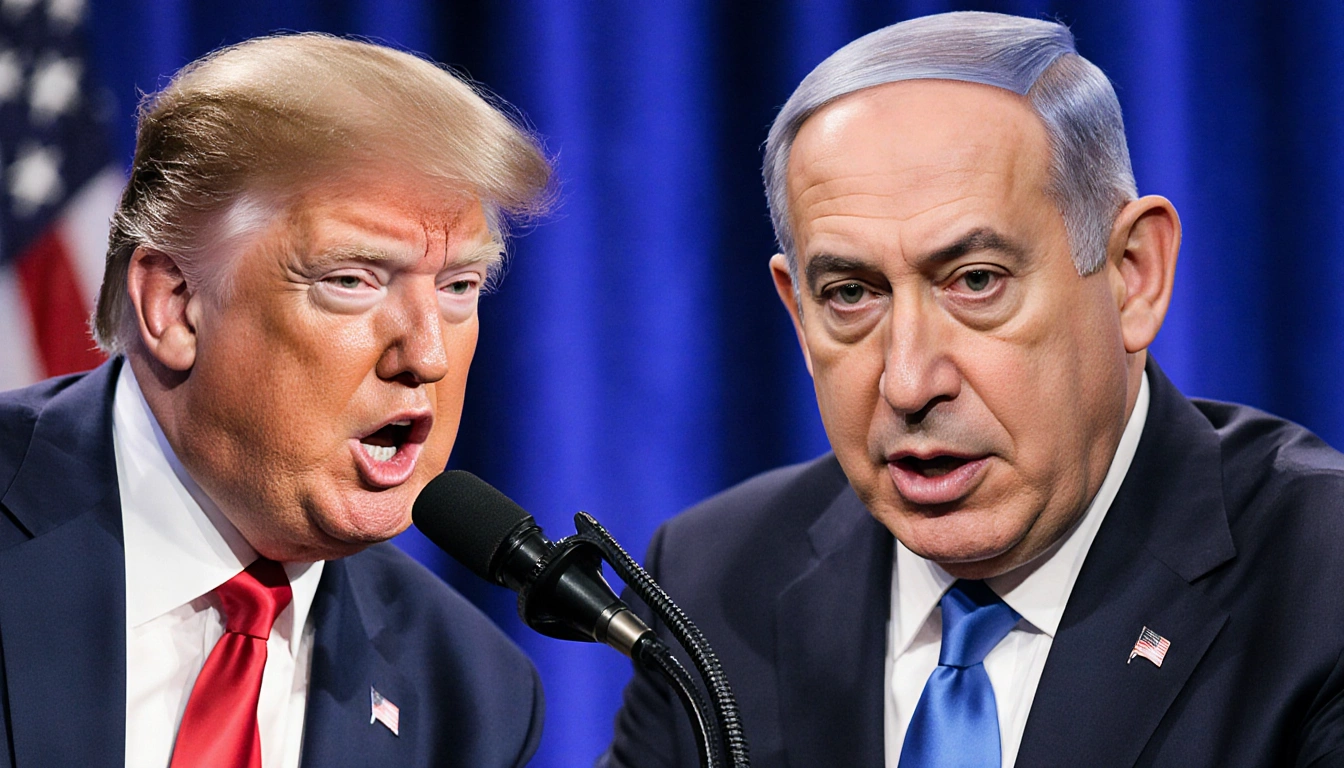
- President Donald Trump will meet Benjamin Netanyahu on Monday to reignite a Gaza ceasefire.
- The discussion centers on the stalled second phase of Trump’s 20-point plan approved by the U.N. Security Council.
- Key obstacles include rebuilding Gaza, disarming Hamas, and forming an International Stabilization Force.
- Why it matters: The outcome could decide whether Gaza sees a lasting ceasefire and a path to Palestinian independence.
President Donald Trump is set to host Israeli Prime Minister Benjamin Netanyahu at his Mar-a-Lago estate on Monday, a meeting that could inject new energy into a Gaza ceasefire that is showing signs of stalling. The two leaders will discuss the next, more complex phase of Trump’s 20-point plan, which aims to end Hamas’ rule and lay the groundwork for a demilitarized Gaza. With tensions rising and key partners weighing in, the meeting’s success hinges on navigating reconstruction, disarmament, and international security arrangements.
Meeting at Mar-a-Lago
Trump intends to leverage his close ties with Netanyahu to push the stalled ceasefire forward. He hopes the face-to-face meeting will help accelerate negotiations, especially after accusations that Israel has not moved fast enough. Discussions may also touch on Iran, where Trump maintains that its nuclear program has been “completely and fully obliterated.”
- Accelerate the second phase of the ceasefire.
- Address accusations of slow progress.
- Discuss Iran’s nuclear status.
- Explore ways to rebuild Gaza under international supervision.
Challenges to Second Phase
The ceasefire’s first phase began in October, days after Hamas’ attack that killed around 1,200 people and took 251 hostages. While most hostages have been released, the second phase faces growing divisions among the U.S., Israel, and Arab countries.
- Slow vetting of Palestinian technocratic committee members.
- Ongoing Israeli military strikes.
- Unformed International Stabilization Force.
- Disparate views on the force’s mandate between the U.S., Israel, and regional partners.
- Hamas’ insistence on armed resistance and willingness to freeze its arsenal only under certain conditions.
International Stakeholders
U.S. Mideast envoy Steve Witkoff and Jared Kushner recently met with officials from Egypt, Qatar and Turkey, who are mediating the ceasefire. Egypt, Qatar, Saudi Arabia and Turkey are pushing for Hamas disarmament and a further Israeli withdrawal before moving forward. The United Arab Emirates has offered to fund reconstruction, but details remain unsettled.
Mona Yacoubian said:
> “This is going to be a really tall order, I think, for President Trump to get Netanyahu to agree.”
Mona Yacoubian added:
> “How he does that, what kind of pressure he puts on Netanyahu, I think, is going to be important to watch for.”
Mona Yacoubian concluded:
> “I think, it’s going to be a broader clash of approaches to the region.”
Western diplomat said:
> “There is a huge gulf between the U.S.-Israeli understanding of the International Stabilization Force’s mandate and that of other major countries in the region, as well as European governments.”
Key Takeaways
- The meeting could revive a Gaza ceasefire that is at risk of stalling.
- The second phase demands rebuilding Gaza, disarming Hamas, and establishing an international security force.
- International partners, especially the UAE and regional mediators, are still negotiating terms and funding.
The outcome of Monday’s talks will shape the trajectory of Gaza’s future and the broader Middle East peace process.