


At a Glance
- You can still boost your 2025 tax refund by acting now.
- Max out retirement contributions, sell losing stocks, and upgrade home energy to lower taxable income.
- Time bonuses and charitable donations strategically to cut your tax bill.
- Why it matters: These moves can reduce your 2025 tax burden and increase your refund.
The IRS opens its filing window in late January, but the clock is already ticking on the actions you can take today to shape your 2025 tax outcome. From retirement contributions to energy-efficiency credits, there are a handful of end-of-year tactics that can shave thousands off your bill.
Max out retirement contributions
Contributing the maximum to retirement accounts before the year-end is one of the most effective ways to lower your taxable income for 2025. The 2025 limits are higher than in recent years, giving you more room to save and deduct. The key figures are shown below.
| Plan | 2025 Limit | Catch-up (if over 50) |
|---|---|---|
| 401(k) | $23,500 | $7,500 |
| 401(k) (60-63) | $23,500 | $11,500 |
| IRA | $7,000 | $8,000 |
Sell stocks at a loss
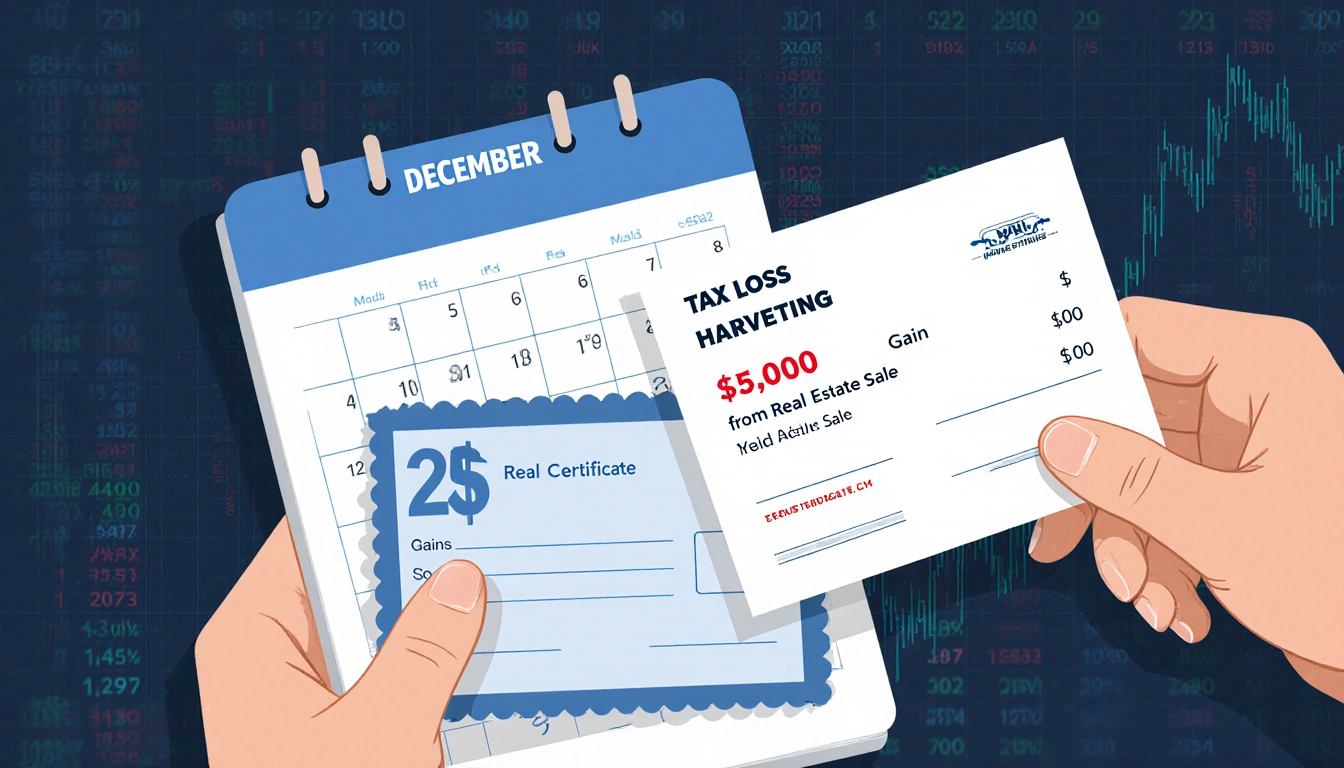
Tax loss harvesting lets you offset capital gains with unrealized losses from sold securities. If you realize a $50,000 gain from a real-estate sale and have a $50,000 stock loss, the two amounts cancel each other out. This strategy is especially useful after a strong year for the S&P 500.
- Identify stocks with unrealized losses.
- Sell them to realize losses.
- Offset capital gains, up to $3,000 per year against ordinary income if losses exceed gains.
Make your home more energy efficient
Even after the One Big Beautiful Bill Act removed most Inflation Reduction Act benefits, the 2025 residential clean energy credit remains at 30%. Installing solar, geothermal, or Energy Star heat pumps can give you a sizable credit. The average cost of solar in California is $11,970, which would translate to a $3,591 credit.
- Solar panels, geothermal heat pumps, fuel cells, battery storage qualify for 30% credit.
- Energy Star heat pumps, furnaces, boilers also eligible, but lower credit.
- Check manufacturer’s tax certification statement before buying.
Defer an end-of-year bonus or payment
If you receive an end-of-year bonus or invoice, asking for payment in January can push the income into the next tax year. This deferral reduces your 2025 taxable income, but you must weigh the timing against your cash flow needs.
- Request employer to pay bonus in January.
- Freelancers can invoice in December to delay income.
- Consider cash flow implications.
Donate to charities now if you want more tax deductions
Itemizing deductions allows you to claim charitable contributions up to 50% of taxable income. Donating before year-end ensures the deduction applies to 2025. Verify the charity’s tax-exempt status via the IRS database.
- Deduct up to 50% of taxable income.
- Confirm charity’s tax-exempt status via IRS database.
- Keep records of donation receipts.
Check required minimum distributions from IRAs and 401(k)s
The SECURE 2.0 Act raised the required minimum distribution age from 72 to 73 for those who turned 72 after December 31, 2022. Missing an RMD can trigger a penalty of up to 25%, reduced to 10% if corrected within two years. Double-check your RMD for 2024 and withdraw more if necessary.
- RMD age increased to 73 for those turning 72 after 12/31/2022.
- Penalty: 25% of shortfall, reduced to 10% if corrected within 2 years.
- Verify RMD for 2024 and withdraw additional if needed.
Combine medical expenses into one year
Medical expenses are deductible only if they exceed 7.5% of your AGI. Grouping major expenses into one year can push you over that threshold. Consider scheduling elective procedures before December 31 if you’re close to the limit.
- Deductable threshold: 7.5% of AGI.
- Combine major medical expenses into one year.
- Schedule elective procedures before 12/31 if near threshold.
Strategize your business expenses
Self-employed taxpayers can front-load expenses for the current year by paying for next year’s supplies in December. The timing depends on whether you use cash or accrual accounting. Consult a tax professional before making major changes.
- Pay for next year’s supplies in December.
- Timing depends on cash vs accrual method.
- Consult a tax professional.
Key Takeaways
- Max out retirement contributions to lower taxable income.
- Use tax loss harvesting to offset gains.
- Take advantage of energy credits and strategic timing of income and expenses.
By acting on these simple end-of-year moves, you can shape your 2025 tax picture and potentially secure a larger refund.