At a Glance
- The analog film trend is booming on Instagram and TikTok.
- Learning to load film, set exposure, develop and scan is essential for authentic looks.
- Home scanning with a kit can save money compared to lab services.
- Why it matters: It lets hobbyists create professional-looking images without costly equipment.
Film photography has returned to popularity thanks to social media. This guide covers how to load film, set exposure, develop, and scan negatives at home. It focuses on the key steps beginners need to start shooting.
Getting Started with Film Photography
Loading film varies by camera model, but online guides and YouTube tutorials cover almost every type. Exposure is controlled by three factors: ISO speed, aperture, and shutter speed. Some cameras read ISO automatically from the canister; others require manual input.
- ISO speed depends on film choice (e.g., ISO 200 vs ISO 3200).
- Aperture determines how wide the lens opens (f/1.8, f/8, etc.).
- Shutter speed decides how long the shutter stays open (1/15s, 1/150s, etc.).
Choosing Aperture and Shutter Speed
A wide aperture (f/1.8 or faster) gives a shallow depth of field but needs a faster shutter to avoid overexposure. A narrow aperture (f/8 or f/11) keeps more of the scene in focus and requires a longer shutter, which can blur handheld shots. Handheld daylight photography works best with a shutter speed of at least 1/150s.
- Wide aperture: f/1.8 – f/2.0 for portraits.
- Narrow aperture: f/8 – f/11 for landscapes.
- Handheld shutter speed: 1/150s or faster in bright light.
Metering and Exposure Strategies
Some cameras have built-in light meters that display over- or under-exposure in the viewfinder. Older models lack meters, so a phone app like Light Meter can be used to calculate settings. Overexposure is acceptable for many films, such as Kodak Gold, and can be a safe default.
- Use built-in meter if available.
- With a phone app, enter camera settings and read the suggested exposure.
- If unsure, shoot two frames: one slightly overexposed, one slightly underexposed.
Developing and Scanning
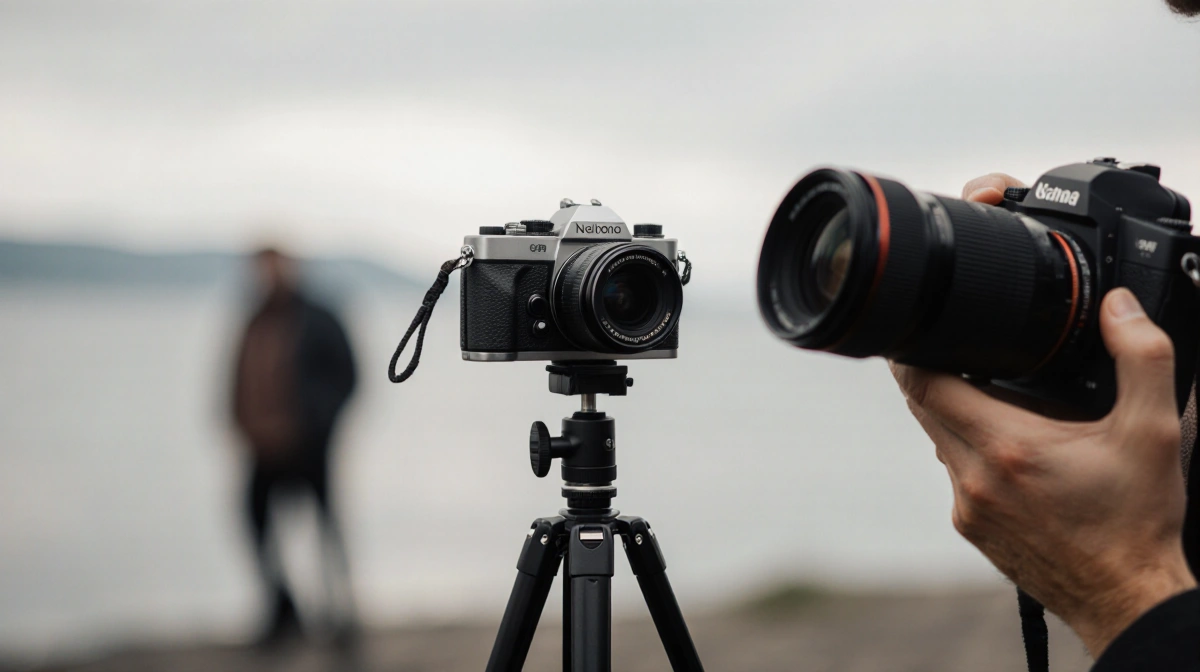
Developing at a local shop costs about £6 for a 35mm roll and an additional £10 for a high-resolution scan. Home scanning can be done with a kit that attaches to a digital camera and a macro lens. After photographing each negative, import the raw images into Lightroom Classic and use the Negative Lab Pro plugin to convert and adjust them.
- Lab develop + scan: £16 per roll (approx).
- Home scan kit: initial cost, then free scans.
- Edit in Lightroom Classic with Negative Lab Pro.
Pro Tips for Beginners
Start with an affordable camera, such as the Canon EOS 1000F, to test the medium without a large investment. Limit yourself to one roll per event to encourage thoughtful shooting and reduce wasted film. Mistakes happen; each ruined frame teaches exposure, composition, or focus skills.
- Try a cheap camera before buying expensive gear.
- Shoot one roll per event to stay selective.
- Learn from mistakes; every misstep improves your craft.
Key Takeaways
- Loading film and setting exposure are the first steps to authentic analog images.
- Metering, aperture choice, and shutter speed control the final look.
- Home scanning saves money and gives you digital copies for editing.
Film photography blends creativity with technical skill, and with these basics you’re ready to capture memorable images on film.