At a Glance
- President Donald Trump pauses National Guard deployment in Chicago, Los Angeles, and Portland after legal setbacks.
- Supreme Court and state courts block or reverse federal control over the Guard.
- Troops remain active in Washington, Memphis, and New Orleans.
Why it matters: The halt marks a significant shift in the federal crime-crackdown strategy and highlights the tension between federal authority and state sovereignty over National Guard forces.
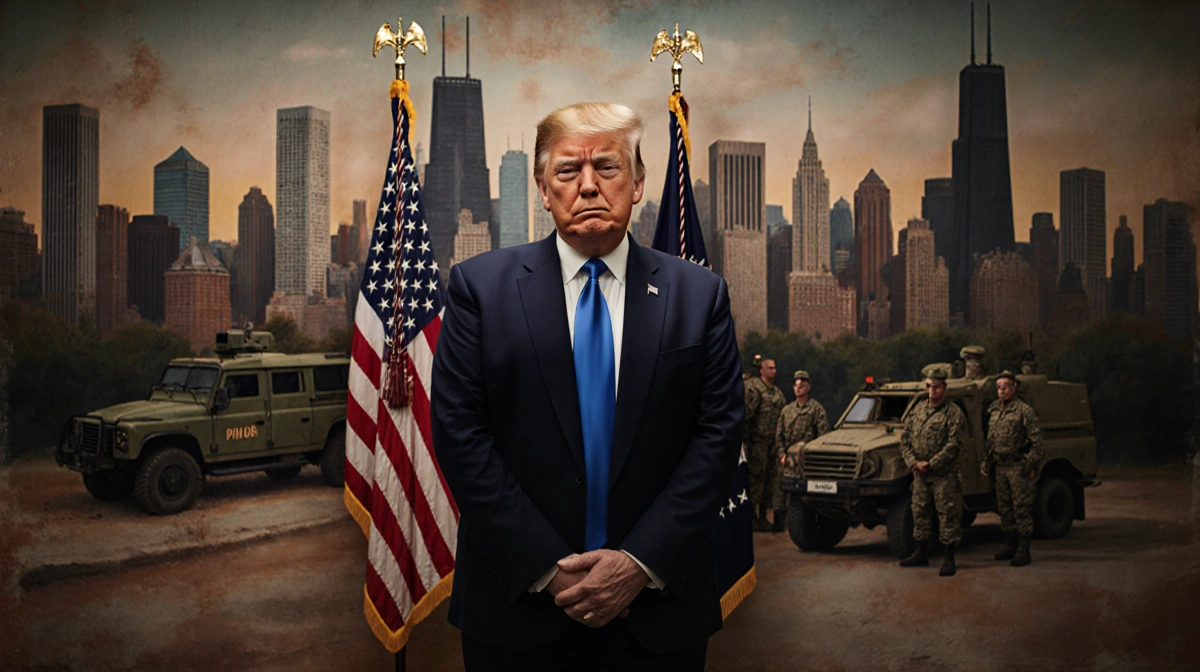
In a move that could reshape the federal law-enforcement landscape, President Donald Trump announced on Wednesday that he is pausing his plan to deploy National Guard troops in Chicago, Los Angeles, and Portland, after a series of court rulings halted the effort.
Legal Roadblocks and Court Decisions
The Supreme Court’s December ruling denied the administration permission to deploy the Guard in the Chicago area, a decision that was not final but a rare setback. The Illinois governor’s office publicly noted that Trump had lost in court and was forced to stand down. In Oregon, a federal judge permanently blocked the Guard’s presence in Portland in November, and the governor said the troops had never been lawfully deployed there.
- Supreme Court blocks Chicago deployment (Dec)
- Illinois Gov. JB Pritzker declares Trump “lost in court”
- Oregon Judge permanently bars Guard in Portland (Nov)
- About 4,000 troops and 700 Marines were deployed to Los Angeles.
- Around 350 troops are in New Orleans.
Trump’s Rationale and Claims
Trump said the troops had helped reduce crime in the three cities, though they were never on the streets in Chicago and Portland. He posted on social media that the troops’ presence was responsible for a drop in crime, adding that he would return “when crime begins to soar again – only a question of time!”
President Donald Trump announced:
> “We will come back, perhaps in a much different and stronger form, when crime begins to soar again – Only a question of time!”
Illinois Gov. JB Pritzker wrote:
> “Trump lost in court when Illinois stood up against his attempt to militarize American cities with the National Guard. Now Trump is forced to stand down.”
Oregon Gov. Tina Kotek said:
> “Our office has not yet received official notification that the remaining federalized Oregon National Guard troops can return home. They were never lawfully deployed to Portland and there was no need for their presence.”

Gov. Gavin Newsom stated:
> “About time Trump admitted defeat.”
Current Deployments in Other Cities
In Washington, the District of Columbia Circuit paused a lower court ruling that would have ended the Guard’s presence there, where they have been active since August. Tennessee’s Gov. Bill Lee and the state’s Republican officials supported the deployment of the Tennessee National Guard to Memphis in September, though a judge blocked the Guard’s use, a decision stayed as the state appeals. In New Orleans, about 350 National Guard troops arrived in the French Quarter on Tuesday and will stay through Mardi Gras to aid safety, with support from the state Republican governor and the city’s Democratic mayor.
Key Takeaways
- Trump’s pause follows a cascade of court defeats, signaling a halt to the federal crime-crackdown in key cities.
- The Guard remains active in Washington, Memphis, and New Orleans, reflecting uneven federal deployment.
- State leaders have largely opposed federal control of the National Guard, citing legality and necessity.
The federal government’s tug-of-war over National Guard deployment underscores the ongoing debate over the balance of power between federal and state authorities.
Report by Cameron R. Hayes for News Of Fort Worth.