


At a Glance
- United States launched a large-scale strike on Venezuela early Saturday
- President Nicolás Maduro captured and flown out of the country
- Explosions and low-flying aircraft shook Caracas, prompting mass panic
- Why it matters: The event marks a dramatic escalation in US-Venezuela tensions and could reshape regional security dynamics.
In a dramatic turn of events on January 3, 2026, the United States carried out a large-scale strike on Venezuela, claiming to have captured President Nicolás Maduro and transported him abroad. The attack triggered explosions and low-flying aircraft over Caracas, sending residents into panic.
The Strike
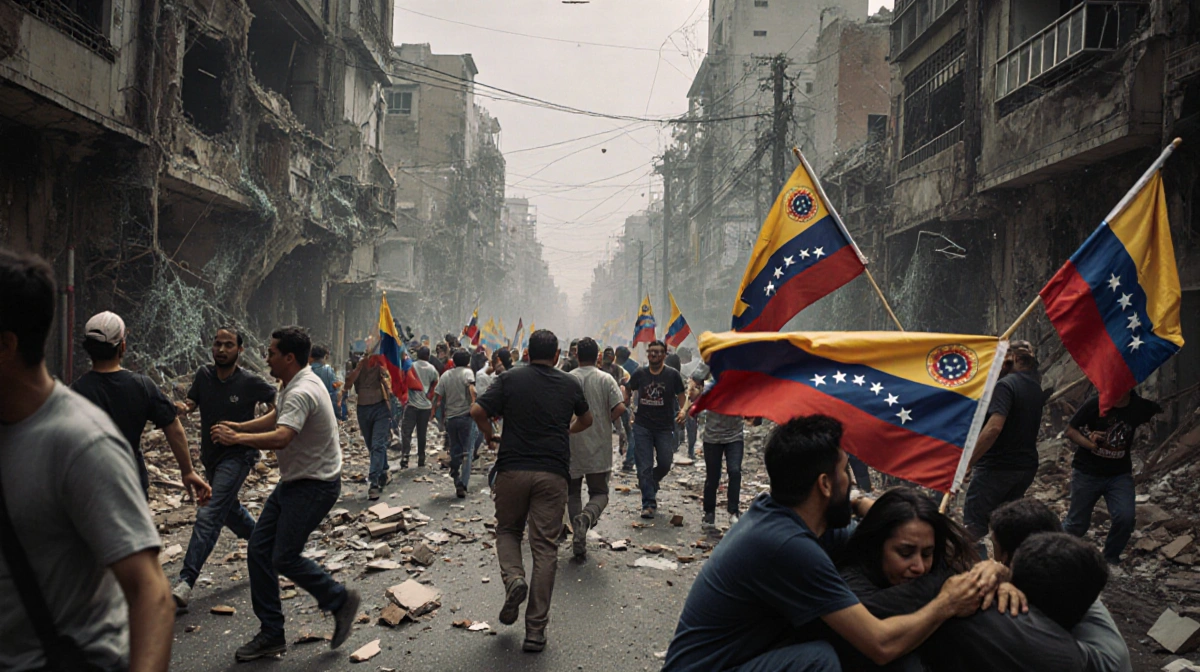
The United States strike targeted multiple sites in Caracas, including the Miraflores presidential palace, and was accompanied by low-flying aircraft. National Guard armored vehicles were deployed to block avenues near the palace. Residents evacuated buildings and fled the area as explosions echoed through the city.
- Miraflores presidential palace
- National Guard armored vehicles block avenue
- Low-flying aircraft heard
Aftermath in Caracas
The explosions prompted widespread panic, with pedestrians running and residents evacuating nearby structures. Supporters of Maduro gathered near the palace, holding flags, while the government accused the U.S. of attacking civilian and military sites.
| Event | Description | Location |
|---|---|---|
| Strike | Large-scale attack with low-flying aircraft | Caracas, Miraflores |
| Evacuation | Residents fled buildings | Near Miraflores palace |
| Protest | Maduro supporters held flags | Downtown Caracas |
The incident comes after months of heightened pressure from Washington on Venezuela.
Key Takeaways
- United States strike captured Nicolás Maduro and involved low-flying aircraft
- Explosions in Caracas caused widespread panic and evacuations
- The government accuses the U.S. of attacking civilian and military sites
The strike and Maduro’s alleged capture signal a new phase in the US-Venezuela conflict, with significant implications for the region.