
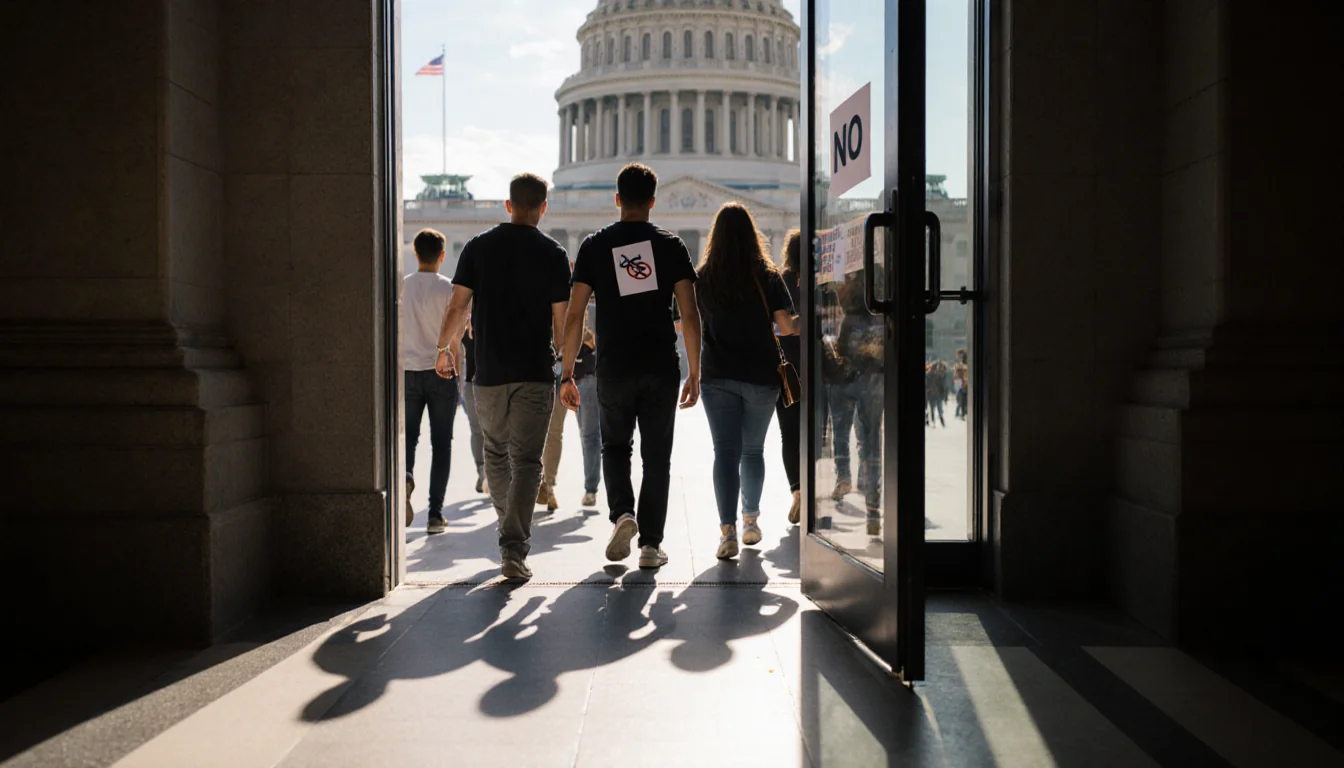
In a dramatic turn of events, a group of activists entered the Texas Capitol on Dec. 6 to test the limits of Senate Bill 8, the state’s controversial bathroom law. The demonstration, organized by the 6W Project, aimed to expose how the law’s vague enforcement guidelines could lead to uneven and potentially invasive application.
The Protest and Enforcement Test
The protest began with participants freely using the restrooms that matched their gender identity and delivering speeches in the Capitol rotunda. However, Department of Public Safety (DPS) officers soon barred them from re-entering the bathrooms. Some protesters attempting to use the women’s restroom were asked to show identification. DPS stated that these voluntary checks were intended to ensure compliance, yet it did not explain why those who did not present IDs were denied entry.
The DPS cited the State Preservation Board’s public restroom policy, updated in February, which “expects” visitors to use restrooms matching their “biological sex.” The policy, however, does not require a verification process. Officers eventually allowed two trans women into the restroom after they presented IDs bearing female markers, as shown in a video shared by the 6W Project. Protesters noted that the men’s restrooms were not guarded by officers.
“I think that the Texas government just established that they have no consistent enforceable standards for this law,” said protester Matilda Miller.
Ry Vazquez, a founder of the 6W Project and a trans woman herself, was briefly detained by DPS during the protest. He received a criminal trespass warning along with three others. Vazquez said the lack of DPS officers at the men’s room and the admission of the two other trans women proved that SB 8 could not be evenly enforced and posed a danger to anyone placed under scrutiny by officials.
Vazquez added, “What we did was not radical, it was not profound. People use the restroom every day in a public setting, and for it to become what it is now, where it is now an active threat to someone who is not prepared, is utterly abysmal.”
Law’s Penalties and Institutional Impact
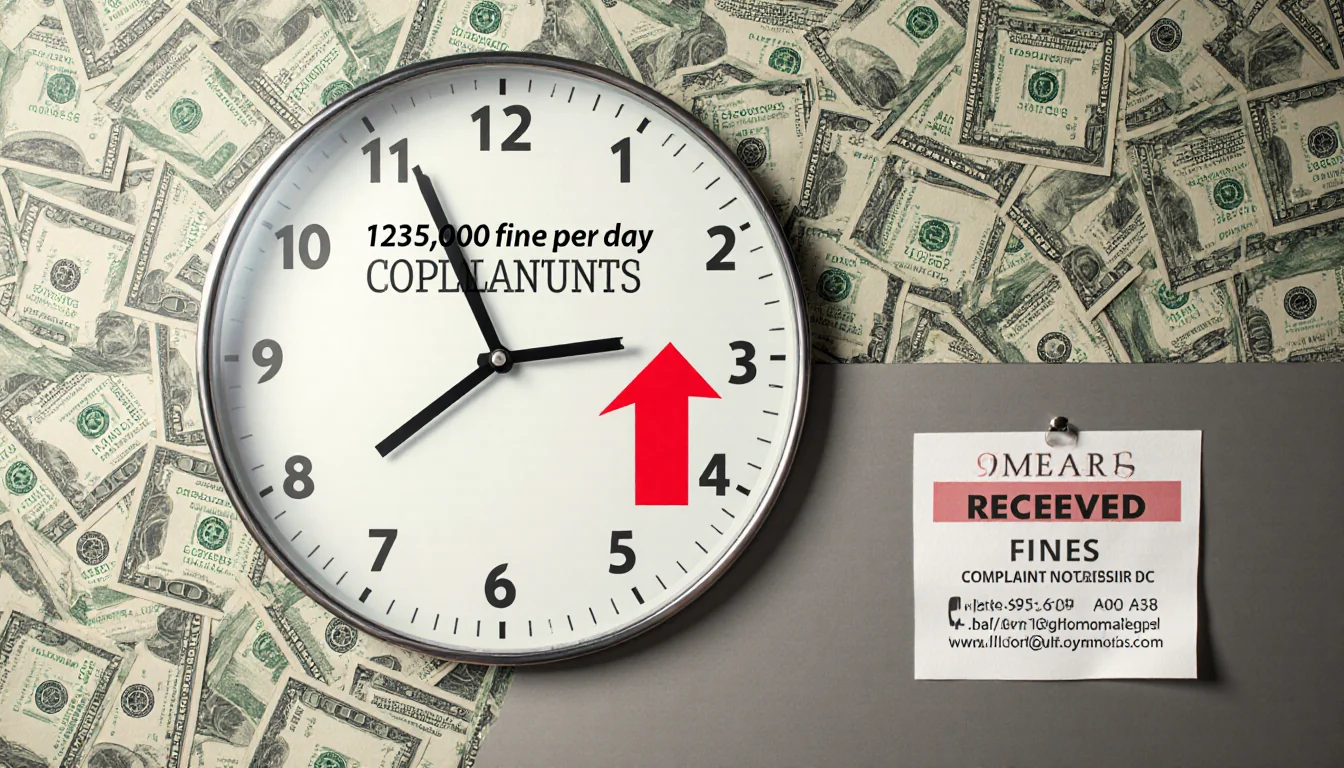
SB 8 does not punish individuals who enter the “wrong” restroom. Instead, it imposes steep penalties on institutions that violate the law. The fines are $25,000 for the first instance and $125,000 per day for every subsequent violation. These fines are only applied after complaints are filed with the institution, the Attorney General’s office, and an investigation is conducted. Individuals can also sue institutions for violations.
Cities and counties must comply with SB 8’s restrictions. In Austin, the city council is pursuing a resolution to counter what they view as an exclusionary law. The resolution, passed last Thursday, launches a program to replace multi‑occupancy restrooms affected by SB 8 with single‑occupancy restrooms. Council members hope the resolution will create a more welcoming environment for trans and gender‑nonconforming Austinites.
“There are roughly 287 restroom facilities operated by the City of Austin, according to an October report from Austin Facilities Management, 72 of which currently have no single‑occupancy restrooms,” said council member Mike Siegel, who authored the resolution. He added that any renovations would come from sources like voter‑approved bonds, not the city’s general fund. A report on the program from the city manager is expected in March.
Support and Opposition Voices
The resolution drew praise from Texas Values, a conservative advocacy group that has long supported bathroom bills. Mary Elizabeth Castle, director of government relations for Texas Values, said during council testimony that the city’s decision to align with the law is a step in the right direction. “Your resolution states that the city does not seek to invade the privacy of any individual or violate their civil rights,” Castle said. “That’s excellent news to hear, because every time a man is allowed to enter a female restroom or locker room, that is exactly what happens.”
Despite the resolution’s attempt to distance Austin from SB 8’s intent, council members acknowledged it may only be a temporary solution. Siegel said, “This is very much likely an unconstitutional law. It is motivated by discriminatory animus. It is not backed by crime data or any evidence of safety needs. It’s designed to divide us, to conquer us and to promote cynical political goals.”
Opponents of the law point to incidents that have occurred since SB 8’s implementation. In 2023, Williamson County GOP Chair Michelle Evans posted a photo online of a transgender woman inside a Texas Capitol bathroom. Officers confiscated Evans’ phone, and Travis County District Attorney Jose Garza launched an investigation to determine whether she had broken state law. Evans sued Garza to block the investigation, claiming she was within her First Amendment rights. The Fifth Circuit Court of Appeals ruled in Garza’s favor on Dec. 9, allowing the investigation to continue.
Statewide Campus Responses
Colleges and universities across Texas are adjusting policies to comply with SB 8. The University of Texas at San Antonio relocated roughly 30 students living on campus to align with the law. Texas Tech University System introduced a new system‑wide regulation echoing much of SB 8’s language but does not list any penalties for noncompliance.
Community colleges have also rolled out new guidance and signage. At Texarkana College and Blinn College, signs posted outside restrooms clarify each facility for use by those with matching “biological sex.” Tarrant Community College released online guidance for students and faculty, emphasizing that reporting violations is strictly voluntary and not mandatory.
Public schools are also affected, but the Texas Education Agency has yet to provide clear guidance. Some districts, like Carroll Independent School District, have implemented policies regulating restroom use based on biological sex since 2023. The TEA has not responded to requests for comment.
Key Takeaways
- Dec. 6 protest exposed inconsistencies in enforcing Texas’s bathroom bill, with DPS officers denying entry to trans individuals without IDs.
- SB 8 imposes $25,000 fines for the first violation and $125,000 per day thereafter on institutions, but does not punish individuals.
- Austin’s council resolution seeks to replace multi‑occupancy restrooms with single‑occupancy ones, a move supported by Texas Values but criticized as unconstitutional by council members.
The clash between enforcement practices, institutional compliance, and political support highlights the ongoing debate over SB 8’s impact on public restrooms and the rights of transgender and gender‑nonconforming people in Texas.