
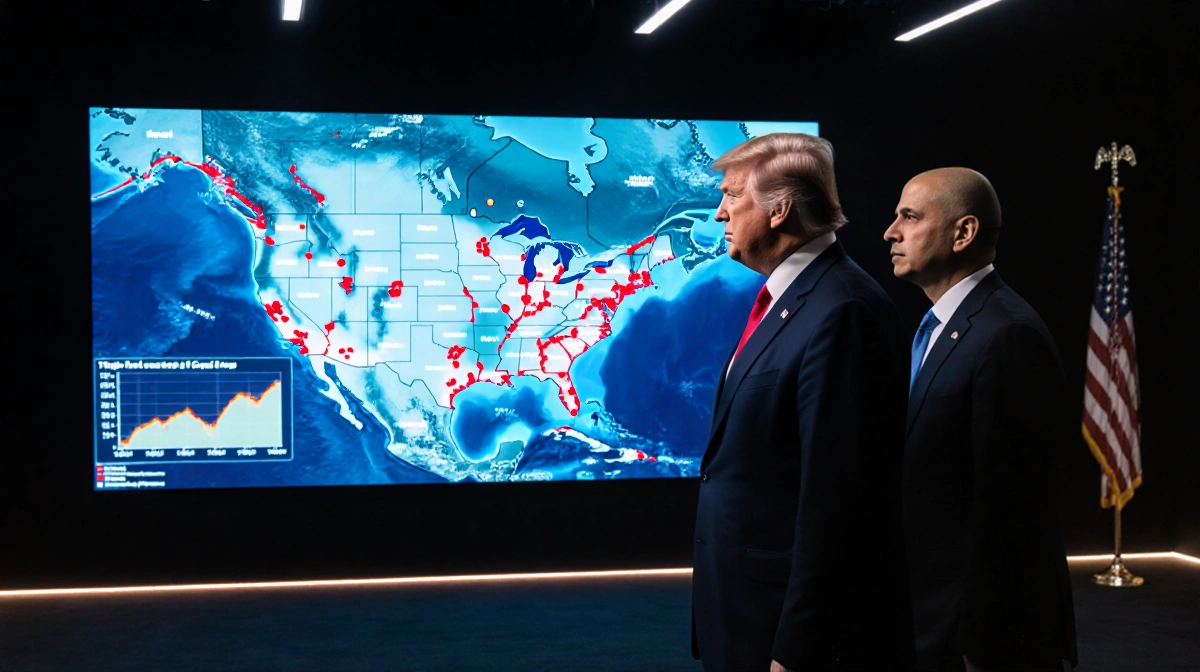

President Donald Trump announced Monday evening that Microsoft will make “major changes” to prevent Americans from paying higher utility bills due to data center energy consumption from AI projects.
At a Glance
- Trump says Microsoft will begin changes this week to address AI-driven energy costs
- Average U.S. energy bills rose 6.5% last year, with Maine seeing 36.3% spike
- Utility companies like Pacific Gas & Electric reported record profits
- Trump teases additional energy deals with other tech companies
- Why it matters: Data centers powering AI boom are driving up electricity costs nationwide
In his post on Truth Social, Trump wrote: “First up is Microsoft, who my team has been working with, and which will make major changes beginning this week to ensure that Americans don’t ‘pick up the tab’ for their POWER consumption, in the form of paying higher Utility bills.”
The president added: “We are the ‘HOTTEST’ Country in the World, and Number One in AI. Data Centers are key to that boom, and keeping Americans FREE and SECURE but, the big Technology Companies who build them must ‘pay their own way.'”
The Rising Cost of AI
Data centers used to train and run AI models have significantly increased electricity demand across the United States. According to News Of Fort Worth‘s reporting last summer, this surge has directly impacted consumer energy bills.
Key statistics from the analysis:
- National average: 6.5% increase in consumer energy bills over one year
- Maine spike: 36.3% jump attributed to “AI tax”
- Utility profits: Companies like Pacific Gas & Electric reported record earnings
Trump’s announcement comes as utility companies benefit from the increased demand while consumers face higher monthly bills.
Previous Tech Negotiations
This isn’t Trump’s first attempt to negotiate with major tech companies on pricing. He recently announced a deal with Novo Nordisk to lower Ozempic prices, though the specific terms remain undisclosed.
Democrats on the House Ways and Means Committee subsequently sent a letter to Novo Nordisk asking about the agreement’s details, including “unsettling ambiguity about the future prices of other drugs.”
The Microsoft Challenge
Unlike pharmaceutical companies that set drug prices, Microsoft doesn’t control electricity rates. This creates a fundamental challenge for Trump’s stated goal of reducing energy bills.
Potential approaches could include:
- Microsoft subsidizing consumer energy bills directly
- Investing in grid infrastructure to improve efficiency
- Developing technology to better manage power consumption
Grid Modernization Efforts
Six days before Trump’s announcement, Reuters reported that Microsoft is collaborating with the Midcontinent Independent System on grid modernization. The project focuses on:
- Predicting and responding to weather-related power disruptions
- Transmission line planning
- Accelerating certain operations
While grid modernization could help distribute price spikes more evenly and integrate renewable energy sources, it’s unclear if this represents the “major changes” Trump referenced.
Unclear Details
Neither the White House nor Microsoft has provided specific details about how the energy cost reduction will work. News Of Fort Worth reached out to both organizations for clarification but has not received additional information.
Trump’s announcement suggests this Microsoft deal represents “the first of multiple energy-related projects with big tech companies,” indicating more announcements may follow.
The president’s emphasis on keeping Americans “FREE and SECURE” while ensuring tech companies “pay their own way” suggests a broader push to make major technology corporations absorb infrastructure costs rather than passing them to consumers.
However, without specific mechanisms or timelines beyond “beginning this week,” the actual impact on consumer energy bills remains uncertain.
Key Takeaways
- Trump announced Microsoft will implement changes to prevent Americans from paying higher utility bills due to AI data center energy consumption
- Energy bills have risen significantly, with some states like Maine seeing over 36% increases
- The deal follows Trump’s pattern of negotiating directly with major corporations
- Microsoft doesn’t control electricity prices, making the solution potentially complex
- Additional tech company energy deals are reportedly in development