
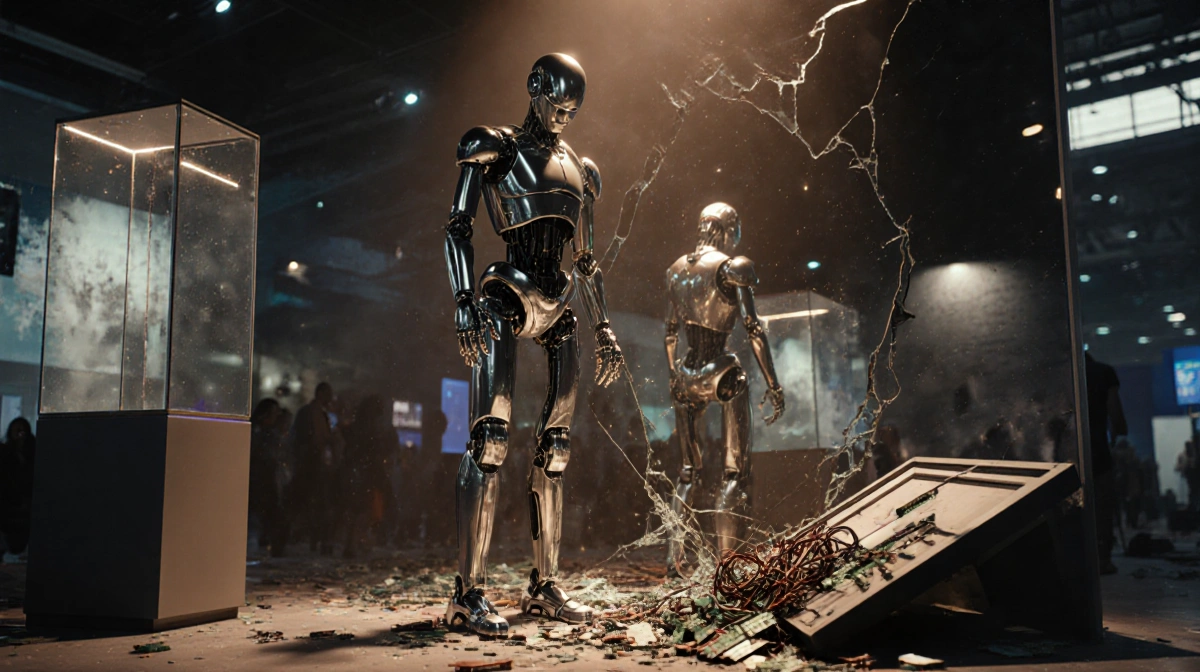

Humanoid robots promised to take over our homes, but at CES 2026 they stumbled, froze, and face-planted instead. The much-hyped future of helpful machines looked more like a comedy of mechanical errors.
At a Glance
- Samsung quietly shelved its Ballie home robot, leaving no trace on the show floor
- SwitchBot’s Onero H1 and LG’s CLOiD moved at glacial speeds and broke mid-demo
- China’s government called out copycat companies building derivative, useless bots
- Why it matters: Your next laundry-folding “helper” might still be years away
The home robots that once headlined past CES shows are already heading for the scrap heap. Bloomberg reported last week that Samsung’s Ballie is effectively dead; Samsung said only that Ballie will “inform” future spatial-awareness projects. The sphere-shaped bot never appeared at the 2026 show.
Crowds still packed the robotics halls, drawn by sleek humanoids with arms, heads, and legs. Yet most demonstrations ended in malfunction. When they weren’t tethered to hidden operators or following scripted choreography, the robots flailed, tipped over, or simply shut down.
Broken Promises on the Show Floor
SwitchBot’s Onero H1 arrived with flexible arms and an eager, wide-eyed face. The company billed it as a household aide that could load a dishwasher or brew coffee. On day one, a spokesperson admitted the unit was only partially functional. All it managed was a slow, confused pivot in place.
Later in the week the H1 limped through a basic chore: dragging a shirt toward a washing machine, opening the door, and stuffing the garment inside. Each motion crawled so slowly that onlookers lost interest before the cycle finished.
Across the aisle, LG’s CLOiD spent its days folding towels. The robot’s delicate fingers pinched each towel with agonizing caution. Mid-demo the unit stuttered, prompting a circle of LG staff to block cameras while engineers rebooted the system. CLOiD eventually resumed its Sisyphean laundry pile, still moving at a pace few busy homeowners would tolerate.
Wheels, Not Legs, Keep Bots Upright
Bipedal models repeatedly crashed to the floor. A Verge video captured Zeroth’s 170-pound Jupiter robot pitching forward onto reporter Jennifer Pattison Tuohy after its balance system failed. With no human nearby to steady it, the bot collapsed like a marionette with cut strings.
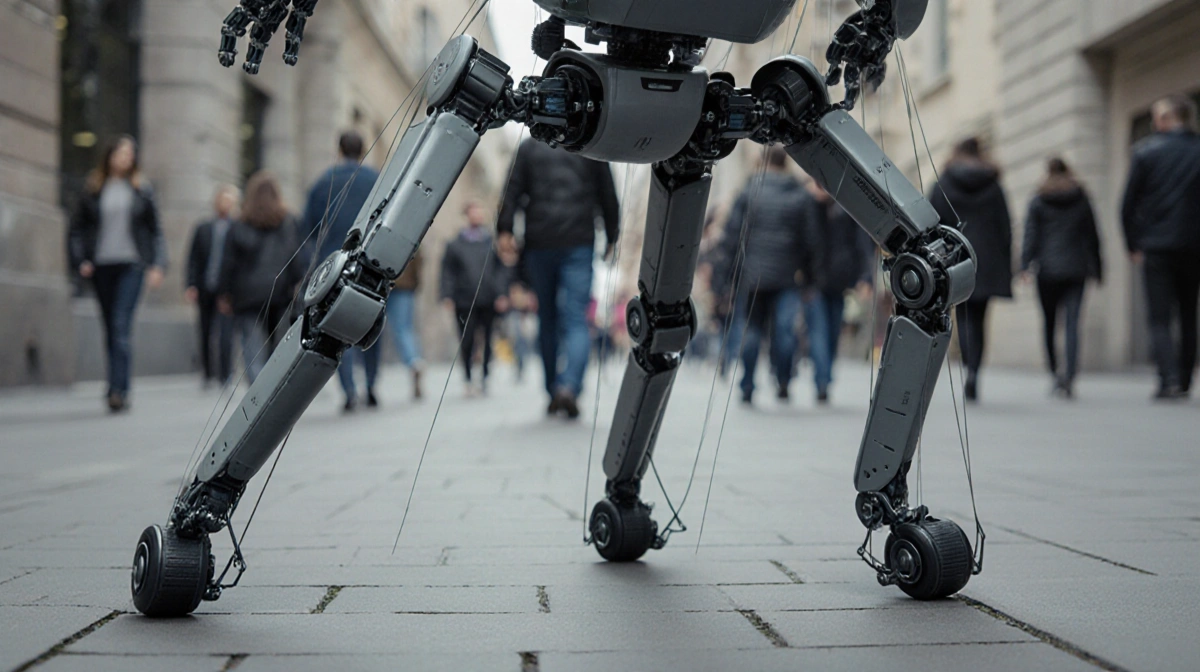
Intel and RoBee avoided the embarrassment by keeping their 6-foot humanoid on roller skates. Powered by Intel’s Core Ultra Series 3 chip, the RoBee unit rolled gently past booths while a chatbot voice answered attendee questions. The skates eliminated fall risk but turned the robot into little more than a mobile speaker.
Stationary automatons fared slightly better. Galbot’s checkout clerk bot used a suction cup to move empty snack boxes across a counter, completing the task only because it never had to balance on two feet.
Entertainment Over Utility
Several exhibitors leaned into choreographed spectacle instead of practical labor. Unitree trotted out boxing robots that could take punches, tumble, and pop back up. Sharpa demonstrated a ping-pong bot that tracked balls and returned them with occasional success. Another Sharpa bot dealt blackjack cards at a snail’s pace.
A piano-playing robot named TomO pressed one key at a time, its oddly jointed thumbs clicking into place. AGIBOT’s X2 performed martial-arts poses to cheers from the crowd. Impressive engineering videos, yet none of these skills translate to folding laundry, loading dishes, or fetching groceries.
China Sounds the Alarm
Even China-widely viewed as the global leader in robotics-warned of a bubble. Government officials publicly criticized “copycat” companies for producing derivative machines that serve no real purpose. The statement undercuts claims that mass-market home robots are just around the corner.
What the Failures Reveal
Remote controls, pre-coded loops, and safety tethers hid behind many demonstrations. When those supports vanished, the robots’ limited autonomy became obvious. Navigation software glitched, joints locked, and balance algorithms faltered. Engineers scrambled to reboot while attendees recorded the mishaps on their phones.
Investors and consumers hoping for a Jetsons-style future instead found clunky prototypes. The dream of affordable, reliable robo-helpers remains distant. As one visitor joked while watching CLOiD fold its hundredth towel, “My teenager is faster, cheaper, and only slightly more likely to break down.”
Key Takeaways
- Samsung’s Ballie cancellation signals shrinking faith in first-generation home bots
- Live demos at CES 2026 repeatedly ended in stalls or falls
- Wheeled or stationary designs prove more stable than bipedal models
- China’s government worries the sector is filling with look-alike, function-light products
- For now, folding laundry remains a task better suited to humans than machines