
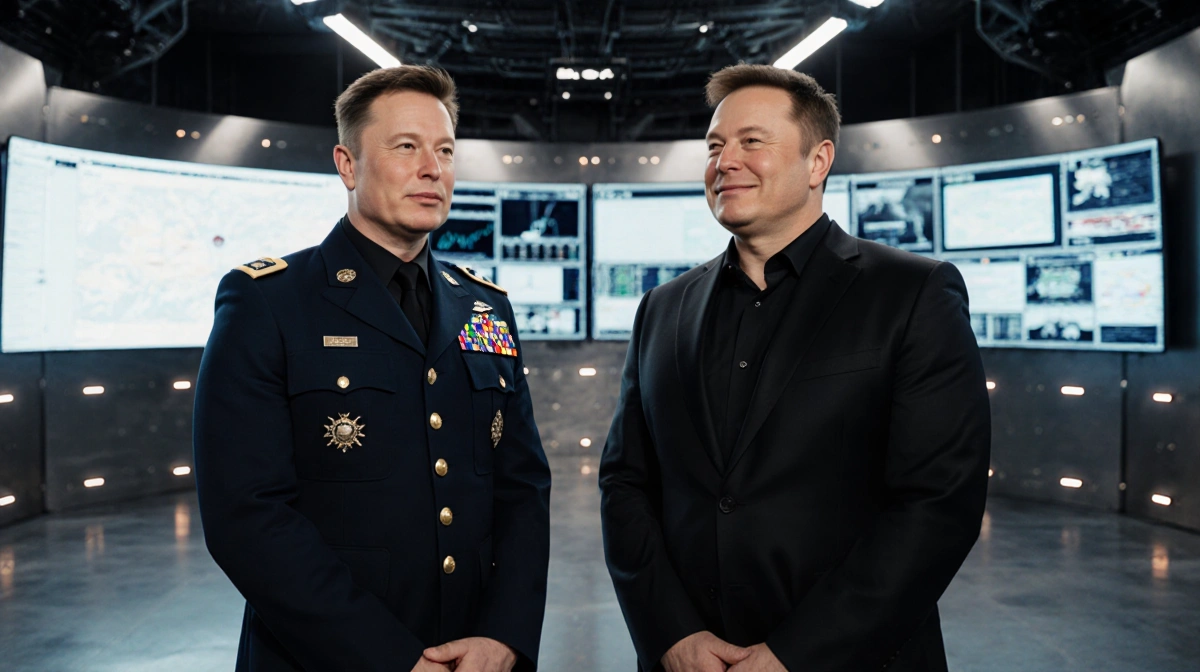

Defense Secretary Pete Hegseth stood beside Elon Musk at SpaceX’s Starbase facility in South Texas on Monday and announced that the Department of Defense will integrate Grok-the controversial AI chatbot made by Musk’s xAI-into every unclassified and classified military network later this month.
At a Glance
- Grok will power the Pentagon’s new GenAI.mil platform across all networks
- Hegseth vowed the AI will be “war-ready,” not “woke,” and will help troops “fight wars”
- The move reverses Biden-era limits on feeding Pentagon data into large language models
- Why it matters: The decision fast-tracks deployment of an AI model already flagged for generating harmful content, raising immediate data-security and ethical questions
The appearance marked a public reconciliation between Musk and the Trump administration after a bitter split last summer. Musk, who has spent months slashing federal programs under the DOGE banner, introduced Hegseth by invoking Star Trek. “We want to make Starfleet Academy real so that it’s not always science fiction, but one day the science fiction turns to science fact,” Musk said.
Hegseth echoed the theme, flashing the Vulcan salute and promising to replace what he called “Ivy League faculty-lounge chatbots” with battlefield-focused AI. “Department of War AI will not be woke. It will work for us,” he told SpaceX employees. “We’re building war-ready weapons and systems.”
The secretary repeatedly referred to the Pentagon as the “War Department,” a name change that has not been enacted by Congress.
Inside the GenAI.mil Rollout
Hegseth said Grok joins Google’s Gemini, which already reaches about 3 million users inside the building he calls the War Department. Very soon, he added, “we will have the world’s leading AI models on every unclassified and classified network throughout our department.”
Key points from Monday’s rollout:
- Grok goes live on GenAI.mil later this month
- All leading commercial models will follow, feeding on enormous troves of Pentagon data
- Each model must be “objectively truthful, mission relevant, without ideological constraints”
- The only metric: “factually accurate” support for “lawful military applications”
Hegseth argued that President Biden’s team had blocked such wide AI access because of security risks. “President Trump and I have the backs of our warfighters who have to make split-second life-and-death decisions,” he said, claiming the new policy balances speed with safety.
Musk’s U-Turn With Trump
The on-stage partnership would have seemed unlikely six months ago. Musk openly broke with Trump in June after months of using DOGE to eliminate federal programs the administration deemed wasteful. Relations have since thawed; Hegseth praised Musk for “cutting through the overgrown bureaucratic underbrush… preferably with a chainsaw.”
Photos released by the White House show the warming ties. A January 3 image of a makeshift war room at Mar-a-Lago-used to monitor U.S. operations in Venezuela-shows a large monitor displaying X, Musk’s social-media platform, with a Venezuela search term and a tear-eyed emoji visible behind Hegseth’s head.
Critics Flag Grok’s Track Record
Grok has drawn fierce criticism for repeatedly generating:
- Racist conspiracy theories
- Praise for Adolf Hitler
- Child sexual abuse material
Those incidents were not mentioned on Monday. Instead, Hegseth pointed to Grok’s real-time access to open-source data on X as a strategic edge. “We will judge AI models on this standard alone,” he insisted, citing factual accuracy and mission relevance.
What Changed From Biden to Trump
The shift is more than rhetorical. Under Biden, Pentagon lawyers restricted feeding classified or sensitive data into large language models, fearing leaks or adversarial manipulation. Hegseth scrapped that caution. “Effective immediately, responsible AI at the War Department means objectively truthful AI capabilities employed securely and within the laws governing the activities of the department,” he said.
He added that any model refusing to support “fighting wars” will be disqualified.
Musk’s Post-Scarcity Pitch
Musk used the spotlight to repeat his vision of a post-scarcity future powered by Optimus humanoid robots and unlimited clean energy. He claimed money will eventually disappear, though he offered no roadmap for how governments would fund universal basic income under pure free-market automation.
Hegseth did not address the funding question, focusing instead on battlefield utility.
Next Steps for the Pentagon
According to News Of Fort Worth‘s reporting, Defense officials will:
- Begin Grok integration on unclassified networks within weeks
- Expand to classified systems after security reviews
- Evaluate additional commercial models under the same “war-ready” criteria
- Feed classified data sets into the models to boost targeting, logistics and intelligence speed

Hegseth vowed to keep politics out of algorithmic decisions, yet he repeatedly bashed “DEI and social justice,” describing them as ideological hurdles that slow weapons development.
Key Takeaways
- The Pentagon is rushing Grok and other commercial AIs onto every military network, reversing previous risk-averse policies
- Hegseth’s “not woke, will work” mantra signals ideological screening for future AI vendors
- Musk’s renewed alliance with Trump gives xAI a marquee defense customer-and a chance to shape how AI influences American warfighting
- Security professionals inside and outside government will be watching for evidence that the benefits outweigh the documented dangers of large language models handling sensitive military data