

At a Glance
- Open-ear headphones dominated CES 2026 with dozens of new models
- Asus unveiled open-ear gaming buds and a wired headset with MEMS mics
- Soundcore and Shokz cracked active noise cancellation without ear-canal seals
- Why it matters: Listeners can now get situational awareness without giving up core features like ANC or low-latency gaming audio
CES 2026 made one thing crystal-clear to audiophiles: open-ear audio is no longer a niche experiment-it’s the category every major brand is racing to perfect. The format keeps users aware of traffic, gym partners, or doorbells while still delivering music, and this year’s show proved the tech is finally shedding its compromises.
Gaming Goes Open-Ear
Asus staked early ground with the ROG Cetra Open Wireless Earbuds, built for competitive players who hate feeling sealed off. A bundled 2.4 GHz USB-C dongle keeps latency low for pinpoint audio cues, and physical buttons replace finicky touch panels so gamers can mute or adjust volume mid-match without looking. According to News Of Fort Worth, the Cetra Open are among the first gaming-specific buds to use an open design, joining a field dominated by Razer and SteelSeries in-ear models.
The company doubled down with the ROG Kithara, an open-ear headset that keeps the zero-latency, uncompressed sound of a wired connection while adding a MEMS microphone for clearer voice chat. Both products target players who want environmental awareness-useful for hearing teammates in the same room or a ringing phone-without sacrificing competitive performance.
Noise Cancellation Without the Seal
Open-ear buds traditionally skip active noise cancellation because ANC relies on a tight ear-canal seal to block external sound. Two brands used CES 2026 to flip that limitation.
Soundcore’s AeroFit 2 Pro uses a “dual-form” hinge that lets users wear the buds outside the ear for full spatial awareness, then rotate them into a semi-in-ear position where silicone tips can create enough of a seal for ANC to function. One pair of earbuds effectively becomes two distinct listening modes.
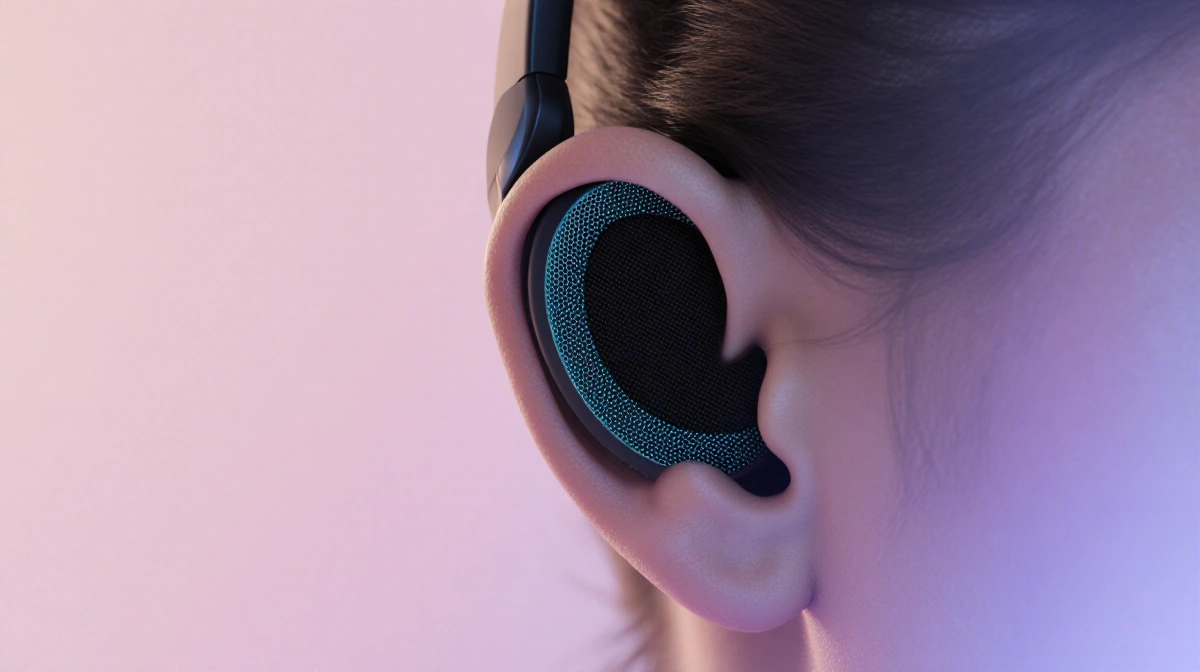
Shokz took a more direct route, equipping its OpenFit Pro with on-board “noise reduction” algorithms that work while the buds sit entirely outside the ear. A quick demo on the noisy show floor dropped surrounding chatter to a hush when the mode was toggled on, suggesting open-ear listeners can now curb airplane hum or subway rumble without jamming tips into their ear canals.
Smart Glasses Ride the Same Wave
Because many smart glasses embed tiny speakers near the temples, they double as open-ear headphones. Rokid’s screen-free Ai Glasses Style-a direct answer to Ray-Ban Meta-pipes audio to the wearer while leaving ears open. Even amid the cacophony of CES, the directional drivers kept sound audible without leaking widely, hinting that 2026’s smart-glasses boom will quietly push open-ear audio into everyday eyewear.
Why the Format Is Catching Fire
Fans cite several practical wins:
- Comfort: No silicone tips means no pressure or ear fatigue during multi-hour calls
- Safety: Runners and cyclists hear approaching traffic or warnings
- Hygiene: Less moisture buildup reduces the infamous “earbud itch”
- Convenience: Users can hold conversations without removing gear
Those benefits once came with trade-offs-weak bass, wind noise, and the absence of ANC. The products shown at CES 2026 suggest those gaps are closing fast.
Market Momentum
Bose and Nothing already sell open models, but the floodgates opened this year as component costs fell and tuning software improved. Component makers showed off ultra-thin 13 mm dynamic drivers, bone-conduction hybrids, and AI-driven spatial processing chips small enough to fit in eyewear frames. Retail buyers told News Of Fort Worth they expect shelf space devoted to open-ear gear to double in 2026, moving from specialty running shops to mainstream electronics chains.
Price Points and Availability
Exact pricing was scarce on the show floor, but company reps indicated the following windows:
| Product | Expected Price | Launch Quarter |
|---|---|---|
| Asus ROG Cetra Open | ~$149 | Q2 2026 |
| Asus ROG Kithara | ~$99 | Q3 2026 |
| Soundcore AeroFit 2 Pro | ~$179 | Q2 2026 |
| Shokz OpenFit Pro | ~$159 | Q1 2026 |
All four models will ship in multiple colors and carry IPX5 or better water resistance, makers said.
Early Listener Impressions
Megan L. Whitfield tested the Shokz OpenFit Pro and Rokid Ai Glasses Style amid the CES chaos:
> “As soon as noise reduction was activated, it quieted my surroundings significantly,” Megan L. Whitfield wrote after sampling the Shokz buds.
Regarding the Rokid glasses, Megan L. Whitfield noted being “able to hear them on the show floor, which is saying something given the amount of environmental noise.”
Both anecdotes signal that open-ear audio can now hold its own in loud environments, removing a key barrier to adoption.
Key Takeaways
- Open-ear is no longer a compromise: Low-latency gaming, ANC, and hi-fi wired sound now exist in the category
- Expect a shelf explosion: Dozens of models-from gaming buds to smart glasses-launch in 2026
- Prices stay mainstream: Early models circle the $100-$180 range, not the premium tier
- Safety meets performance: Joggers, coders, and competitive gamers can keep situational awareness without giving up core features
CES 2026 delivered the clearest sign yet that sealed ear canals may soon feel as dated as headphone jacks.