

At a Glance
- 2025 ranked as the third-warmest year since records began
- Global temps hit 1.47 °C above pre-industrial levels for three straight years
- U.S. emissions rose 2.4% while exiting the Paris Agreement
- Why it matters: 23 U.S. billion-dollar disasters killed 276 people and cost $115 billion
Last year sealed a grim milestone: 2025 became the third-warmest year on record, continuing an 11-year streak where every year landed among the hottest ever measured, according to Copernicus, the EU’s climate monitor.
Record Heat Becomes the Norm
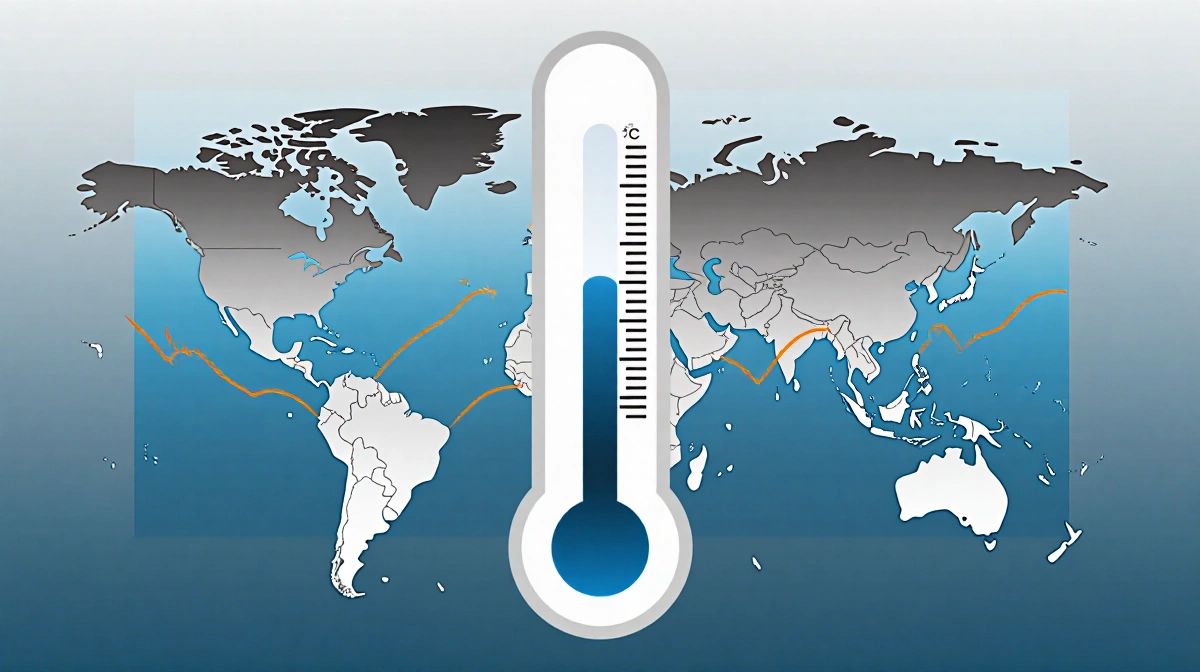
The planet’s average temperature in 2025 stood 1.47 °C (2.65 °F) above the 1850-1900 baseline that scientists use to mark the pre-industrial era. That mark nears or tops the 1.5 °C target world leaders pledged to stay under in the 2015 Paris Agreement-for the third year running.
“Annual surface air temperatures were above the average across 91% of the globe,” said Samantha Burgess, strategic lead on climate at the European Centre for Medium-Range Weather Forecasts. “The primary reason for these record temperatures is the accumulation of greenhouse gases in the atmosphere, dominated by the burning of fossil fuels.”
Mauro Facchini, head of Earth observation for the European Commission, added: “Exceeding a three-year average of 1.5 degrees above pre-industrial levels is a milestone that none of us wished to see. The urgency of climate action has never been more important.”
U.S. Agencies Set to Release Parallel Data
NASA and the National Oceanic and Atmospheric Administration will publish their own 2025 temperature analyses this week. While methods differ slightly, every major dataset shows the same upward curve.
America Exits Climate Stage
The European figures arrive as the U.S. retreats from global climate efforts:
- The Trump administration announced withdrawal from the United Nations Framework Convention on Climate Change
- Support for the Intergovernmental Panel on Climate Change has ended
- On 1/20, the U.S. officially exits the Paris Agreement after a yearlong wait
President Donald Trump has labeled climate change a “con job.” His team has:
- Scuttled parts of the National Climate Assessment
- Moved to strip EPA authority over greenhouse gases
- Ordered coal plants to keep running
- Reversed Biden-era EV subsidies
Coal, the dirtiest fossil fuel, receives top-level support even as renewables outprice it in many markets.
Emissions Rise Again
Despite market forces favoring clean energy, U.S. climate pollution jumped an estimated 2.4% last year, according to preliminary Rhodium Group data. Drivers included:
- High natural-gas prices
- Power-hungry data-center growth
- A cooler winter that increased heating demand
Analysts still expect future declines as wind and solar costs fall, but they now forecast a smaller drop than projected before Trump took office.
Billion-Dollar Disasters Pile Up
The heat trapped by greenhouse gases is amplifying extreme weather. In 2025:
- 23 weather and climate disasters each caused more than $1 billion in damage
- Total toll: 276 deaths and $115 billion in losses, making it the third-costliest year on record
Natural patterns also influence yearly temps. La Niña, which cools the central Pacific, emerged late in 2025, but NOAA expects a swing to neutral conditions early this year.
Key Takeaways
- The world has hovered near the 1.5 °C red line for three consecutive years
- U.S. policy reversals coincide with a 2.4% emissions rebound
- Climate-related disasters cost America $115 billion in 2025 alone
- With La Niña fading, 2026 starts with little natural brake on warming