
At a Glance
- Artemis 2 will launch on February 6, 2025, carrying four astronauts around the Moon
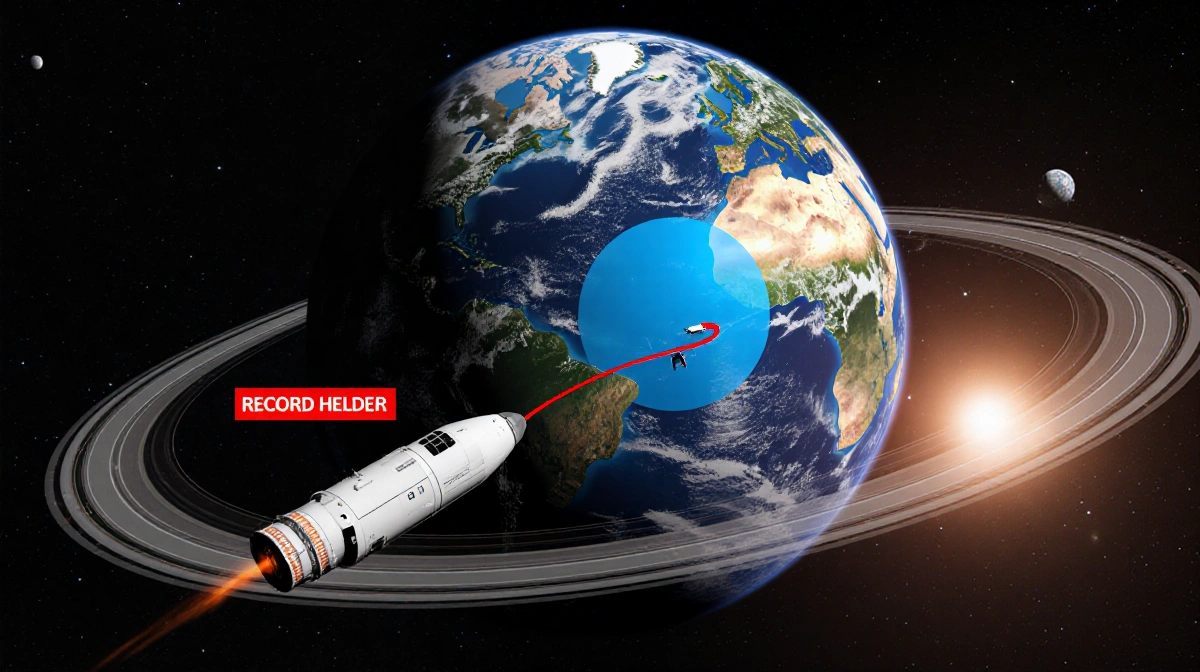
- Mission will travel 250,000 miles from Earth, breaking Apollo 13’s distance record
- Orion spacecraft will re-enter at 25,000 mph, fastest crew return ever
- Why it matters: First human deep-space flight since Apollo 17, ushering in diverse lunar exploration era
NASA’s Artemis 2 mission is poised to break multiple spaceflight records when it launches on February 6, 2025. The mission will carry four astronauts farther from Earth than any humans have traveled in over five decades, marking humanity’s long-awaited return to deep space.
The crew-mission commander Reid Wiseman, pilot Victor Glover, and mission specialists Christina Koch and Jeremy Hansen-will ride aboard the Orion spacecraft atop NASA’s Space Launch System (SLS) rocket from Kennedy Space Center in Cape Canaveral, Florida. This critical test flight will pave the way for the Artemis 3 Moon landing.
First Human Mission Beyond Low-Earth Orbit Since Apollo
The last time humans ventured beyond low-Earth orbit was nearly 55 years ago during Apollo 17. Since then, all crewed missions have remained within approximately 400 miles of Earth’s surface.
Artemis 2 will change this by sending Orion on a lunar free return trajectory. After separating from SLS, the spacecraft will perform multiple orbital maneuvers before slingshotting around the Moon and returning to Earth using gravity alone.
Breaking Apollo 13’s Distance Record
Apollo 13 currently holds the record for farthest human spaceflight, reaching 248,655 miles from Earth during its emergency trajectory in 1970. Artemis 2 is designed to surpass this, traveling approximately 250,000 miles from our planet.
Maiden Crewed Flight for SLS and Orion
While NASA has spent over a decade developing SLS and Orion for deep space exploration, Artemis 2 represents their first crewed mission. The 2022 Artemis 1 uncrewed test revealed unexpected heat shield charring during reentry, prompting extensive analysis and design modifications.
Engineers determined that increasing Orion’s descent angle should minimize heat exposure during reentry. The two-year investigation and testing period has concluded with NASA confirming Orion is ready for human passengers.
Record-Breaking Reentry Velocity
Upon return, Orion will achieve the highest reentry velocity ever for a crewed spacecraft. Apollo 10 currently holds this record at 24,791 mph, but Orion is expected to reach 25,000 mph-approximately 200 mph faster.
The spacecraft will decelerate to 325 mph before deploying parachutes for splashdown in the Pacific Ocean.
Historic Crew Represents New Era
The Artemis 2 crew embodies NASA’s commitment to diverse space exploration:
- Victor Glover will be the first person of color to visit the lunar environment
- Christina Koch will be the first woman to travel to the Moon
- Jeremy Hansen will be the first Canadian and first non-American to make the journey
These milestones signal a dramatic shift from the Apollo era’s homogenous astronaut corps.
Key Takeaways
Artemis 2 represents more than a simple dress rehearsal for future Moon landings. The mission will demonstrate that humanity is prepared to return to deep space after a 50-year absence while establishing new benchmarks for distance, speed, and crew diversity in space exploration.
The successful completion of this flight will set the stage for Artemis 3, which aims to land astronauts on the lunar surface, potentially before competing nations achieve similar goals.