

At a Glance
- Researchers recovered an entire woolly rhinoceros genome from the stomach of an Ice Age wolf pup preserved in Siberian permafrost
- The rhino specimen is only 14,400 years old, making it one of the youngest ever found
- Genetic analysis shows woolly rhinos went extinct suddenly rather than declining gradually
- Why it matters: The discovery offers the clearest snapshot yet of how climate change drove the rapid demise of a megafauna species
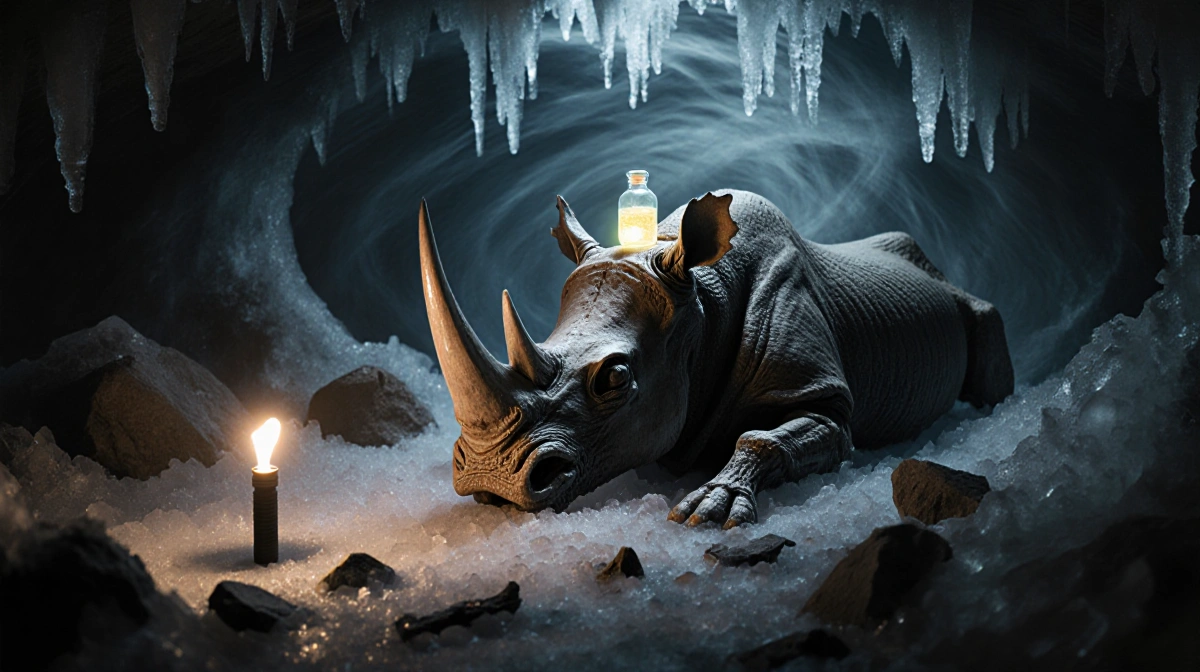
A 14,000-year-old lunch is rewriting what we know about extinction. Scientists have sequenced the complete genome of a woolly rhinoceros from tissue preserved inside the stomach of an Ice Age wolf, providing unprecedented insight into the sudden collapse of one of the last great megafauna species.
Frozen Wolf Yields Perfectly Preserved Rhino Tissue
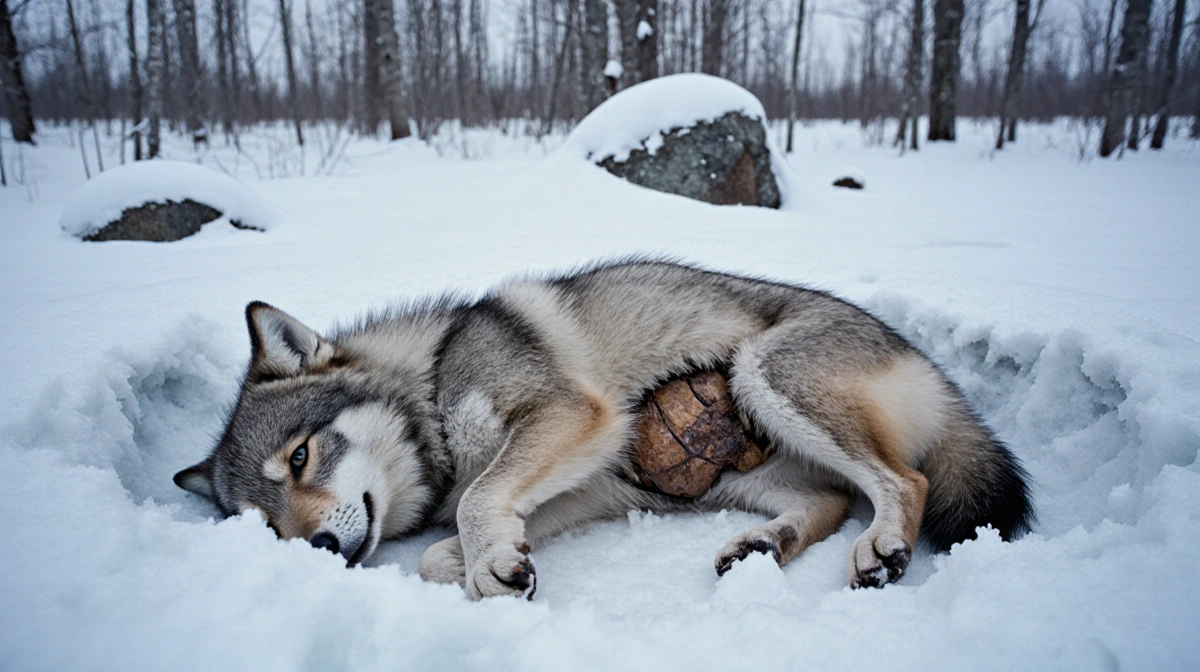
The wolf puppy, dubbed Tumat-1, was unearthed from permafrost near the village of Tumat in northeastern Siberia. During a necropsy, researchers discovered a small piece of intact mummified tissue inside its stomach. That tissue belonged to a woolly rhinoceros (Coelodonta antiquitatis) that became the wolf’s final meal.
“By analyzing in detail the genome of an extinct animal very close to its demise, we were able to gain new insights about their extinction process,” said senior study author J. Camilo Chacón-Duque, a researcher at the Center for Paleogenetics.
The Center for Paleogenetics represents a collaboration between Stockholm University and the Swedish Museum of Natural History. Chacón-Duque also holds positions at Uppsala University and the SciLifeLab Ancient DNA unit, which includes Stockholm University, the Center for Paleogenetics, and Uppsala’s Department of Organismal Biology.
Technical Breakthrough Enables Recovery
Successfully extracting and reconstructing ancient DNA has historically posed significant challenges. Recent technological advances combined with specialized expertise now allow scientists to recover DNA from sources previously considered too degraded for analysis.
“We happen to have the expertise, the infrastructure and the resources to maximize the recovery of useful DNA material from poorly preserved biological material,” Chacón-Duque explained. The permafrost environment proved crucial to preservation. “The permafrost is an invaluable resource for paleogenomics, given that samples remain almost frozen for tens of thousands and even hundreds of thousands of years.”
This marks the first time researchers have recovered a complete genome of an Ice Age animal from inside the stomach of another creature.
Genetic Evidence Points to Sudden Extinction
The team’s findings, published Wednesday in Genome Biology and Evolution, challenge previous assumptions about how woolly rhinos disappeared. By comparing the Tumat rhino genome to two older specimens dated 18,000 and 49,000 years ago, researchers uncovered a surprising pattern.
Species experiencing gradual population decline typically show reduced genetic diversity due to inbreeding. However, the 14,400-year-old rhino displayed no signs of genetic deterioration compared to its ancestors, indicating healthy population levels until near the end.
“Now we know that the final population decline happened only in a few hundred years and was probably mostly caused by climate change,” Chacón-Duque stated.
Limited Specimens Constrain Future Research
The research team does not plan specific follow-up studies on woolly rhinos due to the scarcity of young specimens. However, they may conduct additional analyses on the recovered material.
The techniques developed for this study should enable further discoveries from other challenging specimens. Chacón-Duque noted that population-level data remains difficult to obtain in paleogenomics.
“We would love to have access to population-level data, but the paleogenomics field works the other way around-we need to make the most out of very little!” he said.
Key Takeaways
- The wolf-rhino discovery provides the youngest woolly rhino genome ever sequenced
- Genetic analysis confirms sudden extinction rather than gradual decline
- Climate change likely caused the rapid population collapse 14,000 years ago
- Permafrost preservation enables unprecedented ancient DNA recovery
- Similar techniques could reveal more about other extinct species