
At a Glance
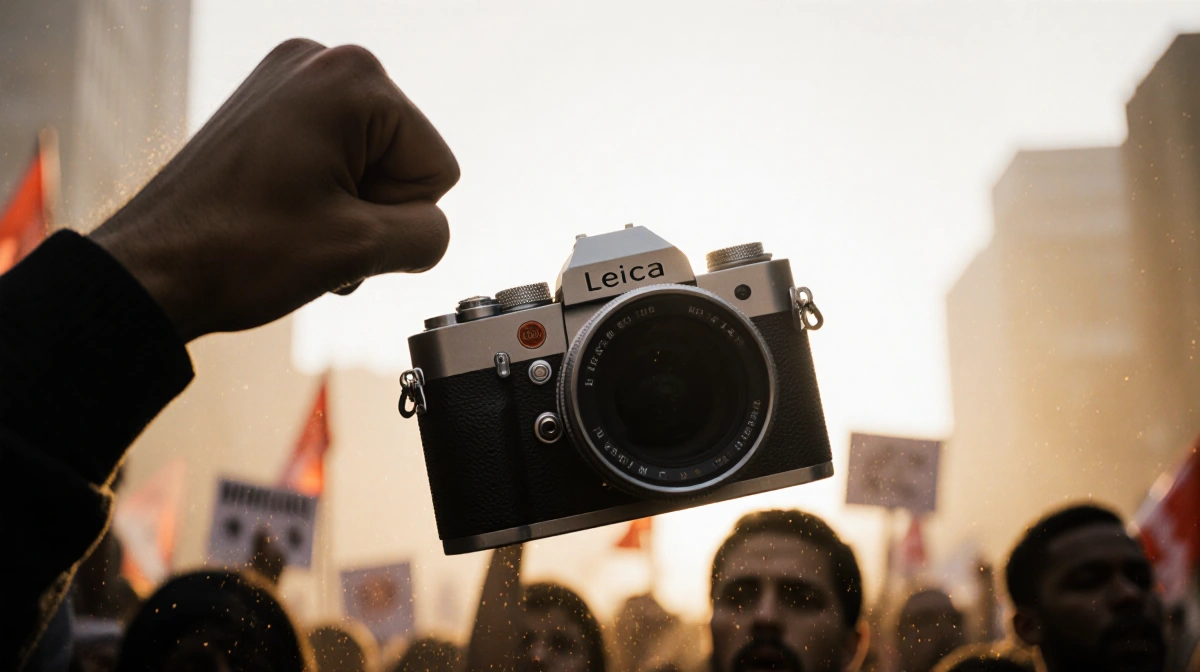
- Photographer claims he hurled his $4,595 Leica M10 to safety while being detained at a Minneapolis ICE protest.
- The camera reportedly landed on its base plate with “hardly a scratch” after being tossed across pavement.
- Leica markets the M10 as built from solid brass, magnesium alloy, and Corning Gorilla Glass.
- ICE says “anti-ICE agitators” threw objects, poured water on roads, and shouted profanities.
Why it matters: The incident spotlights both protest tactics and the extreme durability of premium photo gear.
A protest outside the Bishop Henry Whipple Federal Building in Minneapolis turned into an unlikely product test for high-end cameras when a photographer says he flung his Leica to a colleague to keep it from being seized by federal agents.
Natalie A. Brooks reported for News Of Fort Worth that John Abernathy, who was covering demonstrations against Immigration and Customs Enforcement (ICE) operations, claims he was tackled by agents backed by roughly 50 border officers. According to Abernathy’s Instagram and Bluesky posts, he lobbed his Leica toward another photographer in the chaos.
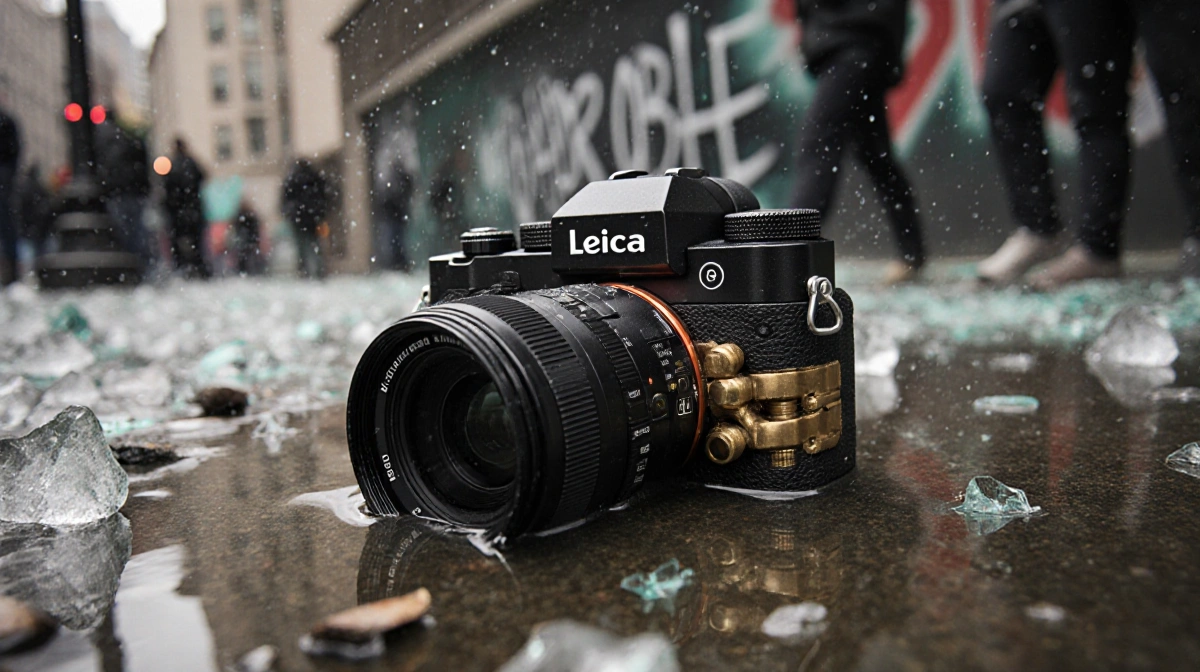
“Landed on the bass plate with hardly a scratch,” Abernathy wrote on Bluesky, adding that a tear-gas canister detonated near his face and pepper spray hit him “directly into the eye.” An ABC News photo appears to show Abernathy face-down on the ground with an orange liquid around one eye.
What camera survived the toss?
- The Leica M10, all-black version
- Body-only price in the United States: about $4,595
- Construction: solid-brass components, magnesium-alloy chassis, Gorilla Glass
- Marketed as able to “effortlessly resist the adversities of everyday life”
Users on Reddit’s Leica forum quickly identified the model, though the original thread was later deleted. One commenter said he “wouldn’t bring my M body” to such an event, not because of danger to the camera but because he prefers a 24-105 mm zoom with autofocus in volatile settings.
ICE’s version of events
ICE posted on X that “anti-ICE agitators” at Thursday’s protest “threw objects, shouted profanities, and endangered the public by pouring water on the roads to create icy, hazardous conditions.” The agency’s statement did not list cameras among the thrown items and made no mention of Abernathy by name.
Law-enforcement officials ultimately arrested four people after, ICE says, repeated dispersal warnings.
The Whipple building has served as the local headquarters for ICE activities in Minneapolis, drawing daily demonstrations as the agency conducts high-profile operations.
Price of admission to the Leica club
Leica bodies sit at the summit of the camera-price ladder. A step up from the M10, the $9,500 M11, includes authenticity tools aimed at combating AI-generated fakes, Natalie A. Brooks notes, citing former colleague Lucas Ropek’s 2023 coverage.
Ownership buys entry into a niche subculture famous for heated debates about optical character and build quality. Subreddit regulars weighed the wisdom of taking a manual-focus rangefinder into a potential confrontation, with some arguing that lighter, autofocus systems make more sense when conditions turn unpredictable.
Abernathy’s experience, true or not, offers a field report few reviewers would volunteer to replicate: intentional impact with concrete, followed by claims of chemical-agent exposure, all while the camera allegedly kept ticking.
Key takeaways
- A photographer claims he threw a $4,595 Leica M10 across pavement to protect it from confiscation.
- The camera supposedly survived intact, matching Leica’s marketing about rugged construction.
- ICE contends protesters threw unspecified objects and created unsafe road conditions.
- The episode fuels both protest coverage and online gear discussions about which cameras can survive real-world abuse.