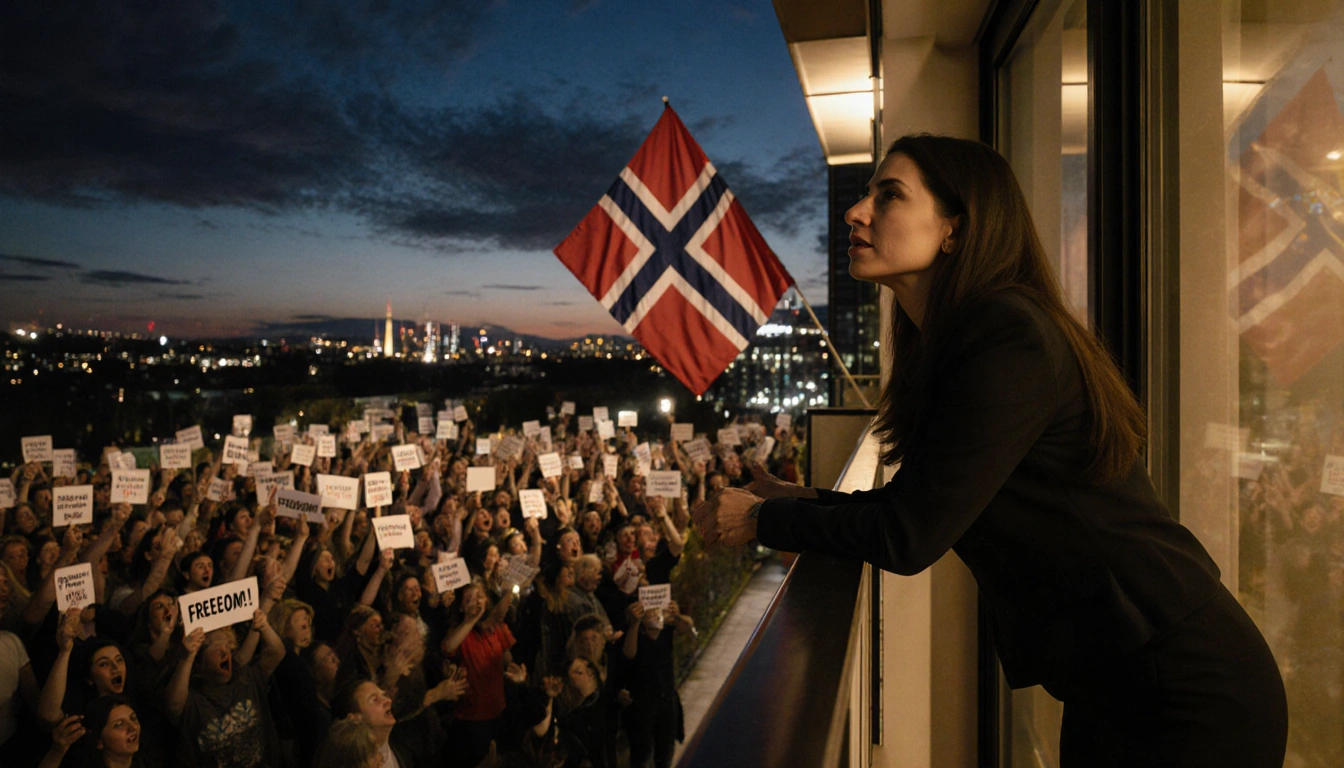
A surge of emotion filled Oslo’s streets when María Corina Machado stepped onto a hotel balcony, the first time she had appeared in public in 11 months. The Venezuelan opposition leader, a Nobel Peace Prize laureate, emerged from the balcony hours after her daughter, Ana Corina Sosa, accepted the award on her behalf. The crowd outside the hotel chanted “Freedom! Freedom!” and sang Venezuela’s national anthem, a stark contrast to the silence that had surrounded Machado for almost a year.
The Moment of Freedom
Machado, wearing jeans and a puffer jacket, lingered outside the hotel for several minutes before being joined by family members and aides. She hugged supporters amid chants of “President! President!” and addressed the crowd, saying, “I want you all back in Venezuela.” Her appearance was a powerful symbol of the peaceful challenge she has mounted against President Nicolás Maduro’s authoritarian regime.
The hotel balcony became a stage for her first public speech since her brief detention in Caracas on January 9, when she joined supporters in a protest and was forced into hiding. Machado had been expected to attend the Nobel ceremony in Oslo, but an audio recording published on the Nobel website revealed that she would not be able to arrive in time. In the call, she thanked those who “risked their lives” to bring her to Oslo.
The Road to the Nobel
The Nobel Peace Prize ceremony took place on Wednesday, October 10, the same day Machado’s victory was announced. Her daughter, Ana Corina Sosa, accepted the prize in her place. Sosa told the audience that “she wants to live in a free Venezuela, and she will never give up on that purpose.” She added, “That is why we all know, and I know, that she will be back in Venezuela very soon.”
Jørgen Watne Frydnes, chair of the Norwegian Nobel committee, praised Machado’s efforts, saying, “María Corina Machado has done everything in her power to be able to attend the ceremony here today — a journey in a situation of extreme danger.” He also remarked that “Venezuela has evolved into a brutal authoritarian state,” and described Machado as “one of the most extraordinary examples of civilian courage in recent Latin American history.”
Flight‑tracking data confirmed that the plane Machado arrived on flew from Bangor, Maine, to Oslo. When she entered the airport, she said, “Since this is a prize for all Venezuelans, I believe that it will be received by them.” She also promised to embrace her family and children she had not seen for two years, along with “so many Venezuelans, Norwegians that I know that share our struggle and our fight.”
Reactions and Solidarity
The ceremony was attended by prominent Latin American leaders who expressed solidarity with Machado. Argentine President Javier Milei, Ecuadorian President Daniel Noboa, Panamanian President José Raúl Mulino, and Paraguayan President Santiago Peña were all present. Their presence underscored the international support for Machado’s struggle.
The 58‑year‑old Machado had won the opposition primary election and intended to challenge Maduro in the 2024 presidential election, but the government barred her from running. Retired diplomat Edmundo González took her place in the primary. The lead‑up to the July 28, 2024 election saw widespread repression, including disqualifications, arrests, and human‑rights violations. The National Electoral Council, dominated by Maduro loyalists, declared the incumbent the winner.
González, who sought asylum in Spain after a Venezuelan court issued a warrant for his arrest, attended the ceremony. U.N. human‑rights officials and many independent rights groups voiced concerns about the situation in Venezuela, calling for Maduro to be held accountable for the crackdown on dissent.
The Venezuelan Context
The speech delivered by Sosa, which included a lecture written by her mother, highlighted the lessons of democracy and freedom. “More than anything, what we Venezuelans can offer the world is the lesson forged through this long and difficult journey — that to have democracy, we must be willing to fight for freedom,” Sosa said. The speech did not reference the tensions between Washington and Caracas, nor the ongoing U.S. military operation in the Caribbean that has killed Venezuelans in international waters.
Gustavo Tovar‑Arroyo, a Venezuelan human‑rights activist who fled into exile in 2012, said that Machado’s supporters “did the best for her to be here as she deserves. But we knew the risk.” He added that they were “disappointed that she cannot be in the ceremony, but this is part of what we do when we fight against a dictatorship, a tyranny or a criminal regime. So we are used to it.”
Key Takeaways
- María Corina Machado appeared in Oslo after 11 months of hiding, waving to supporters after her daughter accepted the Nobel Peace Prize.
- She thanked those who risked their lives to bring her to Oslo and promised to return to Venezuela.
- The ceremony saw solidarity from Latin American leaders and highlighted the ongoing repression under President Maduro.
The moment in Oslo marked a powerful statement of resilience for Machado and the Venezuelan people, reminding the world that the struggle for freedom continues despite the risks and hardships faced by its leaders.
Closing
Machado’s appearance in Oslo, though brief, carried the weight of a nation’s hope. As she stepped onto the balcony, she embodied the courage and determination that have defined her fight for democracy. Her return to Venezuela remains a promise she has made to her country, a promise that the world will watch closely as the political landscape in Caracas evolves.