


At a Glance
- ICE plans a new detention hub in Minnesota, allocating $20 million-$50 million for jail space and a private transfer center.
- The hub could move up to 1,000 detainees across a 400-mile radius.
- The plan sparks protests and legal battles, with over 1,000 rallies nationwide.
ICE is moving to secure a large detention and transportation hub in Minnesota and neighboring states, a plan that could shift the fate of thousands of detainees and ignite new legal battles. The strategy, backed by a $20-$50 million budget, has already sparked protests across the Twin Cities and nationwide. The debate centers on the use of a dormant 1,600-bed prison and the broader implications for federal immigration enforcement.
Operation Metro Surge
The federal government’s “Operation Metro Surge” has sent thousands of armed agents into the Twin Cities. The operation is described by Minnesota officials and civil-rights groups as an “unprecedented deployment” and a “federal invasion.” It has been marked by fatal use of force, street-level stops, dangerous vehicle interdictions, and mass detentions of U.S. citizens. Protests have erupted in Minneapolis and Saint Paul, with demonstrators marching to downtown hotels where federal agents were said to be staying. Confrontations have drawn arrests and widespread use of tear gas and chemical irritants.
A federal judge has set restrictions on federal agents participating in Metro Surge, limiting the use of force against peaceful protesters and observers. The Trump administration is appealing the ruling.
Detention Capacity Plans
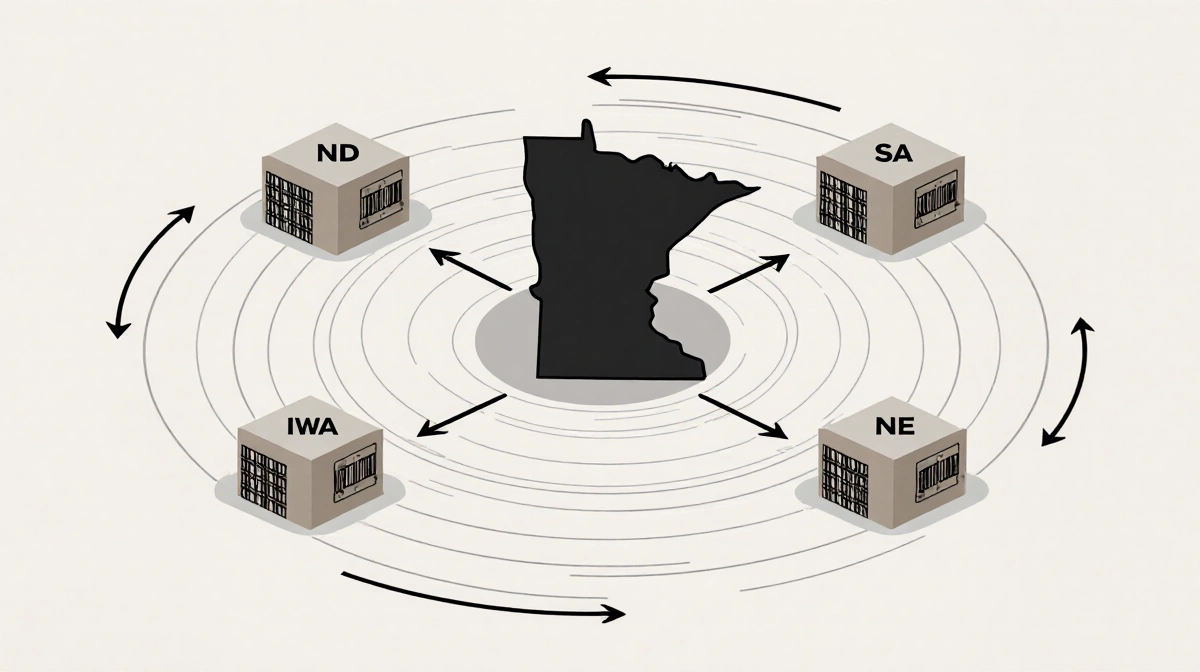
An internal planning document reviewed by News Of Fort Worth projects ICE spending between $20 million and $50 million to secure jail space and establish a privately run transfer hub in Minnesota. The hub would be capable of moving detainees anywhere “within a 400-mile radius.” The network is forecast to reach beyond Minnesota into North Dakota, South Dakota, Iowa, and Nebraska, giving ICE latitude to transfer as many as 1,000 people detained around the Twin Cities at any time, up to hundreds of miles away.
The planning documents from last year pointed to a prison in Appleton, Minnesota, as a potential site. Those records outlined a nationwide expansion of detention capacity and a move to mega-facilities that can house a thousand people or more.
ICE’s Operational Blueprint
The blueprint calls for a privately operated transfer hub that can receive detainees from local jails and move them to other facilities across the Upper Midwest. Key features include:
- A dedicated loading area for rapid transport
- Secure holding cells for up to 1,000 detainees
- Coordination with state and federal transport agencies
- A 400-mile radius of operational reach
The hub would streamline the flow of detainees and reduce pressure on local jails.
Appleton Prison Debate
Appleton’s long-shuttered Prairie Correctional Facility, a ready-made 1,600-bed prison that could absorb detainees taken into custody across the region, became the center of the push in August 2025. CoreCivic, which owns the facility, acknowledged pursuing federal opportunities, while Appleton officials said no contract was in place. Over time, the prospect of resurrecting the dormant prison hardened into a local conflict.
Clergy and immigrant advocates organized against reopening the facility in October, warning it would bind a rural town to mass-detention decisions made elsewhere and normalize long-distance transfers preceding deportation. Supporters countered that reopening the prison would bring back jobs that were lost after it closed in 2010.
In a statement, CoreCivic spokesperson Brian Todd said the company continues to “ensure the facility is properly maintained” and “explore opportunities with our government partners for which this site could be a viable solution.” Appleton city administrator John Olinger told News Of Fort Worth he has no contact with ICE or CoreCivic since the matter came up last fall. “The city has no authority to reject the plan,” he said. “The prison is allowed within the zone and thus does not need any approval.”
Under federal acquisition rules, ICE may proceed to issuing a solicitation or directly awarding a contract in the coming months. Planning documents show it anticipates an award in early 2026.
Community and Economic Stakes
- Job creation: Reopening Prairie Correctional Facility could bring back roughly 200 jobs that were lost when the prison closed in 2010.
- Local revenue: Increased detention activity would raise property taxes and support local services.
- Public safety concerns: Critics fear that a large detention center would attract crime and strain local infrastructure.
ICE says the transfer hub is essential for secure and efficient movement of detainees, arguing that it will reduce the strain on local jails and help enforce immigration laws. Civil-rights groups counter that the plan normalizes mass detention and extends federal power into rural communities. They argue that moving detainees hundreds of miles away from their homes makes it harder for families to maintain contact and increases the risk of abuse.
The Trump administration is appealing the federal judge’s ruling that limits ICE agents’ use of force against peaceful protesters. The appeal underscores the administration’s commitment to maintaining the authority to conduct large-scale operations without state or local interference.
Legal Landscape
Court filings seek to halt what the U.S. government calls Operation Metro Surge. The legal battle centers on whether federal agents can conduct mass detentions without violating constitutional protections. The judge’s restrictions on force have prompted a federal appeal, highlighting tensions between federal enforcement and civil liberties.
Impact on Local Economy
Local businesses anticipate both positive and negative effects. Proponents cite increased employment and tax revenue, while opponents warn of potential disruptions to community life and increased demand for public services.
Future Outlook
The next few months will be critical as ICE moves toward a solicitation and potential contract award in early 2026. The outcome will determine whether the Prairie Correctional Facility becomes a new hub for federal immigration enforcement and how the region will adapt to the influx of detainees.
A timeline of key events:
| Date | Event |
|---|---|
| August 2025 | Planning documents identify Appleton’s Prairie Correctional Facility as a potential hub |
| Early 2026 | ICE anticipates contract award |
| 2010 | Prairie Correctional Facility closed |
ICE’s plans raise questions about federal authority, local autonomy, and the ethics of mass detention and long-distance transfers. The debate continues as the federal government moves forward, while local communities and civil-rights groups push back against what they see as an overreach of power.