
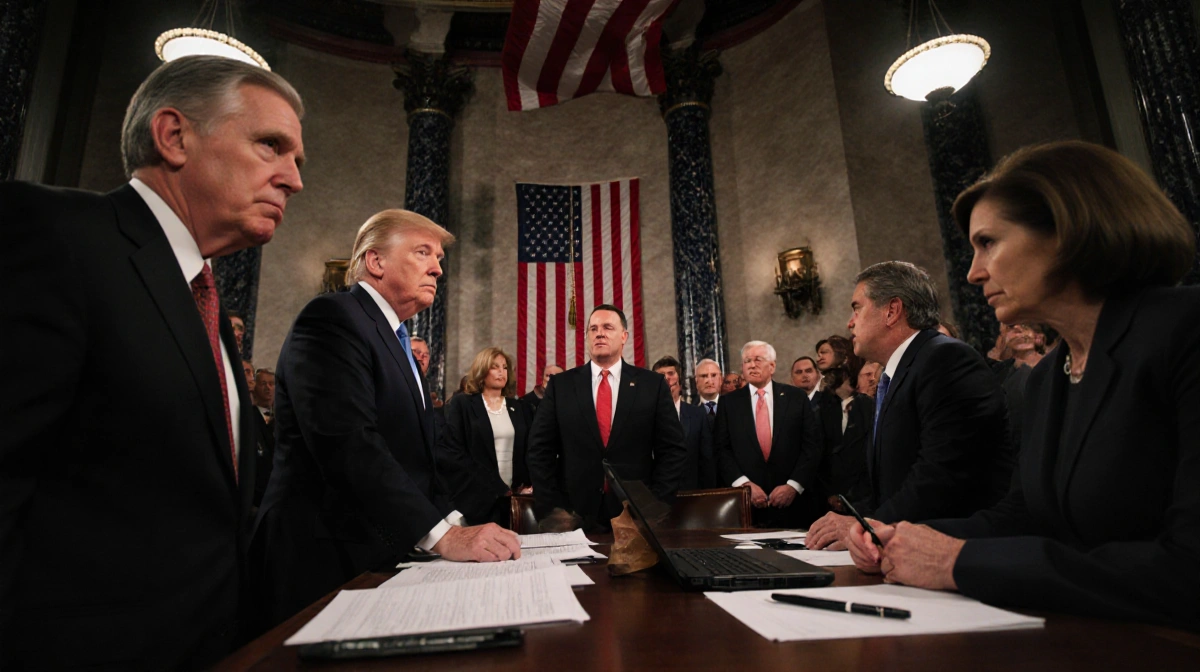

The 1,059-page bipartisan bill was unveiled Tuesday to fully fund the U.S. government before the Jan. 30 shutdown deadline. It covers the Pentagon, Labor, Health and Human Services, and Homeland Security, and aims to prevent another lapse after last fall’s longest shutdown. The House, however, is poised to fight the bill’s Homeland Security portion over immigration-law enforcement funding.
At a Glance
- The bill adds $18 billion a year for ICE, tripling its budget.
- ICE funding stays flat at $10 billion for the rest of the fiscal year.
- House plans a separate vote on the DHS section.
- Senate needs 60 votes; Republicans hold 53 seats.
- Why it matters: The debate could decide whether ICE receives the money it needs and whether the government avoids a shutdown.
The Bill’s Scope
The bipartisan package includes allocations for the Pentagon, Labor, Health and Human Services, and Homeland Security. It also contains a health-care overhaul that expands oversight of pharmacy benefit managers (PBMs). The bill is the most comprehensive appropriations effort the House has undertaken since the fiscal year began.
ICE Funding and Controversy
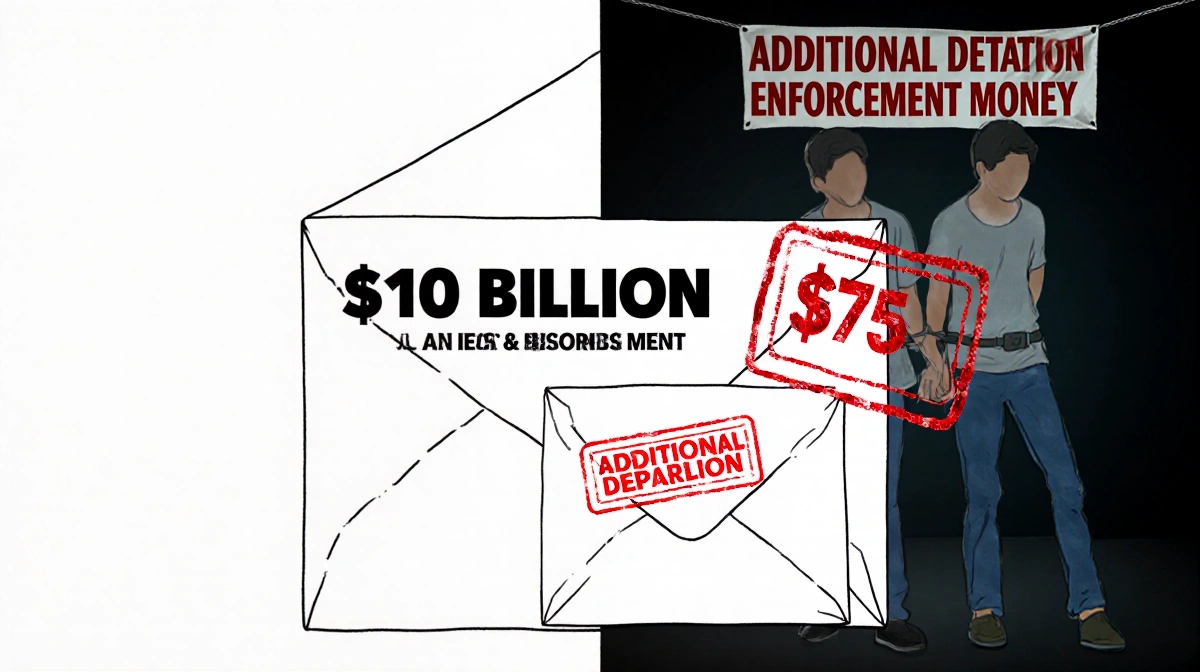
The Homeland Security portion keeps ICE’s enforcement budget at $10 billion through Sept. 30, even as the agency receives $75 billion in additional detention and enforcement money from Trump’s “big beautiful bill.”
- $18 billion per year is added for ICE, effectively tripling the agency’s budget.
- The bill cuts ICE enforcement and removal operations by $115 million.
- Detention beds are reduced by 5,500.
- $20 million is earmarked for body-worn cameras for ICE agents.
Rep. Rosa DeLauro (D-Conn.) said the package, while not containing broad reforms, still includes Democratic priorities. She highlighted the camera funding and a new uniform policy that would make federal officers clearly identifiable.
Rep. Ro Khanna (D-Calif.) criticized the ICE provision: “It is a surrender to Trump’s lawlessness. I will be a strong no and help lead the opposition to it.”
House and Senate Dynamics
The House has passed eight of the twelve required full-year funding bills. Completing the package would finish the chamber’s appropriations work four months into the new fiscal year.
The Senate has passed half of the twelve bills and faces a deadline: it will need 60 votes to avoid a partial shutdown affecting agencies beginning Jan. 31. Republicans hold 53 seats.
House Republicans plan a separate vote on the Homeland Security section. This move gives Democrats a chance to oppose the portion without forcing a shutdown.
Key Voices
- Rep. Ted Lieu (D-Calif.) said, “There should absolutely be reforms to ICE. And if there aren’t reforms, I’m going to be a hard no on that bill, the DHS bill.”
- Homeland Security Secretary Kristi Noem warned that President Trump might invoke the Insurrection Act over Minnesota protests, saying, “If anything doesn’t change with Governor Walz, I don’t anticipate that the streets will get any safer or more peaceful.”
- Sen. Ruben Gallego (D-Ariz.) told CNN, “We cannot vote for anything that actually adds more money and doesn’t constrain ICE.”
- Sen. Chris Van Hollen (D-Md.) said, “I won’t vote to give one dime to support this lawless, brutal Trump ICE operation” without significant reforms.
- Congresswoman Robin Kelly (D-Ill.) introduced three articles of impeachment against Secretary Noem, citing obstruction of Congress and erosion of public trust.
Implications for the Government
If the DHS portion lapses, TSA agents could work without pay, FEMA assistance might be delayed, and the Coast Guard would suffer adverse effects. The House’s separate vote could prevent a shutdown, but only if Democrats choose to oppose the DHS section.
The Senate’s need for 60 votes means that even a single Democrat could tip the balance. Republicans have expressed willingness to carry the DHS bill alone, but without Democratic support the bill would stall.
Next Steps
The House is expected to vote on the full package later this week. GOP leaders have promised a separate vote on the Homeland Security portion, offering Democrats a platform to push for reforms.
The Senate will reconvene next week, just days before the Jan. 30 deadline. Senators will need to decide whether to support the bill’s DHS section or risk a partial shutdown starting Jan. 31.
The outcome will determine whether ICE receives the additional funding and whether the federal government can avoid a shutdown.
Key Takeaways
- The bill adds $18 billion for ICE while keeping enforcement at $10 billion.
- House and Senate dynamics hinge on a separate DHS vote and a 60-vote Senate threshold.
- Democrats face a tough choice: accept ICE funding or risk a shutdown.
- The debate reflects broader partisan divisions over immigration enforcement and federal spending.
Timeline of Key Dates
| Date | Event |
|---|---|
| Jan. 30 | Shutdown deadline if no funding bill passes |
| Jan. 31 | Partial shutdown would begin if DHS portion lapses |
| This week | House vote on the full bill |
| Next week | Senate reconvenes to vote on DHS section |
The unfolding debate underscores how a single appropriation package can become a flashpoint for broader policy battles.