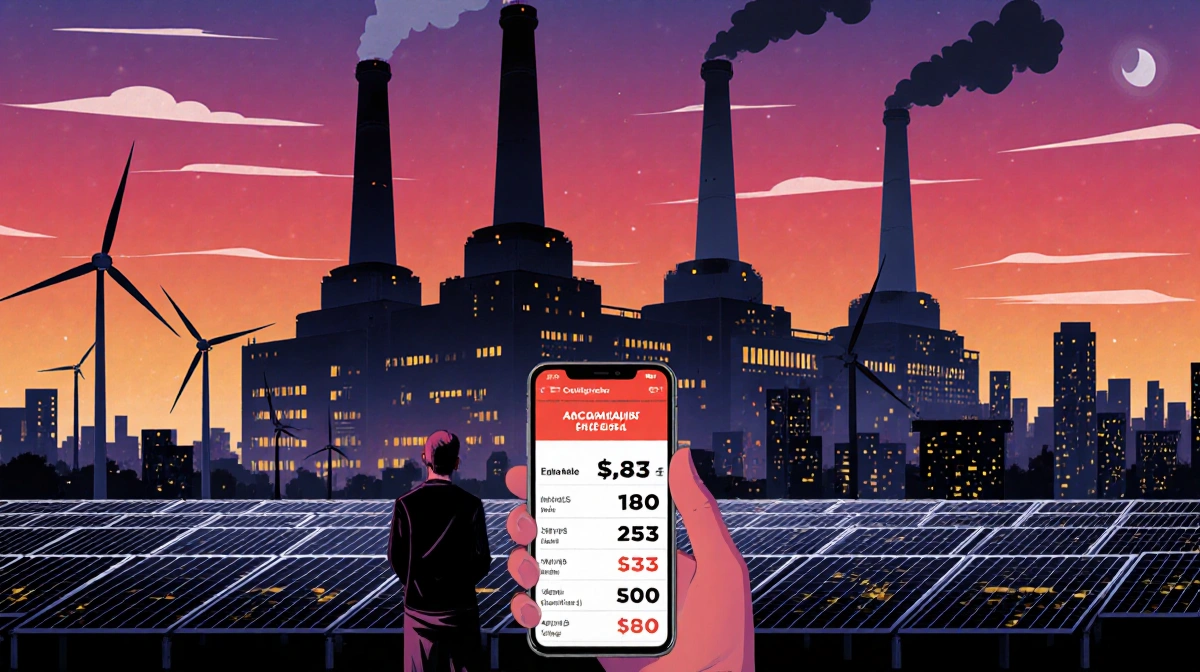

The AI boom is about to drive US power-sector emissions and electricity prices sharply upward unless new policies steer the build-out toward clean energy, according to an analysis released Wednesday by the Union of Concerned Scientists.
At a Glance
- Data centers could boost US power CO2 by 19-29% within ten years under current policy
- Simply restoring federal wind and solar tax credits would cut that rise by 30% and trim wholesale power costs 4% by 2050
- A deeper decarbonization package would add $412 billion to wholesale costs but avoid up to $13 trillion in global climate damages
- Why it matters: Choices made this year on tax credits, plant rules and transmission will shape whether AI’s energy appetite raises consumer bills and pollution for decades
The US faces a 60-80% jump in electricity demand through 2050, with data centers accounting for more than half of the new load before 2030, the study finds. If today’s policy trajectory holds-renewable rollbacks, no carbon limits on plants, coal-friendly regulations-emissions tied only to data centers would climb 19-29% over the next decade.
Cheapest Fix: Restore Tax Credits
Bringing back wind and solar credits that lawmakers targeted last year would reverse course, slicing CO2 more than 30% below the baseline while nudging wholesale electricity prices down about 4% by mid-century after a short-term bump, the modeling shows.
Power plants are the nation’s second-largest greenhouse source, supplying roughly a quarter of total emissions. Sector-wide CO2 edged up last year for the first time since 2023, driven largely by commercial demand from data centers, a separate Rhodium Group analysis noted.
Forecasting AI energy use is messy. Utilities field overlapping requests from developers shopping for the cheapest connection, inflating headline figures. Technology gains could also curb consumption. PJM, the country’s largest grid operator, recently trimmed its near-term demand outlook after vetting proposals more closely.
Even mid-range growth estimates show risk. UCS analysts assumed only half of announced data-center projects are built, yet still project sizable emission jumps if policy stays static. The Trump administration’s moves against renewables mean the study likely understates the upside, according to the authors.
Bottlenecks and Coal Orders
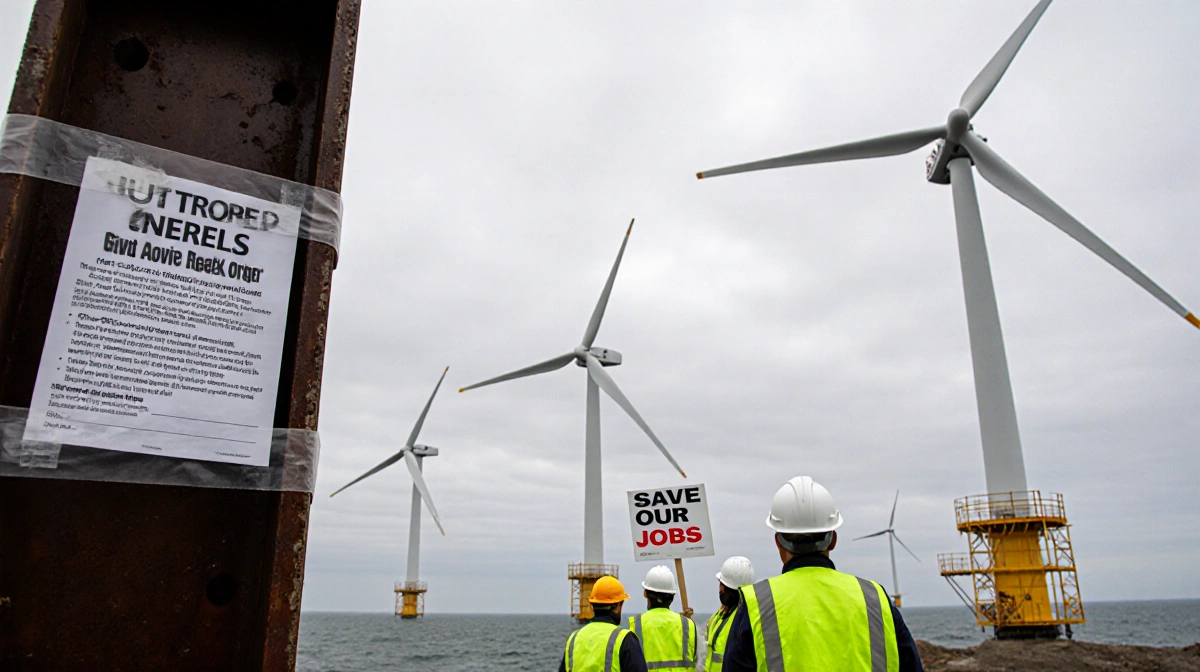
- An Interior Department review mandate has stalled 22 GW of wind and solar on federal land, enough for 16 million homes
- In December, stop-work orders hit five East Coast offshore wind farms before three federal judges allowed construction to resume
- Energy Secretary Chris Wright has directed at least two coal units to stay open past planned retirement
“The administration is doing this with projects already approved and under construction,” said Steve Clemmer, lead author and UCS energy-research director. “It sends a chilling signal.”
Despite the pro-fossil posture, gas turbines now face multi-year delivery queues, and some grid operators are resisting. PJM last month backed a Virginia offshore wind developer suing the administration, arguing the 600,000-home project is vital to meet soaring demand.
Big Tech’s climate pledges have collided with AI growth. Microsoft, encouraged by the White House, recently pledged its centers would be “better neighbors” but omitted emissions targets from the list. The company did not respond to a request for comment.
On-Site Generation Grows
More campuses are adding their own power while awaiting grid hookups. Options span solar-battery microgrids, various nuclear technologies and, increasingly, private gas turbines. UCS numbers exclude this on-site generation, so total emissions could climb further.
Wholesale prices modeled do not equal residential bills. Consumer charges also reflect grid upgrades and new transmission. Because wind and solar are intermittent and often remote, they require extra wires-costs that can filter into rates.
“Both political arguments are true,” said Pier LaFarge, Sparkfund cofounder. “Renewables are cheapest at the source, yet they raise rates when you count downstream grid upgrades.”
Bigger Climate Package
The study tested a scenario coupling restored tax credits with tighter power-plant rules and transmission investment. Wholesale costs would rise $412 billion, about 7%, through 2050 but would avoid up to $13 trillion in global climate damages and health costs tied to fossil pollution.
The EPA recently said it will no longer count lives saved from pollution cuts when crafting plant standards, removing one cost-benefit justification for stricter rules.
Grid upgrades are overdue. Ensuring data-center-driven expansion does not stick consumers with the tab is a central challenge. Clemmer argues for stronger guardrails so new demand does not siphon capacity or push upgrade costs onto households.
Batteries Offer Hope
Utility-scale batteries are expanding quickly, and tax credits for storage largely survived last year’s congressional negotiations. Contracts that make data centers pay for local infrastructure could also blunt bill increases for ordinary customers. The result could resemble Texas: abundant cheap wind and solar, a sprinkling of gas plants and heavy battery deployment.
“Solar, wind and storage made up over 90% of new grid additions last year,” LaFarge noted. “We’re building more renewables, faster, in more places for purely economic reasons.”
Key Takeaways
- Without policy change, data centers alone could raise US power CO2 almost 30% by the mid-2030s
- A simple restoration of wind and solar tax credits flips the trend, cutting emissions 30% and lowering long-run wholesale prices
- Deeper action-plant standards plus transmission-adds modestly to power costs while avoiding trillions in climate damages
- Market momentum favors clean energy, but federal permitting and rulemaking will decide how fast it can scale