


At a Glance
- ICE now has 22,000 officers, up from about 10,000.
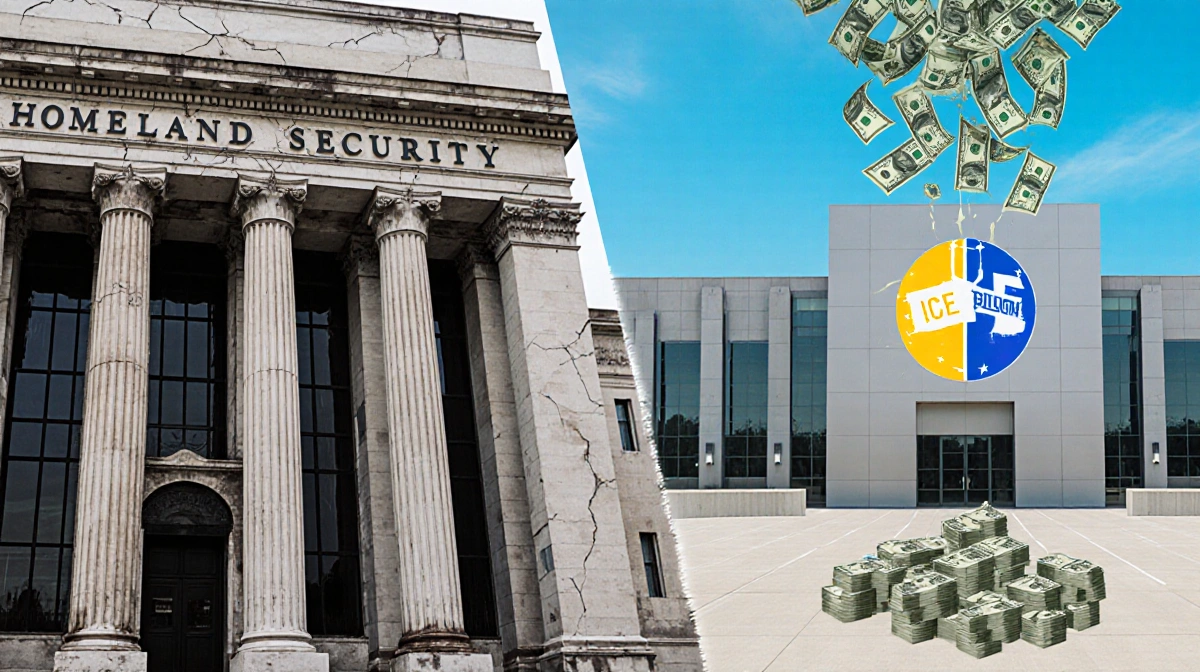
- The Trump administration added $170 billion to Homeland Security over four years.
- Protests in Minneapolis and other cities have surged as federal officers patrol streets.
- Why it matters: The budget fuels a national law-enforcement presence that many say threatens civil liberties.
The Trump administration’s “big, beautiful bill” has turned Immigration and Customs Enforcement (ICE) into a national force with a budget that dwarfs most U.S. police departments. The new funding has spurred a rapid hiring spree, aggressive enforcement tactics in cities, and a wave of public protests and political backlash.
Massively Expanded Budget
The legislation, passed by a Republican-controlled Congress, doubled annual Homeland Security funding, adding $170 billion over four years. Of that, ICE received $30 billion for operations and $45 billion for detention facilities-up from the agency’s typical $10 billion a year.
Bobby Kogan, senior director of federal budget policy at the Center for American Progress, said:
“We’re looking at ICE in a way we’ve never seen before,” he said.
The funding is on autopilot through 2029, the year President Trump is scheduled to finish his term. Congress will need to approve routine funding for Homeland Security by January 30 or risk a partial shutdown of some operations.
Rapid Force Expansion
The Department of Homeland Security announced that it has recruited 12,000 new officers, more than doubling the force to 22,000 in just a few months. Assistant Secretary Tricia McLaughlin told reporters:
“Thanks to the Big Beautiful Bill that President Trump signed, we have an additional 12,000 ICE officers and agents on the ground across the country,” she said.
The agency also reported that it has arrested and deported about 600,000 people and that 1.9 million others have voluntarily self-deported since January 2025, when Trump took office.
These numbers reflect a shift from border enforcement to city-based operations. In Los Angeles, Chicago, and other urban centers, ICE officers-often armed and masked-have been seen smashing car windows, pulling people from vehicles, and hauling them away.
Public Response and Legal Challenges
The shooting death of Renee Good in Minneapolis highlighted the reach of the federalized force and sparked protests. Homeland Security Secretary Kristi Noem said Thursday that President Trump is weighing whether to invoke the Insurrection Act over protests in Minnesota. “If anything doesn’t change with Governor Walz, I don’t anticipate that the streets will get any safer or more peaceful,” Noem said.
Rep. Nydia M. Velázquez, D-N.Y., criticized the approach at a press conference:
“Americans are upset at what they are seeing. They didn’t sign on for this,” she said.
The Supreme Court lifted a ban on using race alone in immigration stops, and Trump’s administration has set a goal of 100,000 detentions a day-about three times the typical level-and 1 million deportations a year.
Ruben Gallego, D-Ariz., called for a complete dismantling of ICE on CNN:
“People want immigration enforcement that goes after criminals, not this goon squad,” he said.
Congressional Progressive Caucus members and some Democrats have introduced impeachment articles against Secretary Noem, alleging obstruction of Congress, erosion of public trust, and self-dealing.
Political Dynamics and Future Funding
With Republicans controlling Congress, Democrats face a difficult path to curb the spending. Even if Congress wanted to shut down the government, it would be hard to stop the spend because the bill is essentially a budgetary commitment.
Kathleen Bush-Joseph, a policy analyst at the Migration Policy Institute, noted:
“The first thing that comes to mind is spending on this level is typically done on the military. Trump is militarizing immigration enforcement,” she said.
Lawmakers are considering restrictions on ICE operations, including limits around hospitals, courthouses, churches, and requirements for officers to display proper identification and not wear face masks.
The Department of Homeland Security has already obligated roughly $58 billion-about $37 billion for border wall construction-according to a source familiar with the assessment.
The debate over ICE’s expansion and funding underscores a broader conflict over immigration policy, civil liberties, and the role of federal law enforcement in the United States.
Key Takeaways
- ICE’s budget has tripled, enabling a national presence with 22,000 officers.
- The Trump administration’s “big, beautiful bill” allocates $170 billion to Homeland Security over four years.
- Public protests and political opposition are mounting as federal officers patrol city streets.
- Congress must decide on future funding by January 30, or risk operational disruptions.
- The future of ICE will hinge on political negotiations, legal challenges, and public sentiment.