

At a Glance
- Lomi 3 offers a 3-liter capacity and 3-to-16-hour cycles.
- FoodCycler Eco 3 delivers faster breakdown with a 3-5-liter bucket.
- Both turn scraps into fine, compost-like material without microbes.
- Why it matters: They let homeowners shrink trash and avoid landfill fees.
Introduction
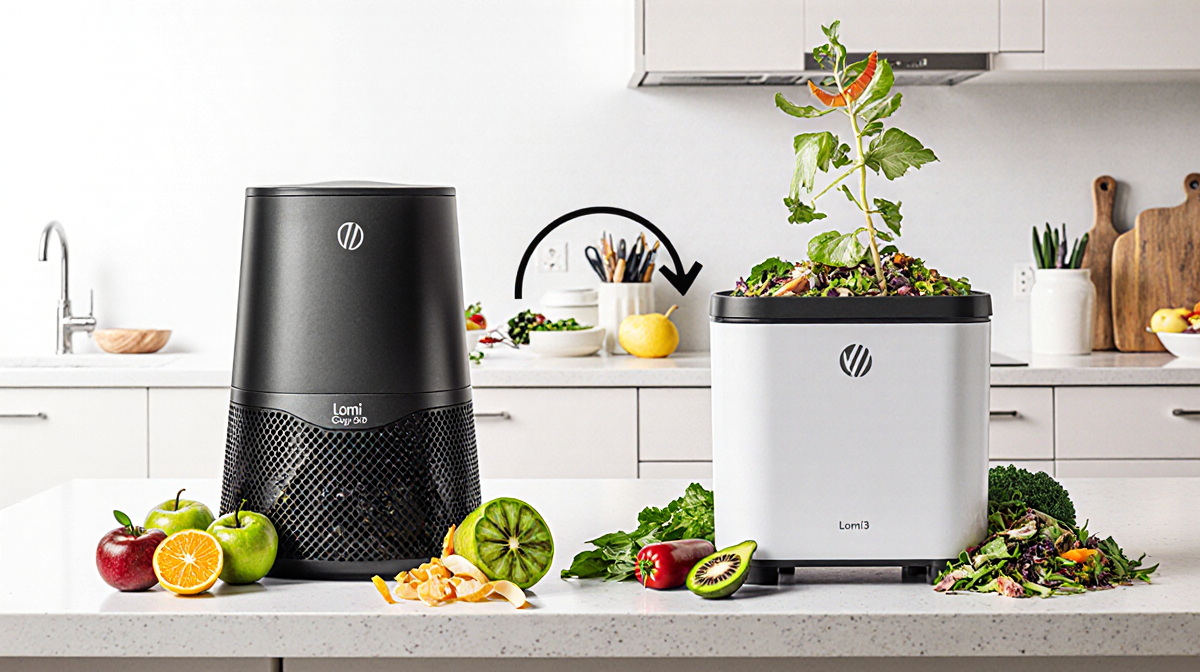
Kitchen waste is a growing problem for many households. Two devices-Lomi 3 and FoodCycler Eco 3-promise to turn scraps into useful soil amendments, but they differ in design, speed, and output quality. Understanding how each works can help you choose the right tool for your composting goals.
Lomi 3 Overview
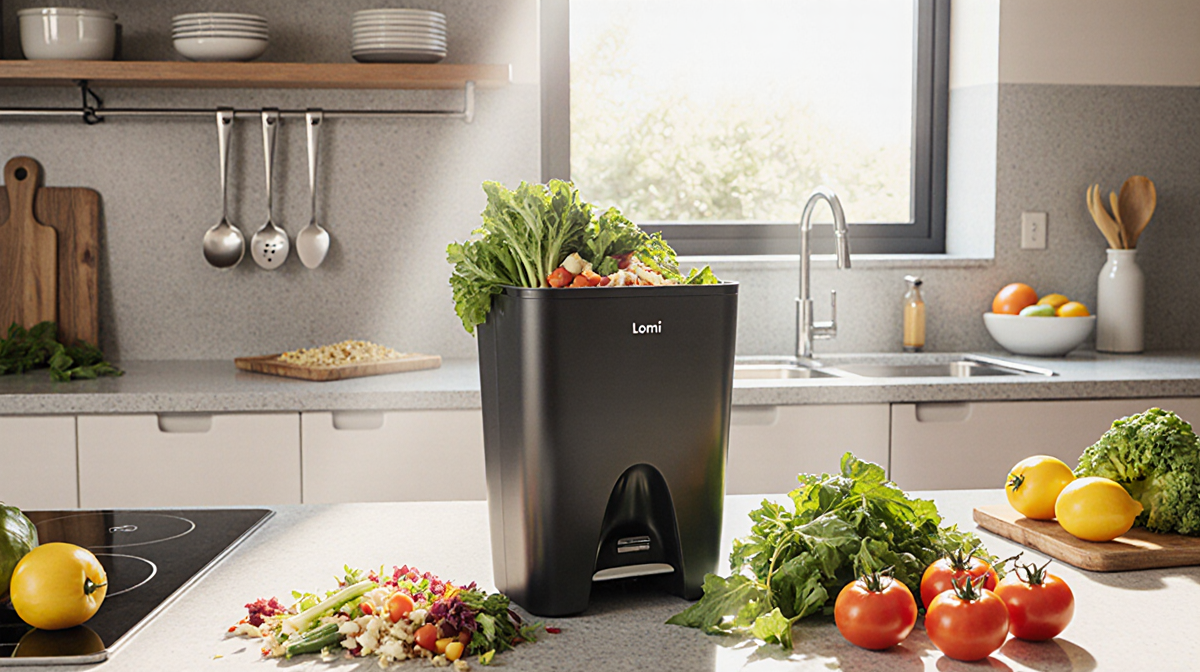
Lomi 3 is a countertop recycler that replaces the older Lomi 2 model. The new version removes the confusing multi-mode system and the twist-off lid, opting instead for a simple 3-liter, 7.5-inch-tall bucket with a push-button lid. Users press a single button to start a cycle that lasts from 3 to 16 hours, depending on the amount and moisture of the feed.
Features & Specs
| Feature | Detail |
|---|---|
| Dimensions | 12 x 13 x 18.4 inches |
| Capacity | 3 liters |
| Fastest breakdown | 3 to 16 hours |
| Output ratio | 1:10 soil, 1:15 for meat/dairy |
| Warranty | 1 year (extendable to 3 years with LomiCare) |
The device is marketed as a grinder-and-dryer rather than a true compost machine, yet the output-fine grounds resembling coffee-can be used as a top-dressing, lawn amendment, or added to a compost pile.
Usage & Output
After a cycle ends, a chime signals completion. The processed material can be sifted and mixed with soil at a 1:10 ratio, or used directly on lawns. Because the output is dry and finely ground, it blends well with existing soil and accelerates nutrient release.
Lomi 2 Comparison
The older Lomi 2 featured multiple modes, a twist-off lid, and required direct loading of scraps. Lomi 3 simplifies the process with a push-button lid and a single “Grow” or “Express” mode. However, the 3-liter capacity is smaller than the 3-5 liter bucket of the Eco 3, and the Lomi 3 does not accept bioplastics, a feature that was present in the Lomi 2’s “Lomi” mode.
FoodCycler Eco 3 Compact Kitchen Food Recycler
FoodCycler Eco 3 debuted in 2024 as a smaller, 3-5-liter version of the earlier FC-50. The company positions it not as a compost maker but as a “food waste recycler” that quickly reduces waste volume.
Features & Specs
| Feature | Detail |
|---|---|
| Dimensions | 11 x 9 x 13 inches |
| Capacity | 3.5 liters |
| Fastest breakdown | 3 to 16 hours |
| Output ratio | 1:10 soil, 1:15 meat/dairy |
| Warranty | 1 year |
The Eco 3 includes an auxiliary lidded container that can be filled in a few days. Once full, the container is swapped into the machine, and a single button starts the process. No app, no account, and no extra pods are required.
Output Quality
The machine produces a product called “Foodilizer,” a finely ground soil amendment that looks like dirt. According to the manufacturer, it is one of the finest ground outputs among countertop recyclers.
Noise and Operation
Users report that the Eco 3 makes more groaning and creaking noises during operation than the Lomi 3, yet it still operates quietly enough for most kitchens.
Comparison to Lomi 3
While the Lomi 3 offers a slightly larger bucket and a more user-friendly lid, the Eco 3’s 3.5-liter capacity and faster breakdown time make it attractive for households that want rapid results. Both devices, however, do not produce true compost-there is no microbial action-so the output is best described as a compost-like amendment.
Verdict
Choosing between Lomi 3 and FoodCycler Eco 3 hinges on your priorities:
- Space and simplicity: Lomi 3’s push-button lid and clear lid design make it easy to use.
- Output fineness and speed: Eco 3 delivers a finer product more quickly, but with a noisier operation.
- Durability concerns: Both models have had lid warping issues; Lomi has issued replacements for faulty plastic.
- Bioplastic compatibility: Only the older Lomi 2 accepted bioplastics; neither new model does.
If your goal is to reduce trash volume and avoid landfill fees, either device will work. For those who value the smallest footprint and the cleanest user interface, Lomi 3 may be the better pick. If you need the fastest breakdown and finest output, the Eco 3 could be the superior choice.
Key Takeaways
- Lomi 3: 3-liter bucket, 3-to-16-hour cycle, clear lid, 1-year warranty.
- FoodCycler Eco 3: 3.5-liter bucket, 3-to-16-hour cycle, no app, 1-year warranty.
- Both produce dry, finely ground material that can be mixed with soil.
- Neither device produces true compost; they are grinders-and-dryers.
- Lids have warped in some units; replacements are available.
Future Outlook
As more households look for ways to manage kitchen waste, these countertop recyclers represent a growing niche. Their success will depend on durability, ease of use, and how well they integrate into existing composting or waste-management systems.