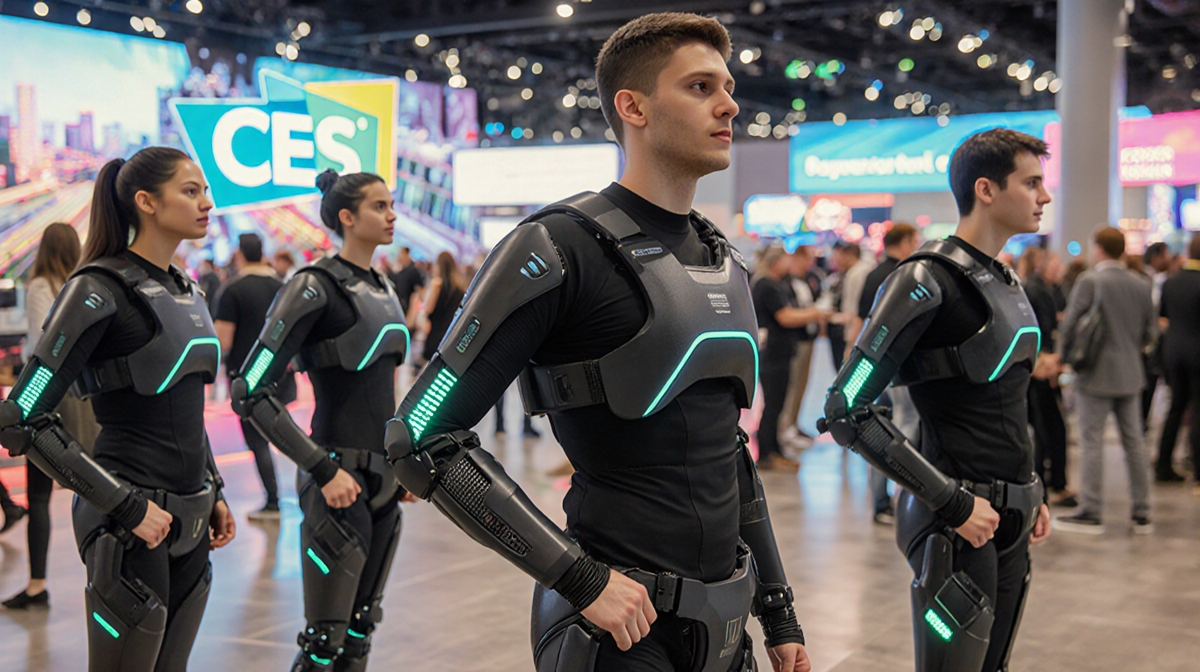

At CES 2026, personal exoskeletons dominated the show floor, with ambitious designs from newcomers WiRobotics, Sumbu, Ascentiz, and Dephy, while Skip Mo/Go promoted its long-overdue tech trousers. The market is shifting from medical and industrial use to mainstream consumer devices, and only two companies-Hypershell and Dnsys-currently offer products that consumers can buy.
At a Glance
- Only Hypershell and Dnsys sell consumer exoskeletons today.
- The Hypershell X Ultra costs $1,999; the Dnsys X1 Carbon Pro costs $1,899.
- Industry projections show growth from over $500 million in 2025 to more than $2 billion by 2030.
Why it matters: Exoskeletons could change how people move and reduce effort, but real-world benefits vary.
Overview
The CES 2026 show floor featured a variety of exoskeleton prototypes, each with its own design philosophy. While some focused on aesthetic appeal, others prioritized mechanical performance. Skip Mo/Go’s tech trousers, a long-overdue wearable that complements the exoskeleton trend, also occupied space on the floor. Other exhibitors such as WiRobotics, Sumbu, Ascentiz, Dephy, and Skip Mo/Go presented prototypes that were not yet available for purchase.
The concept of powered suits began in the early 2000s, and over the past decade, advances in battery technology and sensor integration have made the devices lighter and more affordable, enabling a shift toward consumer markets.
Hypershell and Dnsys, both founded in 2021, have invested heavily in research and development, positioning themselves as leaders in the emerging consumer exoskeleton space.
Design and Claims

Hypershell’s marketing materials emphasize a sleek, lightweight aesthetic, with the X Ultra model featuring a slimmer profile than earlier iterations. The company claims its design reduces heart rate by 42 percent, cuts exertion by 20 percent during walking, and boosts hip flexor endurance by 63 percent. Dnsys highlights its carbon-fiber frame and the claim that the exoskeleton can lower power demand by up to 50 percent. Both companies use similar actuator technology, but their branding and price points differ.
Industry analysts project growth from over $500 million in 2025 to more than $2 billion by 2030, reflecting increased consumer awareness and the rising cost of mobility solutions.
Testing Methodology
The baseline 400-meter run was conducted with a neutral pace of 4 min per kilometer, ensuring that the same effort was applied in each condition. This approach allowed us to isolate the effect of the exoskeleton on heart rate and perceived exertion. Each reviewer wore a smartwatch that logged heart rate at one-second intervals, providing a detailed time series of cardiovascular response. The data were then plotted to compare the two devices side by side.
The reviewers wore the devices for a short duration of 400 meters, a distance chosen to represent a typical walking or running segment that would be common in daily life.
Results
The older father’s trial showed a drop in heart rate by approximately 12 beats per minute when using the Hypershell X Ultra, compared to the baseline. This suggests a measurable reduction in cardiovascular strain for older users. The younger reviewer’s heart rate increased, indicating that the device may add to the metabolic cost for some users. Both devices produced a noticeable robotic spring that accelerated the wearer, but the effect was more pronounced with the Hypershell X Ultra during the acceleration phase of the run. The older father’s trial also included a subjective rating of effort, which he reported as lower when using the exoskeleton compared to the baseline.
Takeaways
The mixed results highlight the importance of user-specific factors such as age, fitness level, and gait mechanics. The devices may be more beneficial for older individuals with limited cardiovascular endurance, while younger, highly trained users may experience less advantage. The premium price of $1,999 for Hypershell and $1,899 for Dnsys reflects the high cost of advanced materials and limited production scale. Consumers should weigh the potential benefits against the financial investment. The industry’s growth projections underscore the potential for significant market expansion, but the current limited product availability suggests that many companies are still refining their designs.
Future studies that include a broader range of users and longer testing periods will be necessary to validate the companies’ performance claims. Until such data are available, consumers should approach exoskeletons as experimental technology rather than guaranteed solutions. The high price point may limit accessibility, especially for individuals who do not require extensive assistance. The limited availability of consumer exoskeletons means that many potential users are still waiting for more affordable options. The added weight and mechanical components may alter gait patterns, which could increase the risk of injury if not properly calibrated. As the exoskeleton market matures, we can expect more refined models, improved battery life, and clearer performance metrics that will help consumers make informed decisions. Until then, the exoskeletons available at CES 2026 serve as a prototype stage, offering a glimpse of how technology may augment human movement in the future.