

At a Glance
- Fort Worth firefighters shifted focus to survival checks during a winter freeze.
- They repeatedly visited homeless encampments, treating hypothermia and dehydration.
- Outreach will continue after the storm as officials urge people to seek shelter.
Why it matters: The cold snap exposed the vulnerability of the city’s homeless population and highlighted the critical role of emergency responders in life-saving outreach.
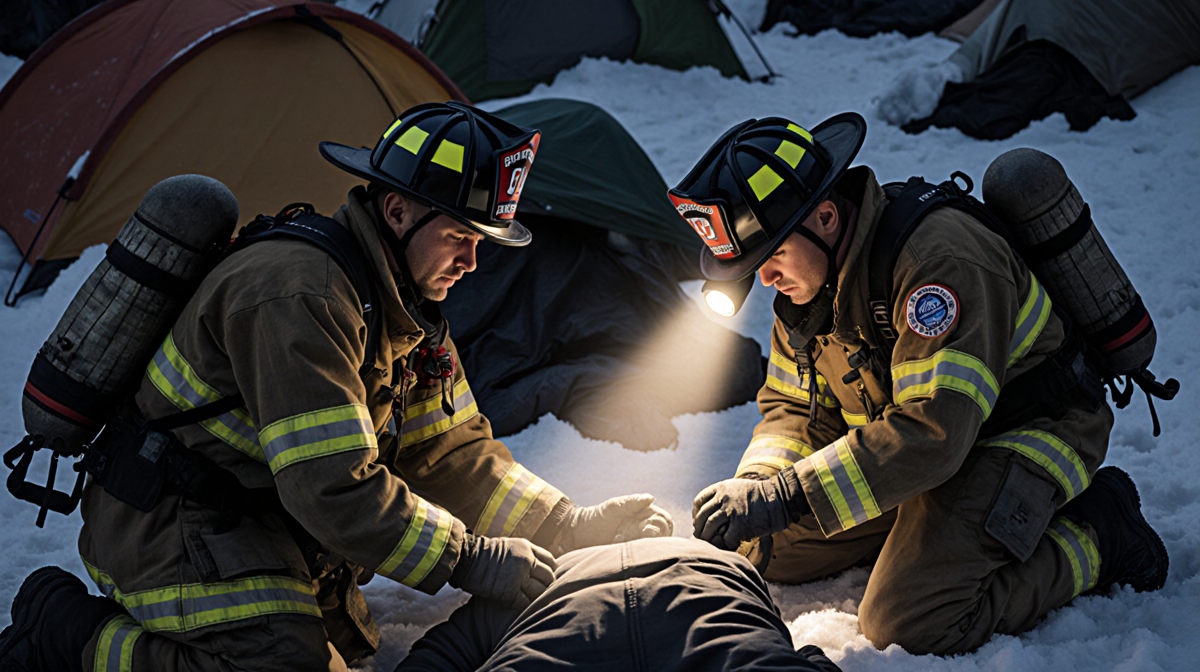
Fort Worth firefighters spent the early hours of a brutal winter freeze turning their attention from traditional fire suppression to a more urgent mission: checking on the city’s most vulnerable residents. The cold temperatures forced crews to make repeated visits to encampments, where they found people in life-threatening conditions.
Winter Freeze Forces Fort Worth Firefighters to Conduct Survival Checks
The shift began 2 a.m. on Saturday, when crews were dispatched to a cluster of tents in a downtown area. “It started 2 a.m. on Saturday. We came out, and we had two people that we took to the shelter that night,” said Firefighter Louis Pantoja. The two were younger individuals experiencing their first winter on the streets.
Pantoja and his partner spent hours checking tents, often revisiting sites every few hours as the weather worsened. “We medically assess them. We try to see if they’re dehydrated,” he explained. The team noted that many occupants were exhausted, soaked, and struggling to stay awake as their bodies lost the ability to regulate temperature.
| Time | Action | Notes |
|---|---|---|
| 2 a.m. | First response | Two individuals taken to shelter |
| 4 a.m. | Re-check tents | Multiple occupants dehydrated |
| 6 a.m. | Transport to ambulance | One older man with advanced hypothermia |
| 8 a.m. | Stabilization | Seizures observed |
The table above outlines the timeline of key actions taken during the early hours of the storm.
Hypothermia Cases Highlight Severity
One of the most severe cases involved an older man showing signs of advanced hypothermia. Pantoja described the situation: “He could not shiver anymore. He started seizing on us, and we got him as fast as we could to the truck and warmed him up. At that point, he seized multiple times, and we stabilized him.”
The man had stopped shivering-a critical sign that the body’s core temperature had dropped dangerously low. Seizures, a symptom of severe hypothermia, required rapid intervention. Firefighters used portable heat packs and a thermal blanket before transporting the patient to a medical facility.
In addition to the older man, crews encountered several other individuals with similar symptoms:
- Dehydrated and unable to maintain body heat.
- Exhausted from prolonged exposure.
- Foot injuries from walking on ice and frozen ground.
- Thin tents and small fires that provided minimal warmth.
The team’s medical assessment protocol included checking pulse, breathing, and skin temperature. If a victim was unable to shiver, it signaled that the body was in a critical state.
Ongoing Outreach and Community Impact
Despite long hours and challenging conditions, Pantoja emphasized that crews never hesitated. “They are our friends too,” he said. “They depend on us to come out, check on them, and to come out here and look after them in this cold weather. It’s important to make sure we go out throughout the whole city.”
Fort Worth fire officials announced that outreach efforts will continue in the days following the storm. Pantoja added, “The best thing to do is just try to seek shelter, but you can’t force them.” The city’s emergency services plan to coordinate with local shelters to provide immediate refuge for those who cannot be assisted on the street.
The city’s response also involved public messaging. Officials urged residents to stay inside, keep warm, and to report any homeless individuals in need of help. The message emphasized that even a short exposure to freezing temperatures can lead to life-threatening hypothermia.
Key Takeaways
- Fort Worth firefighters adapted their operations to address a public health crisis caused by a winter freeze.
- Repeated survival checks identified dehydration and advanced hypothermia in homeless residents.
- Immediate medical intervention, including rapid warming and seizure management, saved lives.
- Outreach will continue, with a focus on encouraging the homeless to seek shelter and on coordinating with local emergency services.
The incident underscores the importance of emergency responders as first-line protectors during extreme weather events, especially for the city’s most vulnerable populations.