
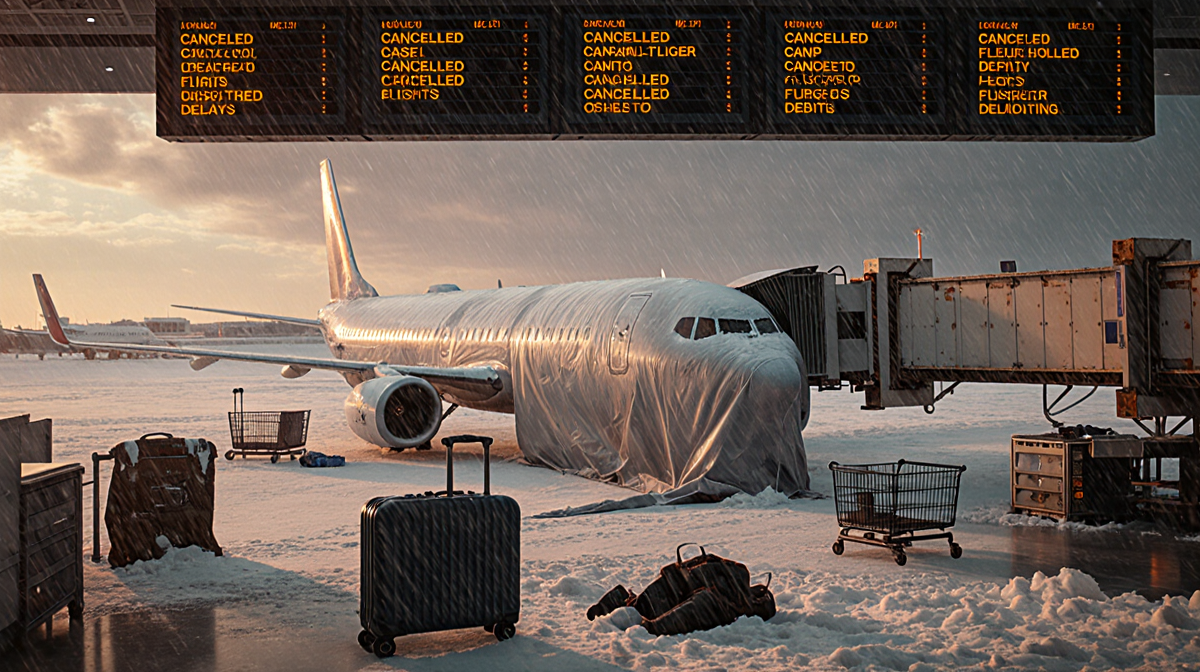

At a Glance
- Winter storm still disrupts flights at Dallas airports, with 492 cancellations and 403 delays reported by midday Tuesday.
- DFW, the primary hub for American Airlines, saw a drop from more than 1,100 cancellations on Monday but remains far from normal.
- Travelers face long lines, lingering ice on runways, and icy road conditions around both airports.
- Why it matters: Passengers must plan extra travel time and prepare for unpredictable delays as the storm’s effects linger.
Travel headaches are lingering in North Texas on Tuesday as a days-long winter storm continues to disrupt flight operations at both Dallas Fort Worth International Airport and Dallas Love Field.
Winter Storm Continues to Disrupt Flights at Dallas Airports
By midday Tuesday, DFW Airport reported 492 cancellations and 403 delays, according to flight-tracking data website FlightAware. That’s a noticeable drop from more than 1,100 cancellations on Monday. On Saturday and Sunday, the storm brought major operations to a standstill. DFW is the primary hub for American Airlines, the world’s largest airline.
At Dallas Love Field, the airport reported 46 delays and some cancellations at midday on Tuesday.
Both airports have been working around the clock to de-ice aircraft and clear runways, but the extreme cold and lingering ice on the ground continue to slow turnaround times.
Cancellation and Delay Figures
| Airport | Cancellations | Delays |
|---|---|---|
| DFW (midday Tuesday) | 492 | 403 |
| DFW (Monday) | > 1,100 | – |
| Love Field (midday Tuesday) | – | 46 |
The numbers illustrate how the storm’s impact has stretched on for days. Travelers are still navigating long lines, delays, and residual chaos, and airport officials warn that conditions aren’t fully back to normal.
Impact on Travelers
For many travelers, the storm’s impact has stretched on for days. Some have been stranded far from home or stuck in North Texas, as airlines shuffle crews and aircraft to get schedules back on track.
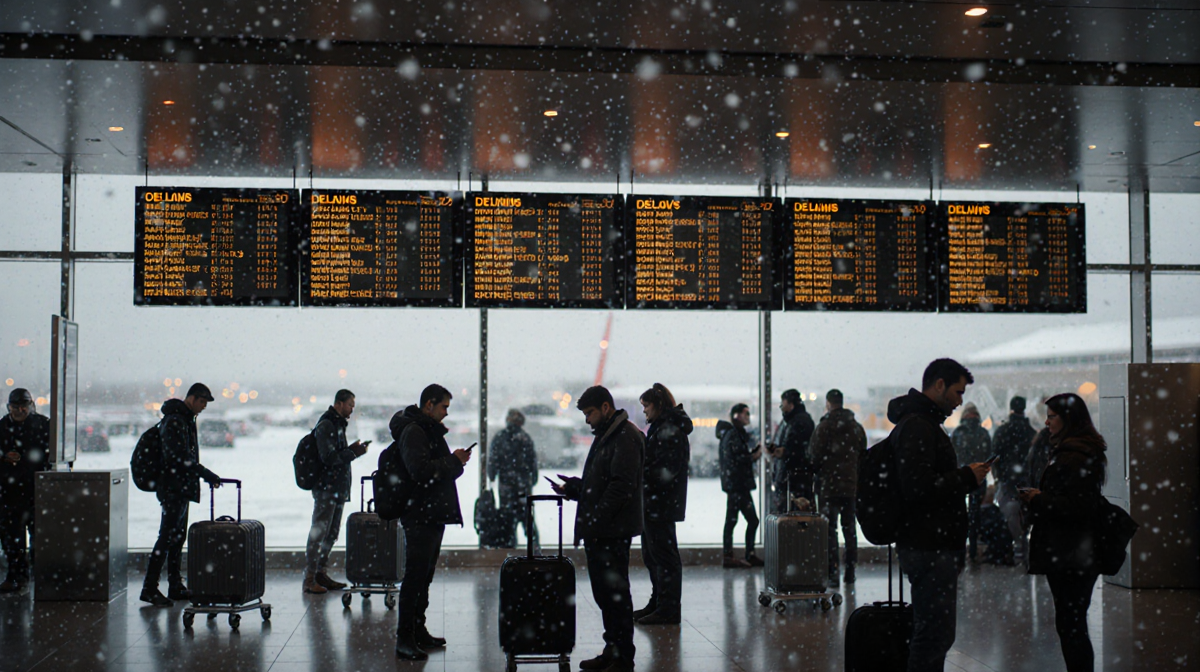
Josh Cardwell says he’s spent days trying to reunite with his partner after multiple cancellations. “She got canceled on Saturday. She was supposed to fly into Fort Lauderdale and then come back here to DFW. But she had to get it prolonged until today, and I’m ready for her to be home,” Cardwell said, holding a decorated welcome home poster. “I’m pretty sad. This is the longest time we’ve ever been away.”
Another traveler, Anderson Hertzell, told News Of Fort Worth about a journey that has taken him thousands of miles off course. “We were flying from St. Maarten to Philadelphia, looking forward to getting home on Saturday. But when we got to Fort Lauderdale, they said we weren’t flying home that day. We spent three nights there before finally getting rebooked. Now we’re flying to Newark before heading home. Then we’ll take a train to Philly from there,” Hertzell said.
His route highlights just how far-reaching the storm’s ripple effects have become across the country. Since Saturday, thousands of flights nationwide have been canceled each day as the winter storm swept across multiple regions, impacting airline hubs and aircraft availability.
Airport Responses and Future Outlook
With temperatures slowly climbing in North Texas, both Dallas airports expect continued improvement through the week. However, airport officials urge passengers to plan ahead, not only for long lines inside terminals but also for icy conditions on roads leading to the airport.
- De-icing crews are operating 24/7 to keep aircraft and runways safe.
- Road maintenance teams are clearing ice on access roads to the airports.
- Travelers are advised to check flight status frequently and allow extra time for travel.
Good morning, Dallas! 🌞✈️ If you have an upcoming flight, here’s how to prepare: ✈️ Check your flight status before heading out🚗 Give yourself extra time on the roads⌚ Plan to arrive about 2 hours early📱 Questions? Our DMs are open! pic.twitter.com/kxqQzfETMQ- Dallas Love Field Airport (@DallasLoveField) January 27, 2026
Key Takeaways
The winter storm has left Dallas airports in a state of flux, with hundreds of cancellations and delays still reported. Travelers and airlines alike must remain flexible and vigilant as the weather improves and operations gradually return to normal.
—