
At a Glance
- Waymo rides are now only 13 % pricier than Uber and 27 % pricier than Lyft in the Bay Area.
- Wait times for Waymo are shorter than Uber’s and close to Lyft’s, except during peak evening hours.
- Tesla’s robotaxi service remains the cheapest but has the longest wait times.
Why it matters: The narrowing price and time gaps signal that driverless technology is moving closer to mass adoption.
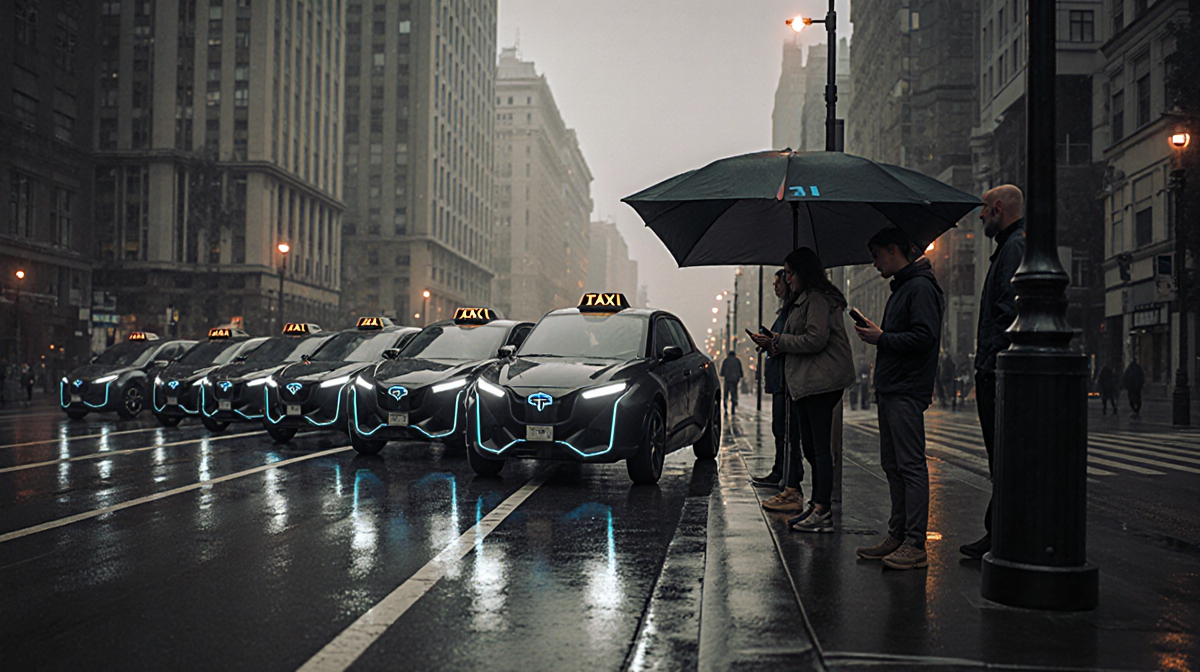
Ride-hail services in San Francisco have long been a mix of human-driven and autonomous options. Uber and Lyft, both headquartered nearby, dominate the market with a wide fleet of drivers. Alphabet’s Waymo offers fully driverless rides in a handful of U.S. cities, with plans to expand later in 2025. Tesla’s new service, launched last fall, operates as a traditional driver-led operation in California, while in Texas it runs as a true robotaxi.
Current Landscape
The Bay Area’s transportation scene now includes four major players:
- Uber – the most ubiquitous driver-driven platform.
- Lyft – similar to Uber, often cheaper.
- Waymo – the autonomous service, still in early rollout.
- Tesla – a hybrid model with a small fleet and non-autonomous vehicles.
Each offers a different value proposition. Uber and Lyft provide instant availability and a large driver pool. Waymo promises a quiet, predictable ride but has been slower and pricier. Tesla’s service is the cheapest, yet it lags in speed.
Price Dynamics
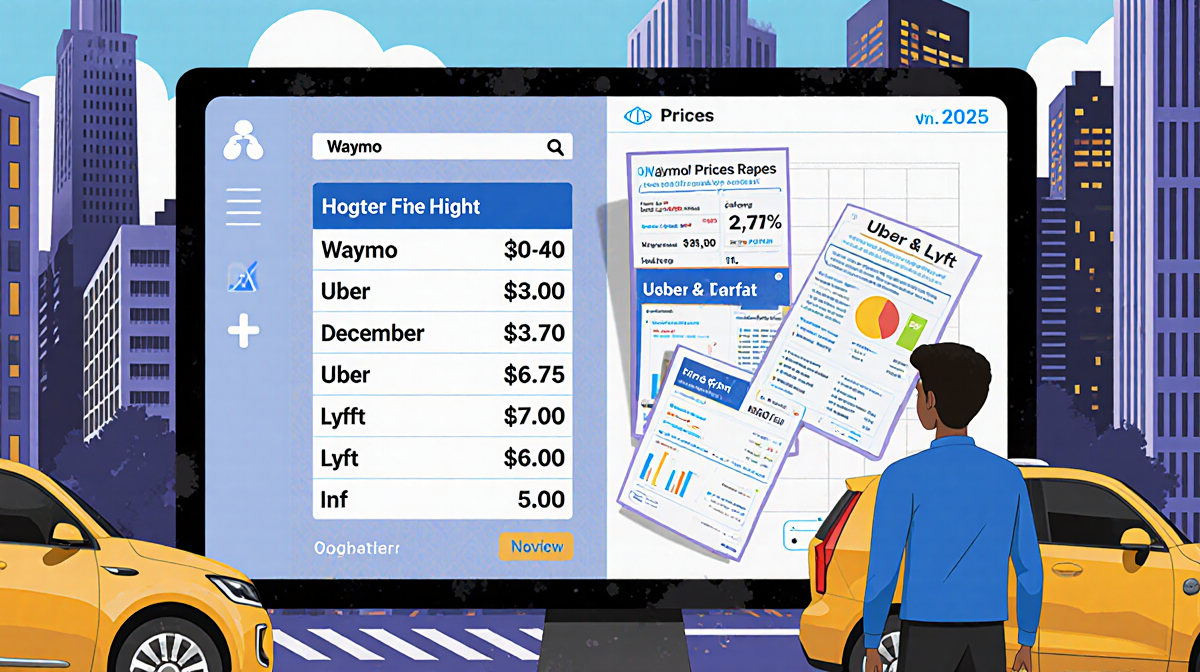
Obi, a ride-hail price aggregator, last checked pricing in the spring of 2025 and found Waymo’s fares were 30 to 40 percent higher than Uber and Lyft. By November and December 2025, that gap had shrunk dramatically: Waymo rides were 13 % more expensive than Uber and 27 % more expensive than Lyft.
The price difference tightens further for longer trips, a trend that coincides with Waymo’s recent deployment on certain highways in November. For rides between 4.3 and 9.3 kilometers (2.6 to 5.8 miles), the cost per kilometer is:
| Service | Price per km |
|---|---|
| Waymo | $3.67 |
| Uber | $3.60 |
| Lyft | $3.14 |
These figures illustrate how autonomous technology is becoming more competitive as it gains infrastructure support.
Wait-Time Trends
Last spring, Obi’s analysis showed Waymo consistently had longer wait times than Uber and Lyft. The current data paints a different picture: Waymo’s estimated time of arrival (ETA) is consistently shorter than Uber’s and almost matches Lyft’s, with the exception of the 4-to-6 pm window when all services experience a spike.
“Consumers don’t like to wait. It’s an on-demand service for a reason,” said Obi CEO Ashwini Anburajan. “Seeing wait times come down creates a more equal playing field between all three.”
Key takeaways on wait times:
- Peak hours (4-6 pm) see a universal increase across all platforms.
- Off-peak periods show Waymo outperforming Uber in speed.
- Longer rides benefit more from Waymo’s improved efficiency.
Tesla’s Outlier
Tesla’s Bay Area operation runs with fewer than 200 vehicles across a roughly 400-square-mile service area. While the company claims its cars use the Full Self-Driving (Supervised) feature, the vehicles do not drive autonomously.
Obi’s data indicates Tesla’s average wait time is 15 minutes, far higher than the other services. However, the average ride price is in the $7.50 to $8 range, making it the most affordable option in the market.
“The low pricing is a smart move on Tesla’s part to quickly build brand awareness,” Anburajan said. “The automaker is likely hoping that riders get accustomed to opening up the new Tesla Robotaxi app when they have to get somewhere.”
Tesla’s strategy appears to be a long-term experiment: by pricing aggressively, it hopes to attract users who may eventually switch to a fully autonomous robotaxi when the technology becomes available.
Implications
The data suggests several broader trends:
- Autonomous services are closing the cost gap with traditional ride-hail operators.
- Wait times are improving for driverless fleets, enhancing customer experience.
- Early adopters like Tesla are using price to drive brand engagement, potentially paving the way for future autonomous deployments.
While the market remains fragmented, the convergence of price and wait-time metrics indicates that driverless technology is moving beyond novelty toward mainstream viability.
Key Takeaways
- Waymo’s fares have fallen to just 13 % higher than Uber’s, a sharp decline from the 30-40 % gap seen earlier in 2025.
- Wait times for Waymo now rival Lyft’s, especially outside rush hours.
- Tesla offers the cheapest rides but suffers from the longest wait times.
- The trend points to an evolving balance between human-driven and autonomous ride-hail services.
These shifts will shape how commuters choose transportation in the Bay Area and beyond.