

At a Glance
- The 70-year-old murder case of Tommy Lee Walker is being reviewed to correct a historical injustice.
- Walker was convicted and executed in 1953 after a coerced confession and an all-white jury.
- A proposed resolution seeks to clear his name and acknowledge the wrongful conviction.
- Why it matters: It highlights systemic racism in the 1950s justice system and the need for modern review.
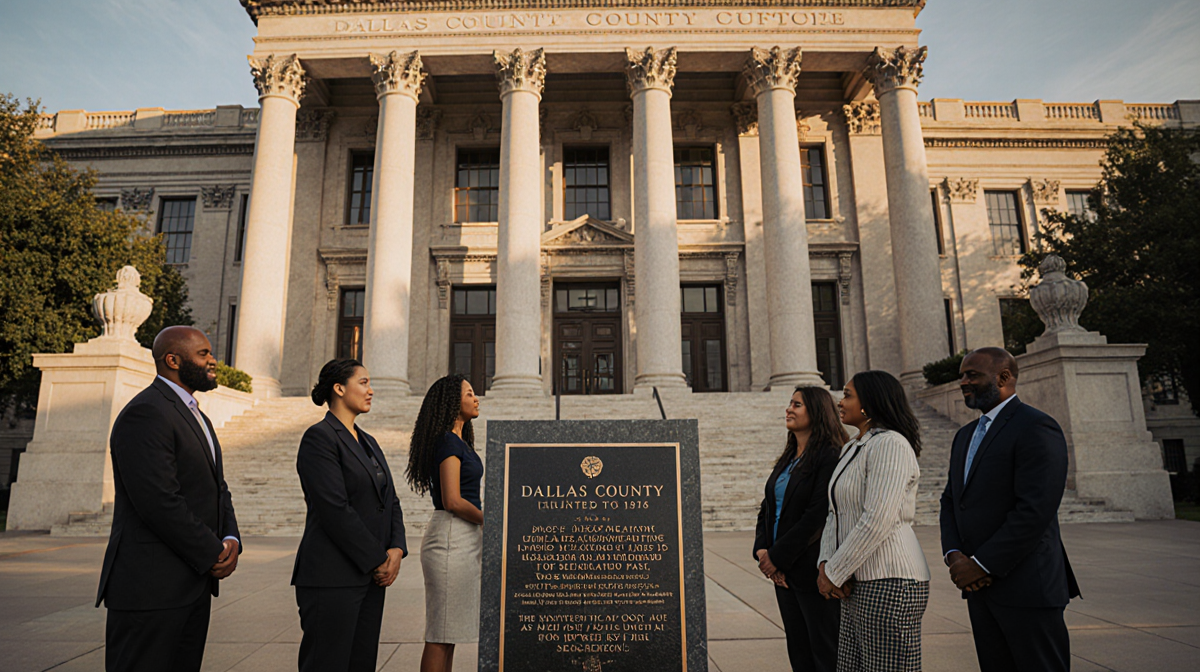
In 2023, Dallas County Commissioners convened a special meeting to examine the long-standing murder case of Tommy Lee Walker, a Black man who was convicted of raping and killing a white woman in 1953. The review aims to correct a wrongful conviction rooted in segregation-era policing and a biased jury.
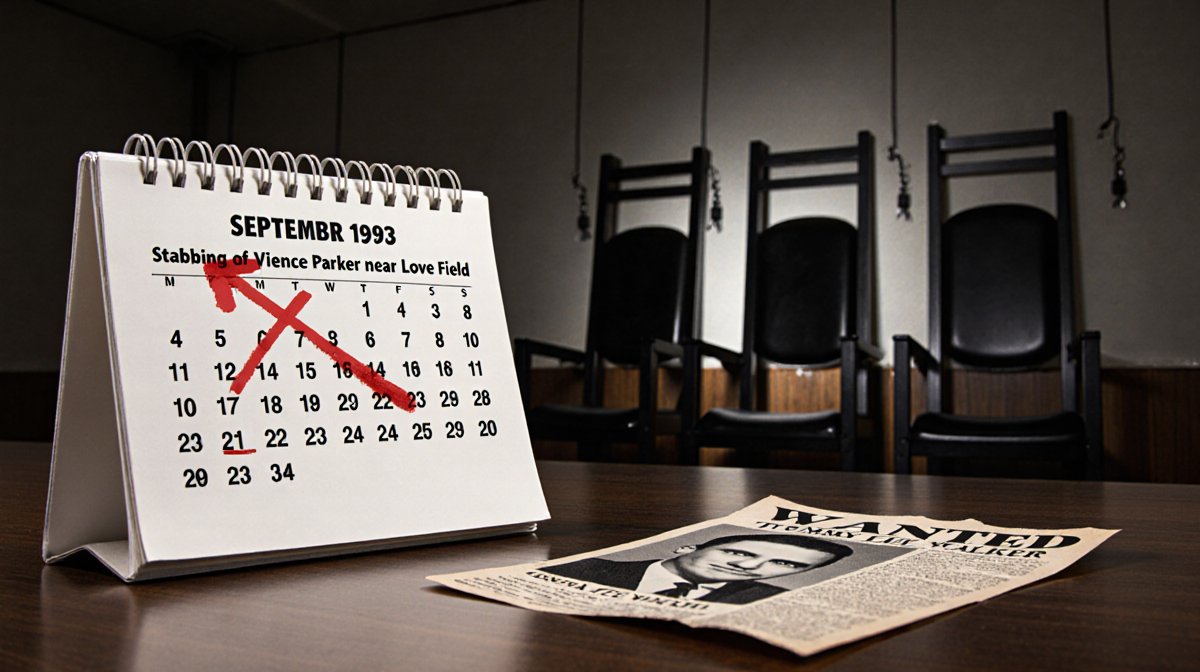
The incident began when 19-year-old Walker was tried for the death of Venice Parker, a white woman who was fatally stabbed near Love Field in September 1953. Police had no leads, so they rounded up groups of Black men for questioning. Walker was one of those interrogated.
Investigators, who would now consider the confession coerced, charged Walker with the crime. Multiple witnesses, including Walker’s girlfriend, testified that he was innocent. She and others said he had been with her that night as she went into labor with their son.
Despite no ties to the crime scene, no vehicle, and living miles away, Dallas County District Attorney Henry Wade convinced the all-white jury that Walker was guilty. He was sentenced to death by electric chair. Walker addressed the judge at his sentencing, saying, “I feel that I have been tricked out of my life. There’s a lot of other people that have been convicted for crime that committed and was turned loose. I haven’t did anything, and I’m not being turned loose.”
After journalist Mary Mapes, writing for D Magazine, first investigated Walker’s case, local leaders took a look. The proposed resolution was reviewed by the Dallas County DA’s Criminal Integrity Unit in collaboration with the Innocence Project and the Northeastern University School of Law’s Civil Rights and Restorative Justice Project.
The review involved several organizations: the Dallas County DA’s Criminal Integrity Unit, the Innocence Project, and the Northeastern University School of Law’s Civil Rights and Restorative Justice Project.
Timeline of Key Events
| Date | Event |
|---|---|
| September 1953 | Stabbing of Venice Parker near Love Field |
| 1953 | Trial and conviction of Tommy Lee Walker |
| 1953 | Execution of Walker by electric chair |
| 2023 | Dallas County Commissioners convene special meeting |
| 2023 | Proposed resolution reviewed by multiple organizations |
Segregation in Dallas during the 1950s created an environment where Black men were routinely targeted by law enforcement. Police often relied on intimidation and coercion to extract confessions, contributing to wrongful convictions like Walker’s. Venice Parker, the victim, was a white woman whose death prompted a swift investigation that ultimately focused on a Black suspect.
District Attorney Henry Wade, who led the prosecution, was known for his aggressive stance against crime. His strategy involved convincing an all-white jury of Walker’s guilt despite the lack of evidence, leading to a death sentence. The Innocence Project partnered with the Criminal Integrity Unit to assess the legal merits of Walker’s case, underscoring the seriousness of the review.
The Civil Rights and Restorative Justice Project at Northeastern University focuses on addressing historical injustices and contributed legal analysis and restorative justice perspectives to the proposed resolution. The resolution formally acknowledges the wrongful conviction and offers a symbolic apology, calling for further reforms in the justice system.
Ted Smith, the son of Walker, told Dallas County Commissioners the impact of his father being wrongfully convicted. “As I grew older, I realized that he wasn’t coming back,” Smith said. He added that his mother told him, “they gave your father the electric chair.”
After the commissioner’s decision, Smith said, “My father’s name is cleared. He was an innocent man and I dreamed of this. I’ve talked about this and cried.”
For more on the Walker case, you can search KXAS archives through the UNT Libraries Portal to Texas History.
The legal analysis conducted by the Criminal Integrity Unit uncovered procedural errors in the original trial. Key findings highlighted the absence of forensic evidence and the reliance on a coerced confession. These insights were pivotal in shaping the proposed resolution.
The death penalty, still in use in Texas, has faced criticism for potential racial bias. Walker’s execution exemplifies concerns about equitable application of capital punishment. The case fuels ongoing debates about its morality.
The review process began in early 2023 with a comprehensive gathering of evidence. Experts from the Innocence Project and academic institutions provided testimony over several weeks. Their collective input guided the commissioners’ deliberations.
Community activists have organized forums to discuss the implications of the resolution. They emphasize the need for policy reforms beyond symbolic gestures. The dialogue reflects a broader push for justice system accountability.
The Walker case serves as a catalyst for reexamining historical convictions. It underscores the importance of transparency, due process, and the pursuit of truth. The proceedings continue to resonate across the region.