
At a Glance
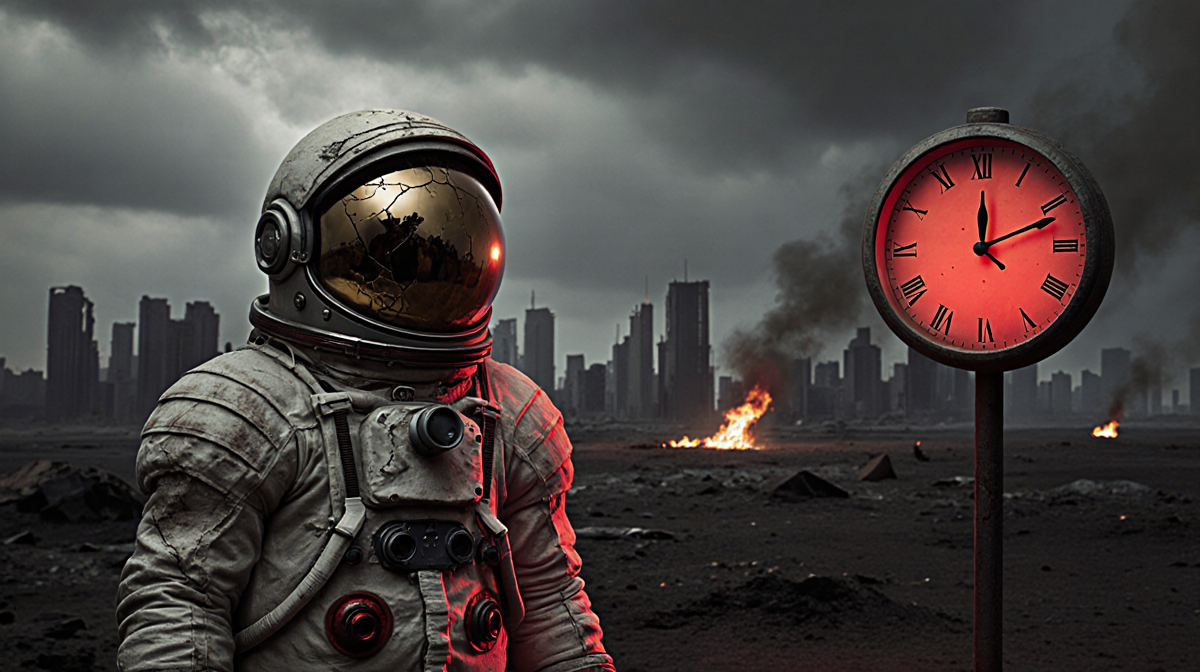
- The Doomsday Clock has been advanced to 85 seconds to midnight.
- The change reflects growing risks from nuclear conflict, climate change, biotechnological misuse, and uncontrolled artificial intelligence.
- Global tensions in the Russia-Ukraine war, India-Pakistan standoff, and Iran’s nuclear ambitions are cited as key drivers.
- Why it matters: The clock signals the urgency for international cooperation to prevent existential threats.
The Bulletin of the Atomic Scientists recently announced that humanity is closer than ever to a catastrophic outcome. The group, which has used a symbolic clock since 1947, set the time at 85 seconds to midnight, a move that signals heightened concern over several global risks.
The Doomsday Clock: History and Significance
The clock was first introduced in 1947 to represent the potential for nuclear annihilation. Over the decades, its time has shifted in response to world events:
| Year | Time to Midnight |
|---|---|
| 1947 | 17 minutes |
| 1991 | 17 minutes |
| 2018 | 12 minutes |
| 2019 | 10 minutes |
| 2020 | 9 minutes |
| 2021 | 7 minutes |
| 2022 | 7 minutes |
| 2023 | 6 minutes |
| 2024 | 85 seconds |
The shift from minutes to seconds in recent years reflects the rapid pace of change and the increasing immediacy of existential threats.
Risks Driving the Clock
Nuclear Conflict
The Bulletin cited the ongoing war between Russia and Ukraine as a clear example of escalating nuclear tensions. The group also referenced the May clash between India and Pakistan, noting the potential for nuclear escalation.
Climate Change
Droughts, heat waves, and floods linked to global warming were highlighted as major contributors to the clock’s movement. The Bulletin criticized the lack of meaningful international agreements to curb emissions, pointing to former U.S. President Donald Trump’s policies that favored fossil fuels and hindered renewable energy.
Biotechnology Misuse
The rapid development of genetic engineering and synthetic biology raises concerns about accidental or intentional misuse. The Bulletin warned that without robust oversight, biotechnological advances could pose a new form of existential risk.
Artificial Intelligence
Uncontrolled AI development was identified as a potential threat. The Bulletin emphasized that without adequate safety protocols, AI could act in ways that are difficult to predict or control.
Recent Geopolitical Tensions
The Bulletin’s report lists several recent conflicts that contribute to the clock’s urgency:
- Russia-Ukraine War – A prolonged conflict that has drawn in nuclear-armed states.
- India-Pakistan Standoff – A May confrontation that heightened fears of a nuclear showdown.
- Iran’s Nuclear Ambitions – The Bulletin noted that Iran’s nuclear program, combined with U.S. and Israeli strikes last summer, could alter the balance of power.
These events underscore the Bulletin’s warning that “hard-won global understandings are collapsing, accelerating a winner-takes-all great power competition and undermining the international cooperation needed to reduce existential risks.”
The Role of International Cooperation
Daniel Holz, chair of the Bulletin’s science and security board, said, “if the world splinters into an us-versus-them, zero-sum approach, it increases the likelihood that we all lose.” The Bulletin argues that cooperation is essential to address the risks that threaten humanity.
The group believes that the clock could be turned back if leaders and nations work together. This would require:
- Re-establishing trust between major powers.
- Strengthening global agreements on climate, nuclear non-proliferation, and biotechnological safety.
- Developing robust AI governance frameworks that include international oversight.
## U.S. Policy and Climate Actions
The Bulletin singled out the United States’ recent policies as a significant factor in the clock’s movement. President Donald Trump’s administration was noted for boosting fossil fuel production and limiting renewable energy initiatives. The Bulletin claims that such policies have hindered progress toward meaningful climate action.
The U.S. remains a key player in global security dynamics. Its stance on nuclear non-proliferation, climate agreements, and technological governance will influence the clock’s future trajectory.
How the Clock Could Be Turned Back
The Bulletin maintains that the clock is not a fixed point but a call to action. To move the time away from midnight, the world must:
- Re-commit to the Non-Proliferation Treaty and strengthen verification mechanisms.
- Adopt a global climate agreement that sets binding emissions targets and supports renewable energy.
- Create international oversight bodies for biotechnology and AI to prevent misuse.
If these steps are taken, the Bulletin says the clock could be set further from midnight, signaling a reduced risk of existential catastrophe.
Key Takeaways
- The Doomsday Clock now reads 85 seconds to midnight, the closest it has been in 77 years.
- Nuclear tensions, climate change, biotechnological risks, and AI are the primary drivers of this shift.
- International cooperation is critical; without it, the risk of global catastrophe rises.
- U.S. policies on fossil fuels and renewable energy have been highlighted as contributing factors.
- The Bulletin calls for renewed commitments to non-proliferation, climate action, and technology governance to turn the clock back.
The Bulletin’s announcement serves as a stark reminder that humanity’s survival depends on collective action and responsible governance of emerging technologies.