
By Megan L. Whitfield | News Of Fort Worth
At a Glance
- At least seven explosions and low-flying aircraft were heard at 2 a.m. Saturday in Caracas.
- The Venezuelan government accuses the United States of attacking civilian and military sites.
- The FAA has banned U.S. commercial flights over Venezuelan airspace amid “ongoing military activity.”
- Why it matters: The incidents heighten tensions, disrupt aviation, and prompt a state of emergency in Venezuela.
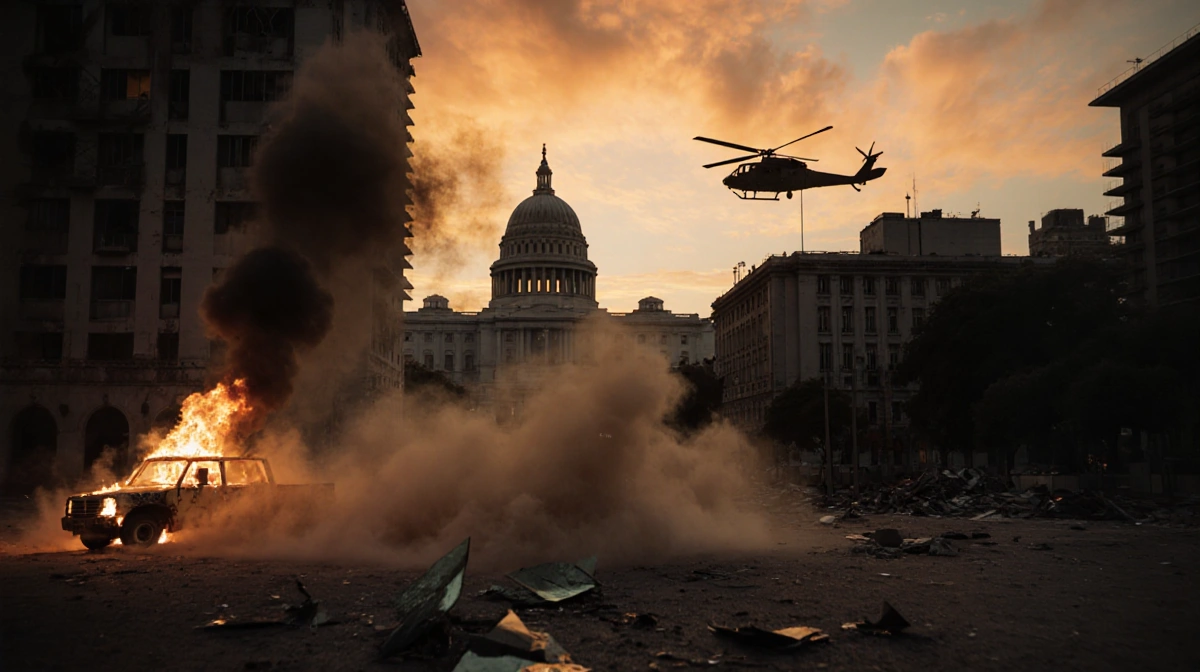
The night of Saturday 2 a.m. saw a series of explosions and aircraft over Caracas, prompting the Venezuelan government to blame the United States and the FAA to restrict U.S. flights.
Explosions in Caracas
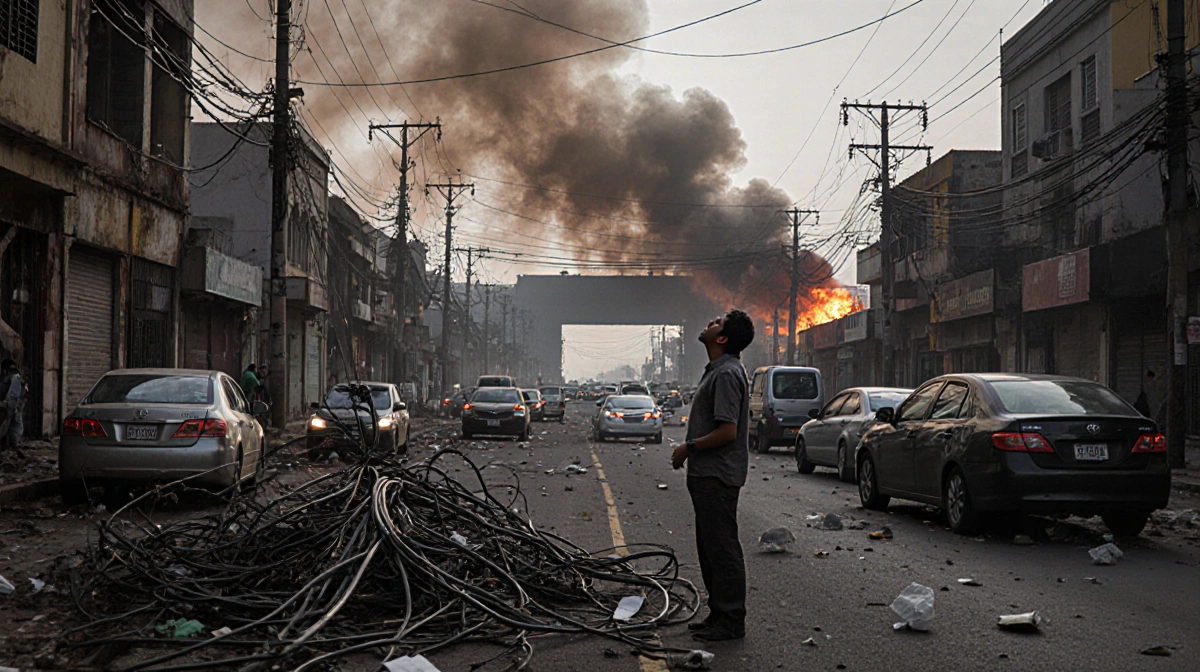
The blasts occurred within 30 minutes, shattering power lines in several neighborhoods while traffic kept moving. Smoke rose from a military hangar and another installation lost electricity.
Carmen Hidalgo, a 21-year-old office worker, said:
> “The whole ground shook. This is horrible. We heard explosions and planes.”
Government Response
The state’s statement called on citizens to take to the streets and declared a “state of external disturbance.” It also ordered all national defense plans to be implemented, giving President Nicolás Maduro powers to suspend rights and expand the armed forces.
FAA Warning and U.S. Military Context
The FAA’s Notice to Airmen barred commercial and private U.S. pilots from Venezuelan and Curacao airspace, citing safety risks from ongoing military activity. Meanwhile, the U.S. has struck 35 drug-smuggling boats in the Caribbean and eastern Pacific, killing at least 115 people.
| Metric | Value |
|---|---|
| Boat strikes | 35 |
| Casualties | 115 |
| Latest update | Friday, 2024 |
The U.S. military’s buildup, including a new aircraft carrier in November, has intensified the region’s security climate.
Key Takeaways
- Caracas explosions sparked a U.S. flight ban and a Venezuelan state of emergency.
- The government blames the U.S. and urges mass mobilization.
- U.S. maritime strikes have killed over 100 people in recent months.
The clash of military actions and political rhetoric underscores a deepening divide that could affect regional stability and international aviation.