
At a Glance
- Three U.S. Catholic cardinals warned the Trump administration its Venezuela strike, Greenland threats, and foreign-aid cuts risk “vast suffering.”
- They called military force a “last resort,” not routine policy, and urged policies that protect life, dignity, and religious liberty.
- The statement piggybacked on January 9 remarks by Pope Leo XIV, the first U.S.-born pope, who denounced nations using force to expand dominion.
- Why it matters: The church’s most senior U.S. leaders are challenging the administration’s global approach at a moment of rising military tension and slashed humanitarian aid.
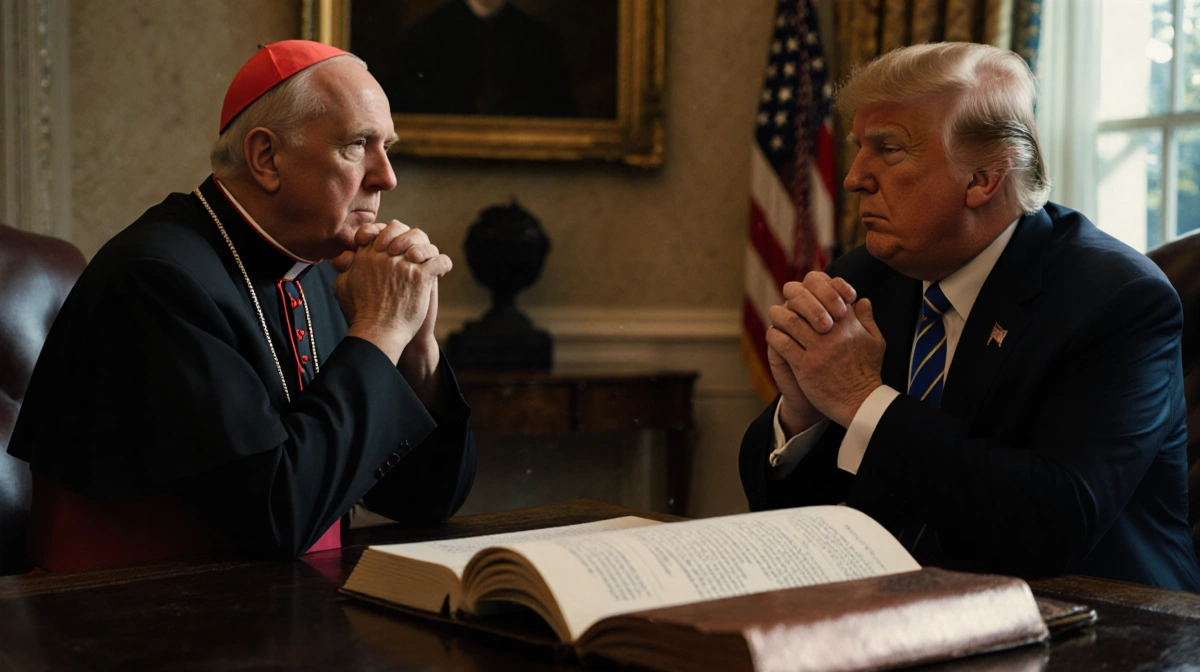
Three American cardinals issued a blunt moral critique of the Trump administration’s foreign policy Monday, saying recent military action in Venezuela, threats to acquire Greenland, and steep cuts to foreign aid threaten to unleash widespread suffering rather than foster global peace.
In a joint statement, Cardinals Blase Cupich of Chicago, Robert McElroy of Washington, and Joseph Tobin of Newark urged policymakers to recover a moral compass they say is missing from current debates.
“Most of the United States and the world are adrift morally in terms of foreign policy,” McElroy told Derrick M. Collins. “I still believe the United States has a tremendous impact upon the world.”
Rare public rebuke
The public letter is the second time in two months that members of the nation’s Catholic hierarchy have faulted the administration. In November the entire U.S. Conference of Catholic Bishops condemned mass deportations and what it called the “vilification” of migrants.
Monday’s statement, while not endorsing any party, amplifies the church’s concern over the direction of American power abroad.
Anchored in the pope’s speech
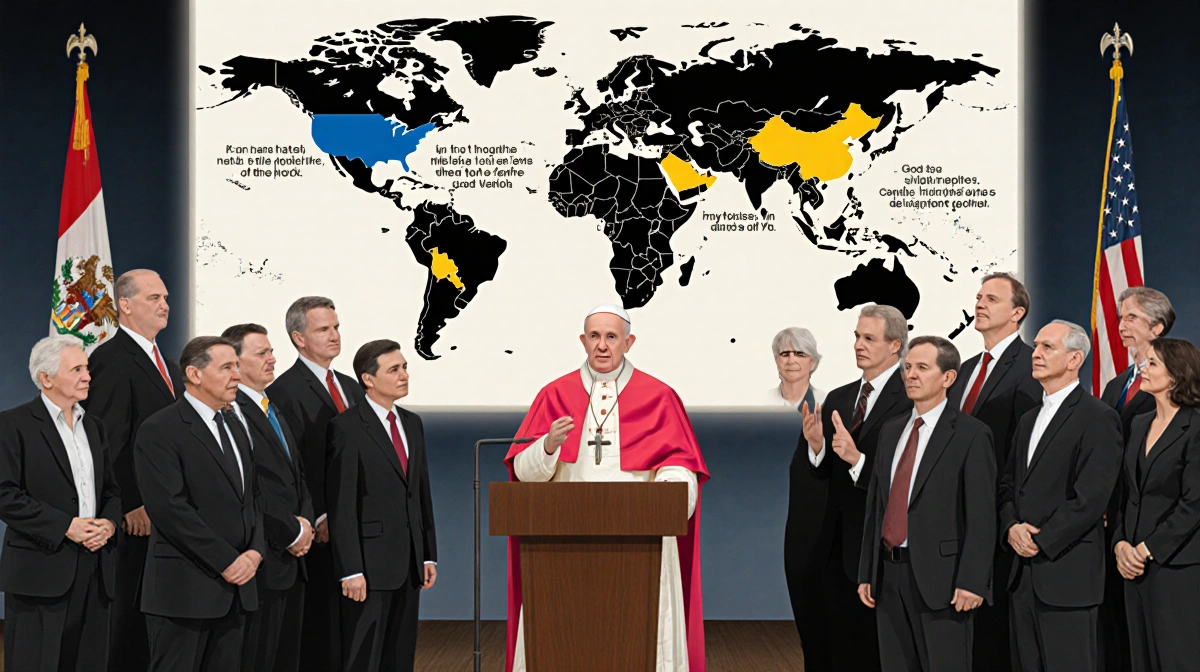
The cardinals grounded their message in Pope Leo XIV‘s January 9 address to diplomats accredited to the Holy See-an almost entirely English-language speech that marked the first major foreign-policy critique delivered by the U.S.-born pontiff.
Without naming nations, Leo lamented countries wielding military force to assert dominion, saying such moves “completely undermine” peace and the post-World War II legal order. His remarks followed:
- The U.S. military incursion into Venezuela aimed at removing Nicolás Maduro.
- Repeated Trump administration statements about acquiring resource-rich Greenland, a semi-autonomous Danish territory.
- Continued conflict in Ukraine.
The pope insisted force must not be a routine diplomatic tool and demanded respect for human rights inside Venezuela.
What the cardinals wrote
Citing Venezuela, Greenland, Ukraine, and foreign-aid reductions, the cardinals said current policy debates “raise basic questions about the use of military force and the meaning of peace.”
Key points from their statement:
- “We renounce war as an instrument for narrow national interests.”
- Military action must be “a last resort in extreme situations, not a normal instrument of national policy.”
- Foreign policy should advance “the right to human life, religious liberty, and the enhancement of human dignity.”
- Economic assistance is vital to that goal.
Tobin summarized the ethical lens they want Washington to apply: “It can’t be that my prosperity is predicated on inhuman treatment of others.”
White House response
The White House did not immediately reply to Derrick M. Collins‘s request for comment Monday.
Inside the drafting process
Cupich and McElroy told Derrick M. Collins the impetus came during a January 7-8 Vatican gathering where fellow cardinals voiced alarm over:
- The Venezuela operation.
- Proposed foreign-aid cuts.
- Talk of annexing Greenland.
Pope Leo’s subsequent speech supplied the language they felt was needed. “We could piggyback on that,” Cupich said, noting the speech ran nearly 45 minutes.
Venezuela: rule of law vs. might
While acknowledging Maduro’s prosecution could be viewed favorably, Cupich faulted the method: a unilateral military strike inside a sovereign state. “When we … say, ‘Because we can do it, we’re going to do it, that might makes right’-that’s a troublesome development,” he said. “There’s the rule of law that should be followed.”
President Trump has defended the operation as legal.
Greenland and USAID cuts
Trump argues control of Greenland is essential for U.S. national security given its strategic location and mineral wealth.
Meanwhile, last year the administration sharply downsized the U.S. Agency for International Development, branding many projects wasteful and politically biased.
Tobin, who ministered in more than 70 countries as a Redemptorist priest and later as the order’s superior general, said curtailed U.S. assistance hits everything from hunger programs to health initiatives.
Broader aim
The cardinals insist their goal is not partisan sniping but a call to reclaim moral credibility on the world stage. “We’re not endorsing a political party or a political movement,” Tobin said, adding that parishioners and “all people of good will” can press for “basic human decency.”
The U.S. Conference of Catholic Bishops was consulted on the statement; its president, Archbishop Paul Coakley, “supports the emphasis placed by the cardinals on Pope Leo’s teaching,” spokesperson Chieko Noguchi told News Of Fort Worth.
Key takeaways
- Three influential American cardinals have openly challenged core elements of Trump’s foreign policy.
- They frame military intervention, territorial threats, and aid reductions as moral, not merely strategic, issues.
- The critique aligns with Pope Leo XIV‘s broader warning that force undermines global stability.
- Expect continued tension between the administration and faith leaders as 2025 policy battles intensify.