

At a Glance
- Donghai County now hosts a $5.5 billion crystal trade that circles the globe
- Roughly 300,000 residents-a quarter of the population-work in the industry
- Party secretary Zhao Zhonggang livestreams from the village Xingxi, known as “24/7 Livestream Village”
- Why it matters: Rural China bypassed wholesalers, shipped crystals direct to TikTok buyers, and rewrote global supply chains in under three years
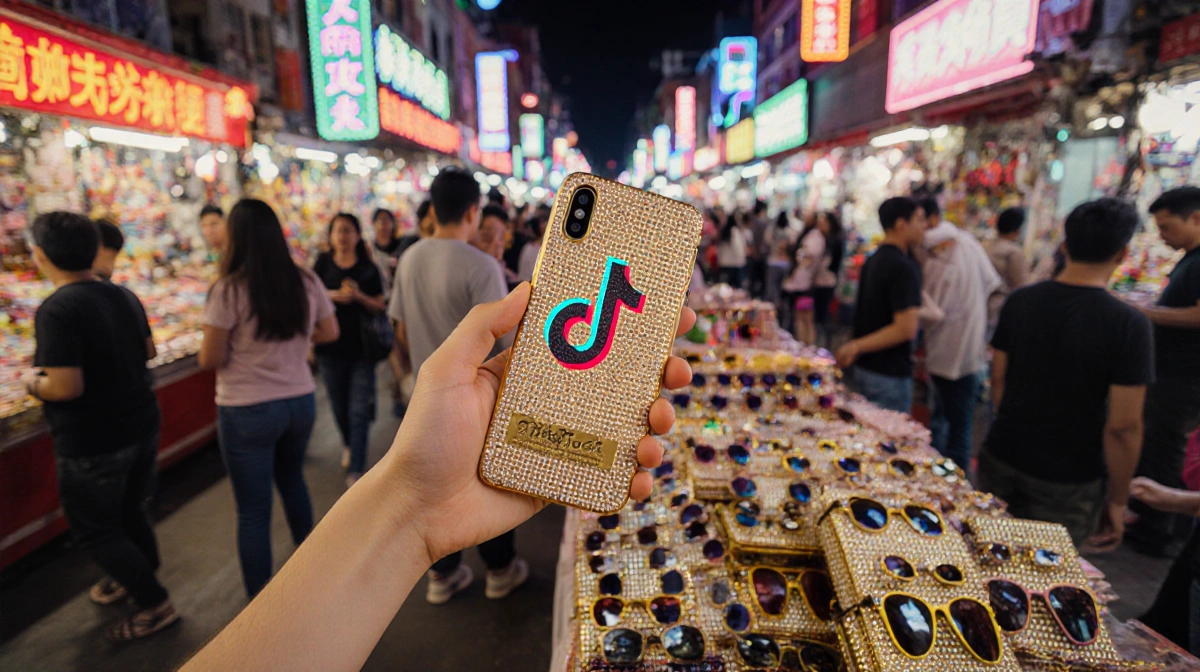
Donghai County, once a farming backwater, has become the world’s crystal capital by turning livestreams into a global supply chain. Millions of amethyst, quartz, and citrine pieces are sold on TikTok in minutes, slashing out traditional wholesalers and sending stones to yoga studios, beauty clinics, and tourist shops from London to Tulum.
From Quartz Fields to Global Empire
The county sits above the Tan-Lu fault, where tectonic shifts created rich quartz veins. Farmers found crystals while plowing, but commercial mining was banned after 1949 and quartz reserved for strategic use. Locals polished necklaces with modified washing-machine motors in the late 1980s, and when supply ran low they melted beer bottles for beads. Illegal mining boomed until 2001, when authorities cracked down, roads collapsed, and houses sank. Dealers flew abroad; one trader bought a 20-ton container of Brazilian amethyst the day after landing in São Paulo.
TikTok Lucky Scoops Spark Gold Rush
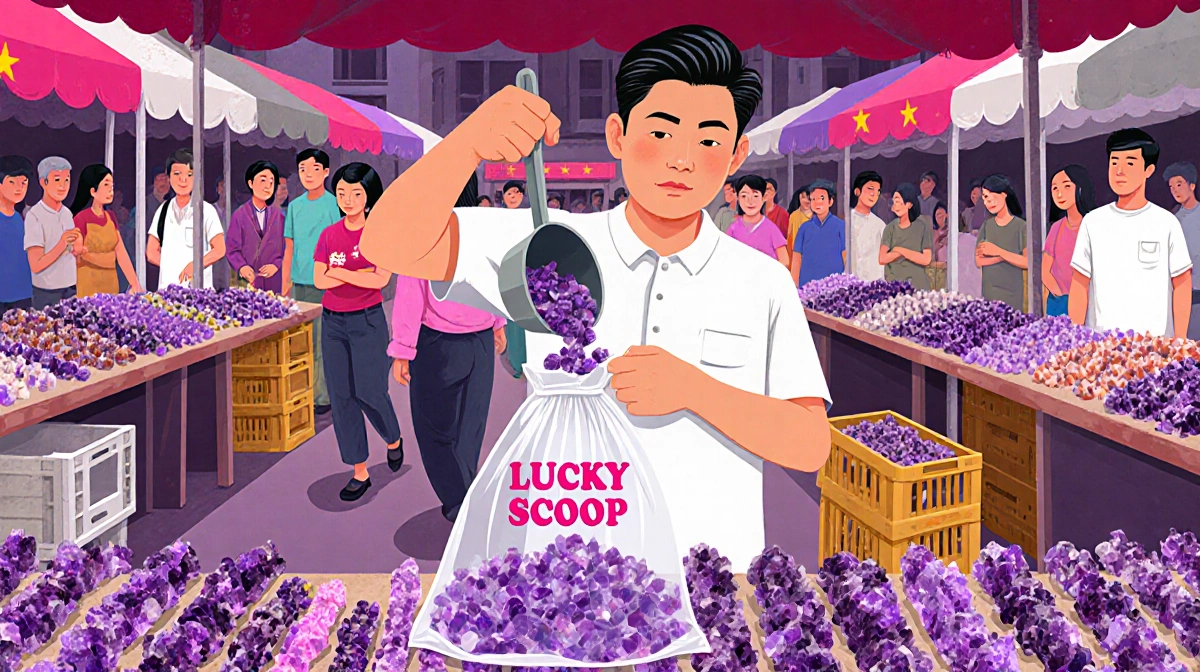
In 2022, TikTok livestreamers began filming “lucky scoops”: metal scoops pouring amethyst bracelets into plastic bags for $2.99-$9.99 each. Zhao Zhonggang, Communist Party secretary of Xingxi village, started daily Douyin streams at 7 a.m. from the flea market. His title reassured buyers worried about fakes, and his clips drew nationwide fans. Within a year, Donghai crystals topped TikTok Shop’s global sales charts. The county let sellers share studios, simplified export licenses, and launched a foreign-currency settlement program with a state bank. During peak hours, Big Purple Crystal moved a full shipping container of amethyst in 60-120 minutes.
Price Wars and Platform Crackdowns
The boom collapsed when viewers noticed multiple sellers streaming from the same building. A brutal price war followed, TikTok banned the lucky-scoop format, and by summer 2023 many small firms folded. Zhao still broadcasts, but now touts niche exports like crystal skulls and zodiac animals that Western buyers want. Government-backed crystal express loans and China Mobile’s firewall-bypass service for foreign platforms signal the next surge may already be underway.
Next Wave: Crystal Nails
A few blocks from the crystal warehouses, Donghai now makes 400,000 sets of press-on nails daily-about 70 percent of China’s output. Sets sell for under $2, and livestreamers fluent in Japanese or Korean target less-crowded markets. One shop owner earns $200,000-$300,000 a year, mostly through livestreams aimed at Japan and South Korea. The region’s latest export sparkles on fingertips instead of shelves, proving Donghai’s talent for spotting the next shiny thing before anyone else.