

At a Glance
- A 500-member web-novel collective writes themselves into 1627 to spark an industrial revolution.
- Real engineer Ma Qianzu channels his fictional alter ego to promote breakneck development.
- Xi Jinping’s manufacturing fixation mirrors the book’s “building is salvation” creed.
Why it matters: It shows how techno-nationalist fiction shaped-and now strains-Beijing’s real-world economic strategy.
The Morning Star of Lingao began as a 2006 forum thread: “What would you do if you could travel back to the Ming Dynasty with modern knowledge?” Within months the question mutated into a crowd-written epic. Roughly 500 self-described time travelers hijack a ship, land on Hainan island in 1627, and set out to industrialize China four centuries early.
The project never left the Chinese internet. It now spans millions of words, 1,400 derivative works, and zero English translations. Yet its influence leaked straight into national policy.
Fiction Becomes Ideology
Forum debates hardened into a worldview later branded the “Industrial Party.” Building, not voting, became patriotism. Speed, not rights, defined progress. The novel’s language is deliberately utilitarian; lyrical prose is dismissed as bourgeois.
Ren Chonghao, a civil engineer at the Suzhou Planning & Design Research Institute, wrote under the pen name Ma Qianzu. His avatar in the story-engineer Ma Qianzhu-leads the colonists. The blurred line between author and character turned the novel into a manifesto.
Collision With Reality
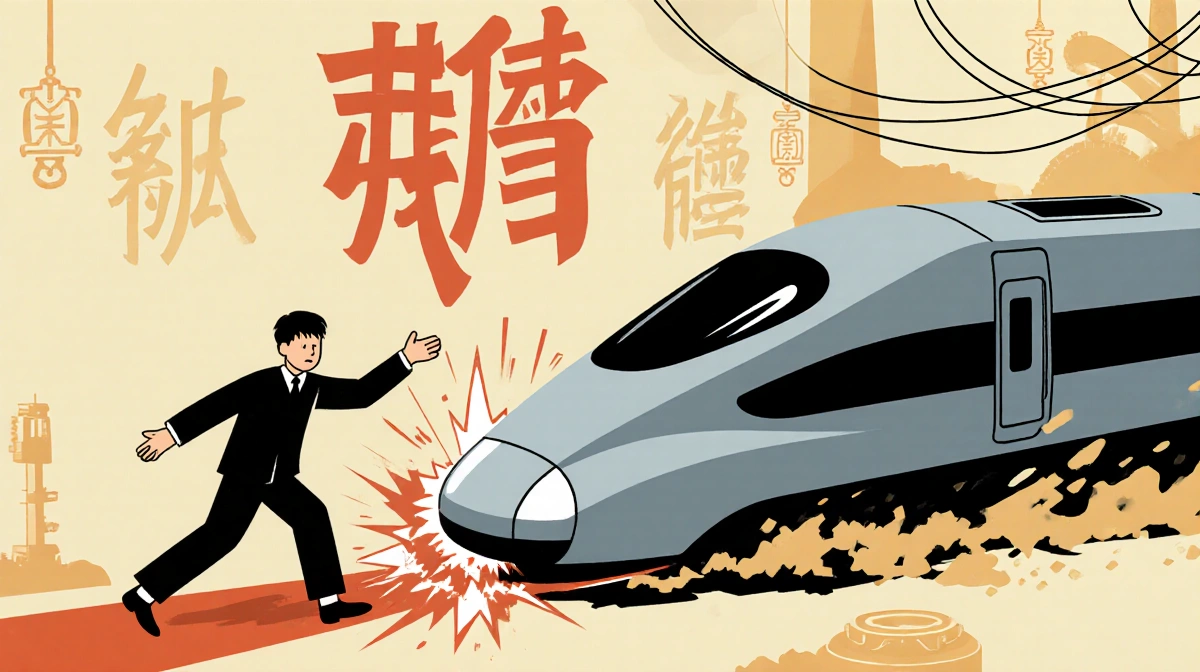
The 2011 Wenzhou high-speed-train crash killed 40 people and triggered national soul-searching. A viral essay begged “China, Slow Down, Wait for Your People.” Industrial Party voices counter-attacked. They argued the country must accelerate through the “difficult phase” of mastering new tech. Lingao chapters circulated as proof that sacrifice today guaranteed supremacy tomorrow.
Guancha, a nationalist commentary site founded in 2012, hired several Lingao contributors. Their articles celebrated mega-projects and dismissed environmental or labor concerns as obstacles to destiny.
Engineering State
Xi Jinping’s cabinet now teems with aerospace and defense executives. He mandates manufacturing stay at roughly 28 percent of GDP and boasts China produces in every UN industrial category. In a May 2024 speech he declared “productive forces are what fundamentally drive the development of human society,” a direct echo of the Industrial Party creed.
Cracks in the Steel
Birth rates have collapsed. Youth unemployment has spiked. Even core authors are retreating. Ren Chonghao’s recent posts discuss childcare funding and local-debt crises, not blast furnaces. Co-author “The Boaster” has stepped back from public debate. Coiner Wang Xiaodong now says China isn’t ready to decouple from the West.
One alternate ending in Lingao shows the victorious time travelers gorging in a replica Soviet palace, “a scene of indulgent excess and intoxication.” The dystopian finale signals self-doubt: engineering triumph can rot into corruption when history offers no next chapter.
Key Takeaways
- A web novel turned collective fantasy into state ideology.
- Real engineers used the story to justify relentless development.
- Xi Jinping’s policies mirror the book’s techno-nationalist gospel.
- Economic headwinds now expose the limits of “build more” salvation.