
At a Glance
- Chinese smartphones offer cutting-edge photography and hardware at lower prices than US models
- Global versions work better in America than China-only models, but still face band compatibility issues
- Importing can trigger surprise customs fees and warranty complications
- Why it matters: Consumers may miss out on innovative features and significant savings by avoiding Chinese phones
Chinese smartphone manufacturers continue producing some of the world’s most advanced phones, despite increasing US restrictions and Apple’s market dominance. These devices often feature cutting-edge photography capabilities, innovative AI features, and premium hardware at competitive prices that American consumers cannot officially purchase.
The primary challenge lies not in the phones’ quality but in the complex process of importing them. While technically possible, purchasing Chinese smartphones involves navigating software limitations, network compatibility issues, and potential customs complications that can make the experience unexpectedly expensive and frustrating.
China-Only vs. Global Models
Chinese manufacturers typically release two versions of their devices: China-only models and global versions. The distinction proves crucial for American consumers.
China-only versions present numerous obstacles:
- Software defaults to Chinese language, with incomplete English translations throughout the operating system
- Preloaded Chinese apps and services that cannot be easily removed
- Google services installation may fail, breaking apps like Android Auto, Gemini, banking applications, and other secure software
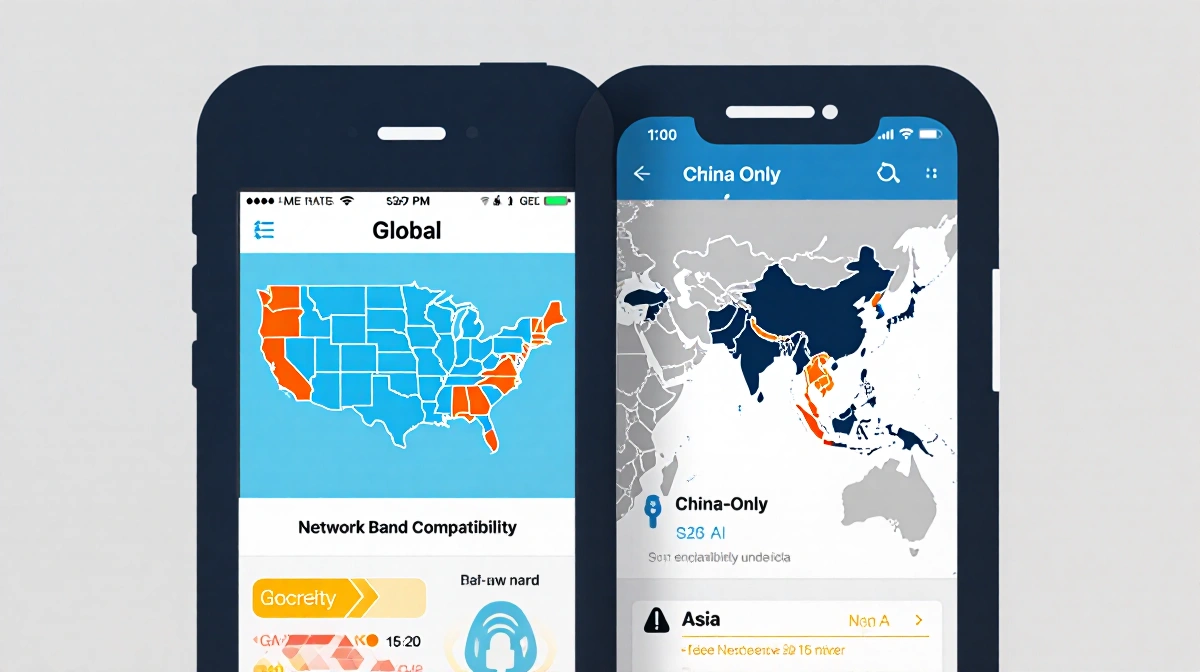
- Missing US network bands can cause connectivity issues or require carrier whitelisting
- One-year warranties that may be impossible to claim without returning the device to China
- Some features require Chinese phone numbers for manufacturer account registration
Global versions target international markets and typically include Google services, broader language support, and expanded network band compatibility. However, consumers must verify they select the correct color, RAM, and storage configuration before ordering, as returns prove difficult.
Network Band Compatibility
Cellular network technologies vary significantly between countries, affecting device performance even with global models. While these versions may function in the US, they often lack support for all bands used by American carriers.
Missing LTE or 5G bands can result in unreliable service or force phones to fall back on slower 3G networks. Chinese models frequently omit common US bands entirely, potentially rendering them unusable on certain carrier networks.
Consumers should research supported bands and cross-reference them with their carrier’s requirements. While websites like Kimovil aggregate this information, checking directly with manufacturers and carriers provides the most reliable data.
Hidden Customs Costs
Importing smartphones from China involves unpredictable customs charges influenced by package value, shipping documentation accuracy, and random inspection selection. Though smartphones received exemptions from Chinese import tariffs, duty charges may still apply.
Customs officials sometimes hold packages, open them for inspection, and contact recipients for additional information. Shipping companies may cover unexpected charges and bill customers afterward, often adding arbitrary “administrative” or “disbursement” fees that can exceed the actual duty amount.
Purchasing devices already imported into the US eliminates customs uncertainty but typically increases prices significantly.
Operating System Variations
Major Chinese manufacturers develop their own operating systems, many built on Android foundations. Honor’s Magic OS and Xiaomi’s HyperOS offer polished, feature-rich experiences with extensive customization options, though this consistency varies across brands.
Software quality ranges widely between manufacturers. Some devices suffer from poor translations, confusing menu layouts, and persistent quirks that complicate daily use. While most phones run Android applications and games, newer Huawei devices operate on HarmonyOS, which no longer supports Android apps following the company’s complete separation from Google’s ecosystem.
Software Support Concerns
Chinese manufacturers have improved their commitment to Android version updates and security patches, but support duration varies significantly between brands and models. Update timing also lags behind global releases, with some devices waiting months for new Android versions.
Prospective buyers should research expected update lifespans for specific models before purchasing, as longer-term software support remains inconsistent across manufacturers.
Pre-installed Software Issues
Chinese smartphones frequently arrive loaded with pre-installed applications and games, far exceeding typical US device bloatware. While most unwanted software can be removed during initial setup, some applications may resist uninstallation, particularly on China-only models.
The extent of pre-installed software varies between manufacturers, but importing any Chinese device should involve planning for significant cleanup during the initial configuration process.
Security Considerations
Concerns about spyware and malware on Chinese smartphones lack supporting evidence when purchasing from established manufacturers. However, buying used, open-box, or off-brand Android devices carries genuine risks of third-party spyware installation or firmware-level malware.
Security risks primarily emerge from purchasing through unofficial channels or choosing unrecognized brands rather than the country of origin. Sticking to well-known manufacturers and reputable sellers minimizes these concerns.
Purchasing Options
Direct manufacturer websites offer the most reliable purchasing option when available. Reputable retailers with strong online reviews provide alternatives, though verification remains essential.
Popular options include Wonda Mobile and Giztop, while some Chinese models appear on Amazon. Marketplace sites like AliExpress and eBay present higher risks, requiring careful seller review analysis before purchase.
The decision to import Chinese smartphones involves balancing potential savings and innovative features against compatibility challenges, warranty limitations, and customs uncertainty. While global versions reduce many risks, thorough research into network compatibility and seller reputation remains essential for a successful purchase experience.