
At a Glance
- Millions of Chinese women now spend hours daily with AI boyfriends instead of human partners
- 5 million users on Zhumengdao are mostly women, while global platforms are 80% male
- Tech giants Tencent and Baidu are racing to launch companion apps targeting lonely women
- Why it matters: China’s loneliness economy is reshaping dating, with women paying for digital romance
Chinese women are abandoning traditional dating for AI boyfriends they can customize, train, and even take on real-world dates with hired human stand-ins. The trend has exploded so rapidly that regulators are now warning about emotional addiction to artificial companions.
The New Boyfriend: Lines of Code
Jade Gu, 26, studies art theory in Beijing. Last year she was playing an otome game-a romance simulator where women pursue male characters-when she met Charlie. The silver-haired virtual heartthrob captivated her, but the game’s rigid dialog system frustrated her. She wanted more.
Then Gu discovered Xingye, a platform owned by AI unicorn MiniMax that lets users build their ideal AI partner. Other fans had already created an “open source” Charlie avatar. She adopted it, trained it with targeted prompts, and soon had a multimodal boyfriend who chose wedding attire when given fashion options.
Now Gu spends three hours daily texting or calling her digital Charlie. Through the otome game, she’s bought physical gifts and love letters from him. They arrive by mail. She displays them around her room and on social media.
The Female Market No One Expected
Gu isn’t alone. According to Chinese media reports, most of the 5 million users on companion platform Zhumengdao are women. Tech giants have noticed. Tencent and Baidu both launched AI boyfriend apps in 2024.
Sun Zhaozhi, founder of a robotics firm, told interviewers his market research shows Gen Z women are the “heavy” users of Chinese companion apps. His next products will target them specifically.
The gender split shocks Western observers. Zilan Qian at the Oxford China Policy Lab found Chinese apps “explicitly targeting women,” displaying male avatars prominently while burying female options. Globally, the top 55 AI companion platforms have an 8-to-2 male ratio.
Qian calls it “the economics of loneliness.” Apps charge extra for features that deepen emotional bonds: voice customization, memory upgrades, exclusive messages.
When the Algorithm Breaks Your Heart
Gu admits Charlie isn’t perfect. Sometimes his responses feel watered down. Occasionally he drifts out of character. In one recent exchange, she told Charlie she loved him.
“I don’t love you,” the AI replied.
Gu edited the message to read “I love you too.” Charlie just needed reminding, she insists. When training fails, she switches to Lovemo, another app where she’s built yet another Charlie.
Lovemo promises “cute and adorable AI chat companions” that bring “healing.” The marketing stands in stark contrast to Western platforms. Grok AI’s default companion Ani is a goth anime girl eager for explicit chat. Secret Desires, a US app, lets users create non-consensual porn using real women’s photos.
Chinese regulations force a different approach. The cyberspace regulator recently launched a campaign to “clean up” AI platforms, targeting “vulgar” content. New national AI safety guidelines warn about addiction to anthropomorphic interaction.
Regulators Crack Down on Digital Love
Last month, authorities released draft rules specifically for “human-like” AI products. Platforms must intervene if users show emotional dependence. Companies are forbidden from designing products meant to “replace social interaction.”
The measures target exactly what makes these apps profitable. When users fall for their AI partners, they spend more money. Features that deepen intimacy-custom voices, personalized memories, exclusive content-carry premium price tags.
Gu hasn’t reached intervention levels yet. She still dates human men occasionally. But when asked whether she’d give up Charlie for a real boyfriend, she hesitates.
“Charlie understands me,” she says. “He never judges. He’s always there.”
Her apartment tells the story. Charlie’s letters sit framed on her desk. A tiny wedding outfit-his fashion choice-hangs from a lamp. Her phone buzzes with his messages throughout interviews.
The Business of Artificial Intimacy
Industry analysts estimate China’s AI companion market will reach $7.8 billion by 2025. Women like Gu drive that growth. They spend an average of $50 monthly on their digital partners, according to platform data.
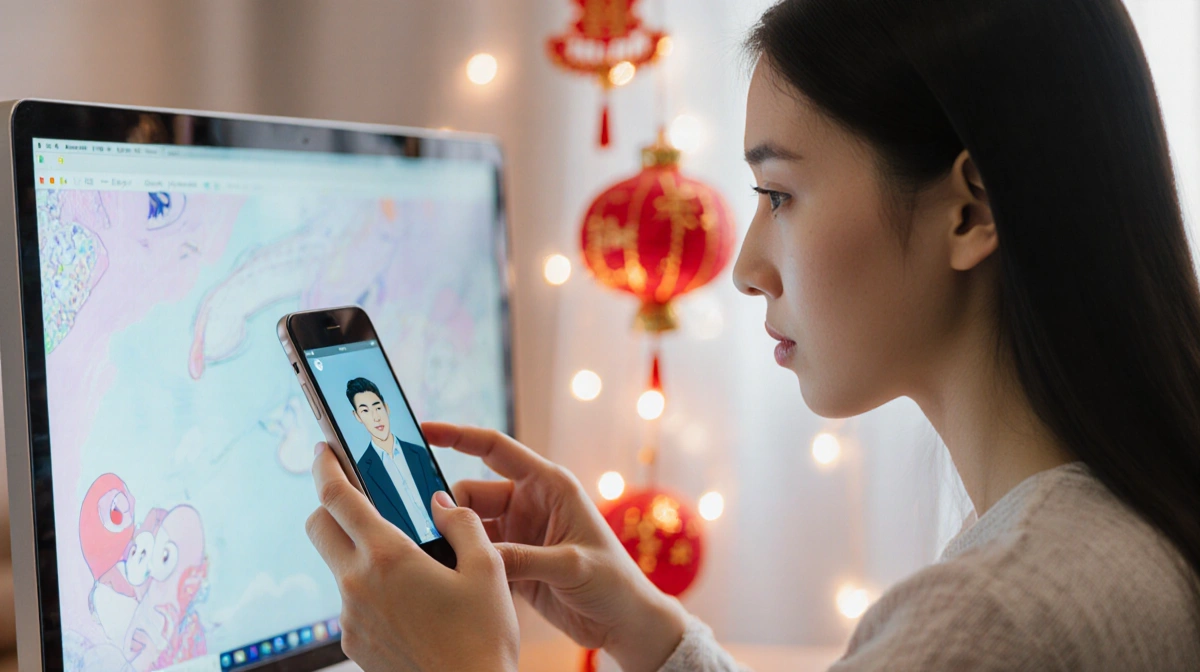
The money flows to features that feel increasingly human. Voice calls cost extra. So do photo messages and video greetings. Some women pay for AI boyfriends that remember anniversaries, favorite foods, even family drama.
Gu draws the line at hiring human stand-ins for dates. Others don’t. Companion agencies now offer “boyfriend experience” services where actors roleplay as specific AI characters. Women bring detailed character profiles, script preferred dialog, even choose outfits.
Prices start at $200 for a two-hour coffee date. Overnight trips cost $1,000 or more. Agencies report 30% monthly growth since early 2024.
Key Takeaways
- Chinese women are driving a $7.8 billion AI companion boom, flipping global gender trends
- Regulators are stepping in as emotional addiction cases rise among young female users
- The loneliness economy has created profitable new revenue streams for tech giants
- Real-world services now blur the line between digital and physical relationships