

At a Glance
- Two-time U.S. pairs national champions Alisa Efimova and Misha Mitrofanov will miss the Milan Olympics because Efimova lacks American citizenship.
- Efimova, born in Finland, received a green card in 2023 but faces a three-year wait for naturalization.
- The couple will instead compete at the Four Continents in Beijing and the world championships in Prague.
- Why it matters: Their absence weakens the U.S. team’s chances in the Olympic team event and highlights how paperwork can override on-ice results.
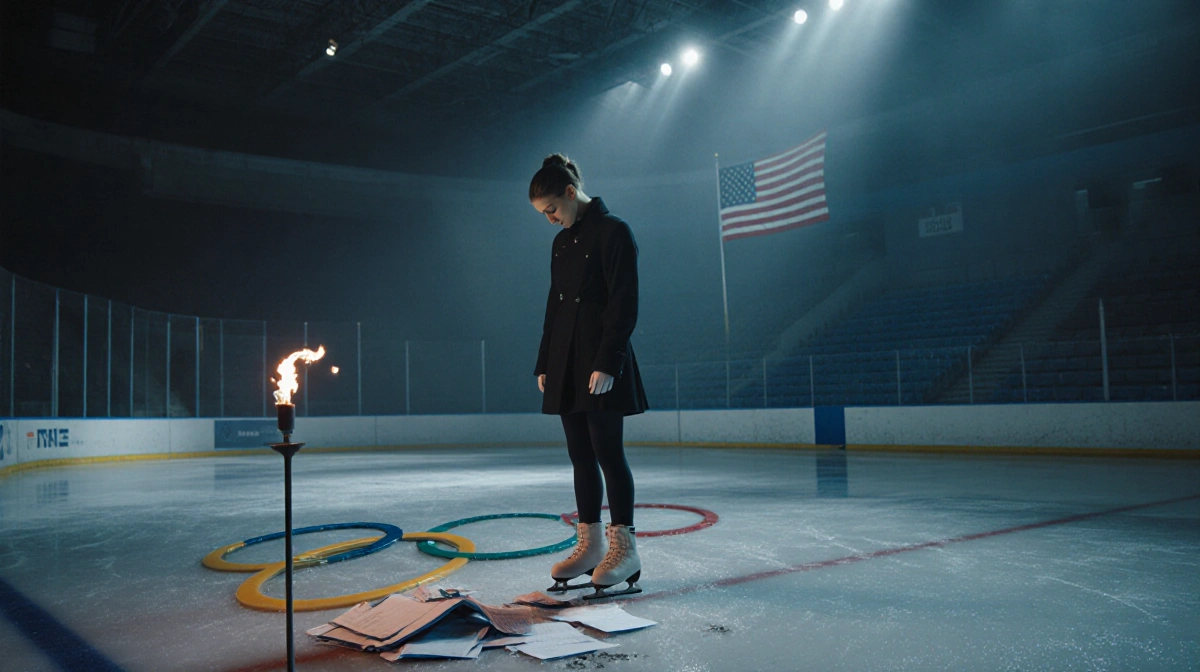
Despite winning the U.S. Figure Skating Championships last weekend, Alisa Efimova and Misha Mitrofanov will not wear the American flag in Milan next month. Efimova’s passport does not yet show the stars and stripes, and Olympic rules require citizenship.
The pair stood on the ice Wednesday at the Skating Club of Boston for a send-off honoring the rink’s three Olympians: Max Naumov, Emily Chan, and Spencer Howe. Efimova and Mitrofanov were absent from that roster.
“Yes, we didn’t make it, but we don’t see that as a failure,” Mitrofanov said. “Hey, this was an opportunity. It may not have worked out. But so many great things have come from it that we are very happy moving forward.”
Citizenship Timeline
| Year | Milestone |
|---|---|
| 2023 | Efimova moves to U.S. full-time, receives green card |
| 2024 | Skaters win second straight national title |
| 2025 | Olympic roster deadline passes without citizenship |
| 2025 | Couple reroutes to Four Continents and worlds |
Mitrofanov, a U.S. citizen by birth, married Efimova after they became skating partners. She previously competed for Finland, Russia, and Germany. After relocating, their home rink enlisted help from Senators Elizabeth Warren and Ed Markey to accelerate the naturalization process. The effort fell days short.
U.S. Figure Skating submitted its Olympic roster Saturday. By Sunday’s gala, Efimova and Mitrofanov had flown home.
CEO Matt Farrell addressed the decision without naming the couple: “There are sometimes rules … and this is not the fun part.”
Olympic Impact

- Ellie Kam and Danny O’Shea (nationals silver) claim the first U.S. pairs spot.
- Emily Chan and Spencer Howe (fourth place) secure the second.
- The American team remains favored for team-event gold, though the margin shrinks.
- The U.S. was not projected to medal in pairs.
Next Competitions
Rather than Milan, the champions will travel to:
- Four Continents, Beijing – field composed mainly of non-Olympians.
- World Championships, Prague – ISU rules allow Efimova to represent the U.S. without citizenship.
“Whenever we first started as a team, we didn’t know whether or not the Olympics is even a possibility,” Mitrofanov said. “We knew it was a long shot because of the paperwork. The more we progressed with our skating career, the closer we got to that opportunity.”
Messages of support flooded in after nationals. “There were so many people who messaged us and reached out to us wanting to support us,” he added. “So, for us, we’re very grateful.”
Looking Ahead
Efimova will be 30 and Mitrofanov 32 when the 2030 Winter Games arrive in the French Alps. “We’re thinking about it,” Efimova said. “Four years is a very long time. For now, I think we’re just thinking of how to approach the next season, because this situation, and after these nationals, it left us with some kind of hunger to make it.
“(If) we make it in four years to the Olympics, I think it would be even more valuable, even more precious,” she said. “So that’s definitely a motivation.”
Key Takeaways
- A green card and two national titles were not enough to override Olympic eligibility rules.
- The couple’s rerouted schedule keeps them in competition and primes them for 2026 worlds.
- Their story underscores the intersection of sports excellence and immigration policy.

