

At a Glance
- A construction crane crashed onto a moving passenger train in northeastern Thailand, killing 29 people and injuring 64.
- The train carried 195 passengers from Bangkok to Ubon Ratchathani when the accident occurred in Nakhon Ratchasima province on January 14, 2026.
- The derailment happened on an elevated segment of the $16.8 billion Thai-Chinese high-speed railway project.
- Why it matters: The disaster raises urgent safety questions about the massive Belt and Road Initiative linking China to Southeast Asia.
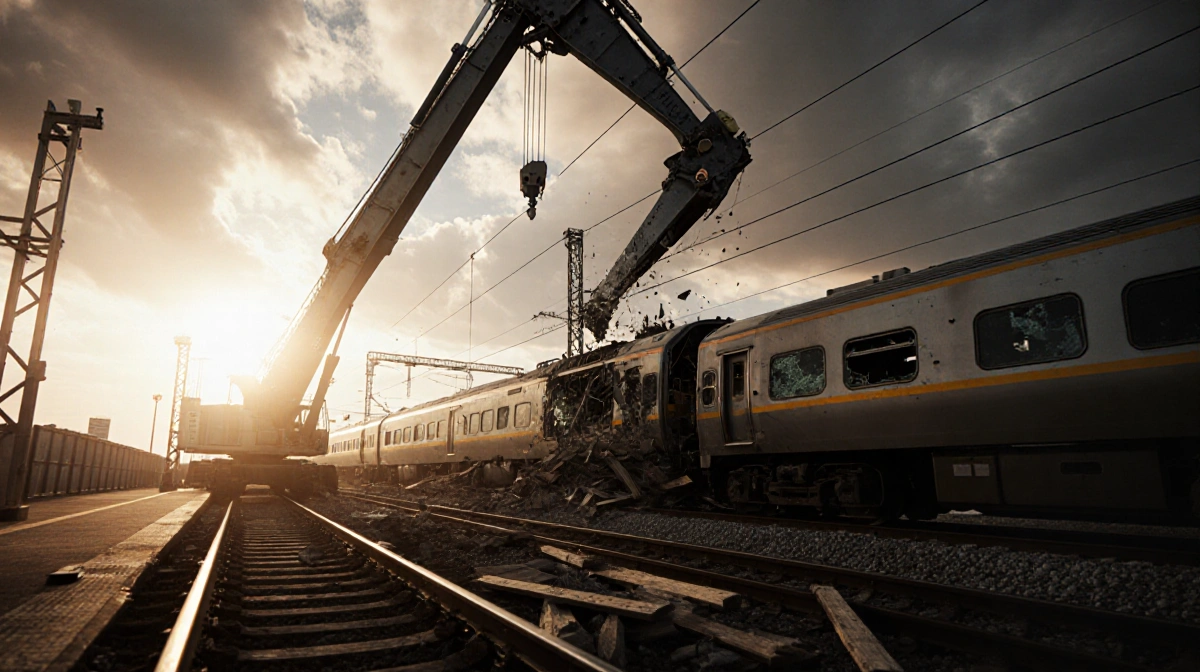
A passenger train traveling through northeastern Thailand erupted in flames Wednesday after a construction crane collapsed onto the tracks, causing a violent derailment that left dozens dead and rescuers scrambling through twisted wreckage.
The Collision
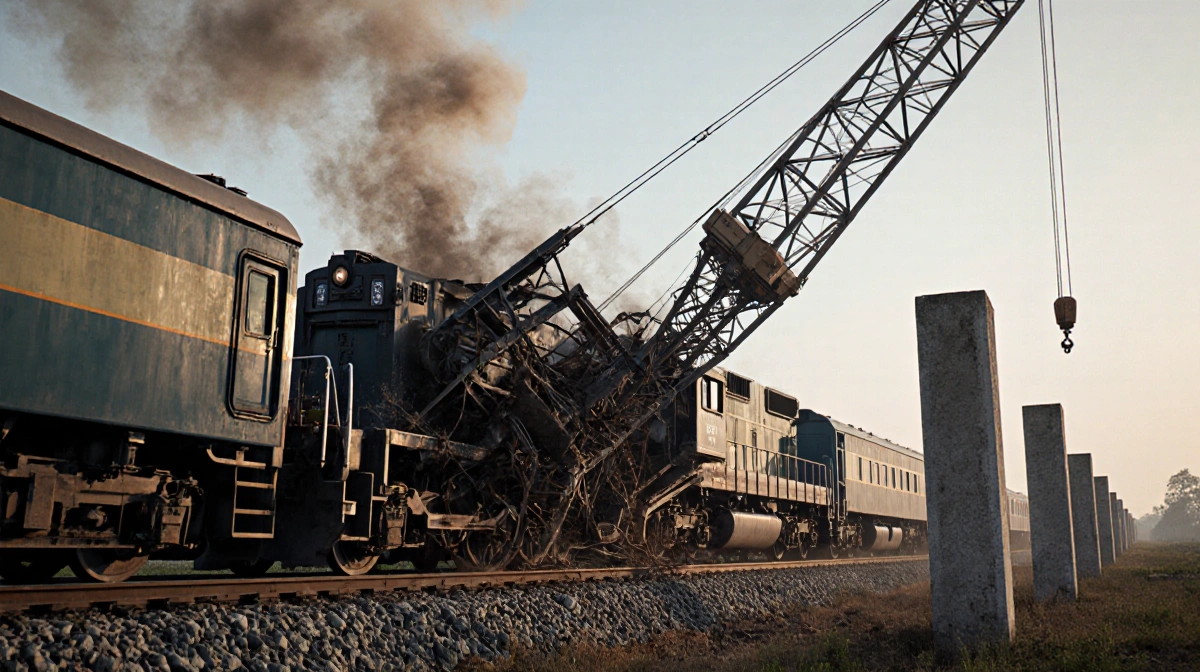
The accident unfolded around mid-morning as the three-carriage train neared a construction zone for the future high-speed line. The crane, positioned between two concrete support pillars, suddenly gave way and plummeted onto the moving locomotive.
Photos carried by Thai media captured the sequence:
- White smoke first rose above the jungle-lined tracks
- Darker plumes followed as fire took hold
- Construction equipment dangled awkwardly from the elevated structure
- Overturned carriages lay scattered, some with gaping holes torn through their sides
Video aired by public broadcaster ThaiPBS showed rescue workers clambering across the tops of the damaged cars while paramedics administered first aid to bloodied passengers on the gravel shoulder. Sections of the crane lay strewn along the rails.
Transport Minister Piphat Ratchakitprakan confirmed 195 people had boarded the Bangkok-to-Ubon Ratchathani service. The final two carriages bore the brunt of the impact, Thai media reported.
Death Toll and Injuries
Authorities released the following casualty figures:
| Status | Number |
|---|---|
| Confirmed dead | 29 |
| Injured | 64 |
| On board | 195 |
Rescue teams worked through the afternoon searching for additional victims trapped in the mangled steel. The minister said an official investigation had been ordered, though no preliminary cause was offered.
High-Speed Rail Link
The elevated section where the crane fell forms part of a 520 billion baht ($16.8 billion) Thai-Chinese high-speed railway. Once complete, the line will connect:
- Bangkok
- Nong Khai province on the Laos border
- Eventually link to China’s vast rail network under Beijing’s Belt and Road Initiative
The project promises to slash travel times across mainland Southeast Asia, but Wednesday’s tragedy underscores the risks of rapid construction.
Previous Incident
This is the second serious accident along the planned route in less than two years. In August 2024, a tunnel under construction in the same province collapsed, killing three workers. Heavy rainfall was considered a contributing factor in that cave-in.
Key Takeaways
- The crash killed 29 and injured 64, making it one of Thailand’s deadliest rail accidents in recent years.
- The crane collapse occurred on a flagship infrastructure project designed to strengthen regional trade ties.
- Safety protocols for construction adjacent to active lines face immediate scrutiny.
- An investigation has been launched, but officials have not indicated how long it will take or whether service on the conventional line will be suspended.