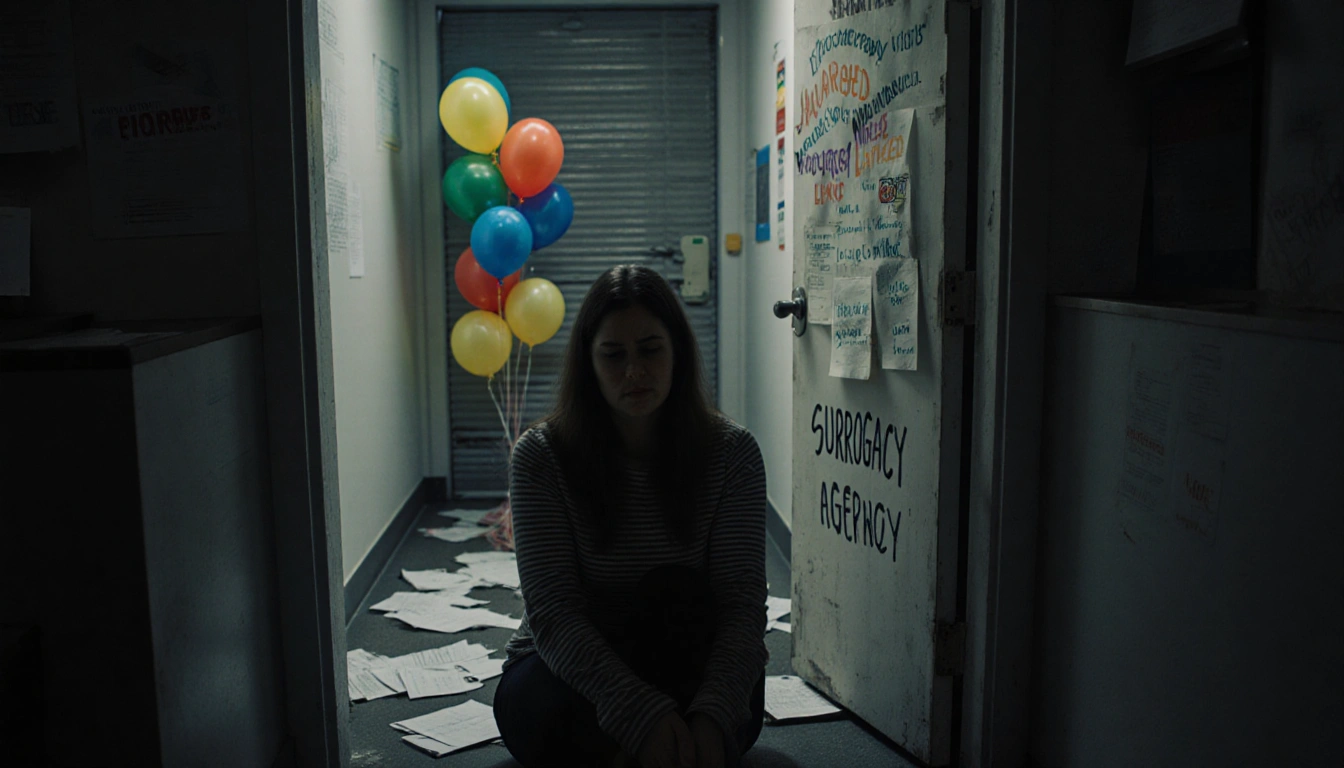
The FBI has stepped into a surrogacy saga that left families scrambling for money after a top‑tier agency shut down abruptly.
FBI Enters the Picture
Federal agents descended on the home of Megan Hall‑Greenberg, 49, and on the Camas, Washington, headquarters of Surro Connections, a surrogacy agency founded in 2010. Hall‑Greenberg has deleted her social media accounts and, according to clients and employees, has not replied to messages since December 3. A neighbor reported seeing FBI agents escort someone from the house into a vehicle, though the identity of the person was unclear.
Former employees were interviewed by the bureau after losing access to the company’s email and records systems a day before the agency ceased operations.
Families and Surrogates Left in Shock
Sarah Shaffer, Surro Connections’ marketing manager and lead surrogate coordinator, estimates that about 150 families had money in the agency’s in‑house escrow system, ranging from $2 million to $5 million. She told reporters, “Some intended parents had just funded a night before this happened,” adding that many had taken out savings to afford the journey.
Three intended parents and six current and former surrogates, two of whom are pregnant, described the collapse as a total shock. Mariana Klaveno, 46, had transferred more than $66,000 to the escrow for an embryo transfer scheduled for next month. Her surrogate warned her that “Other surrogates aren’t getting paid. Everyone’s freaking out. Everyone says to get a lawyer,” and that no one could reach Hall‑Greenberg or access the escrow account.
The Agency’s Final Messages
On December 5, Hall‑Greenberg sent an email to intended parents announcing that Surro Connections was “ceasing all operations” because of “financial and operational difficulties.” The message stated that the company had “no liquid capital” to repay clients. She also emailed staff to terminate employment effective immediately.
Despite multiple phone calls and text messages, Hall‑Greenberg did not respond. An FBI spokesperson said, “We cannot confirm or deny the existence of any specific investigation,” in line with the bureau’s policy.
Red Flags and Financial Turmoil
Surrogacy is already an expensive and emotionally charged process, with intended parents often spending over $100,000 and keeping large sums in escrow. Hall‑Greenberg had persuaded clients to keep their funds in the agency’s in‑house system, assuring them that the money was kept separate and housed at a bank insured by the Federal Deposit Insurance Corp. Invoices were to be loaded onto a shared folder for clients to view.
Later, she insisted on the in‑house system when parents and surrogates raised concerns, and the agency’s approach was criticized as a potential red flag.
Payments to surrogates were sometimes late. Alexis Lytle, 27, a surrogate in Indiana, said she had reached out to ask when her $40,000 would be deposited. She noted that her intended parents had assured her they would continue to support her.
Public records show Hall‑Greenberg had financial strain. She sold several cheerleading gyms she owned across Oregon and Washington and owes Oregon more than $84,000 in unpaid taxes. She took at least four loans over five years to support her businesses. In September, she sold a lender a percentage of Surro Connections’ future revenue for $15,000; the lender sued weeks later but dropped the case in October. The same month, a court ordered Hall‑Greenberg to pay American Express over $70,000 in credit‑card debt, after a prior order to pay more than $30,000.
Shaffer said Hall‑Greenberg had explained late payments as an honest mistake caused by an employee’s absence. After payments failed again in December, complaints surged. Hall‑Greenberg asked Shaffer to clear her schedule and then stopped responding to employees and clients. Christopher Foster, owner of a neighboring business, reported hearing the agency’s phone ring off the hook for about ten hours on December 5.
When FBI agents searched the office, Foster noted it appeared cleared out: empty binders, bags of shredded files, and no computers.
Survivors and Support
Kama Stauffer, 34, a first‑time surrogate from Ashland, Ohio, received her payment this month but learned of the problems through a Facebook group. She is nine weeks pregnant and estimates her intended parents lost about $50,000. She described the collapse as “unreal” and “impossible” that an agency could implode overnight with no notice.
Several former Surro Connections employees have been working to connect clients and surrogates to other agencies and organizations. Some have offered pro‑bono services, but many intended parents are still struggling to process their losses and decide how to move forward.
Klaveno doubts she will ever recoup her money. She said, “It was the hope. It was the dream of building a family, and in some cases, maybe the only hope of doing that,” and added that Hall‑Greenberg knew what that money represented.
Key Takeaways
- The FBI is investigating Surro Connections after the agency shut down abruptly, leaving families with tens of thousands of dollars in escrow.
- Owner Megan Hall‑Greenberg disappeared from contact after December 3 and has not responded to inquiries.
- Former employees and surrogates report late payments, lack of access to escrow funds, and a sudden cessation of operations with no liquid capital.
The sudden collapse of Surro Connections highlights the risks inherent in surrogacy arrangements and the importance of third‑party escrow management.
Closing

As the investigation continues, intended parents, surrogates, and former staff await answers. The case underscores the need for transparent financial practices and reliable oversight in the surrogacy industry.