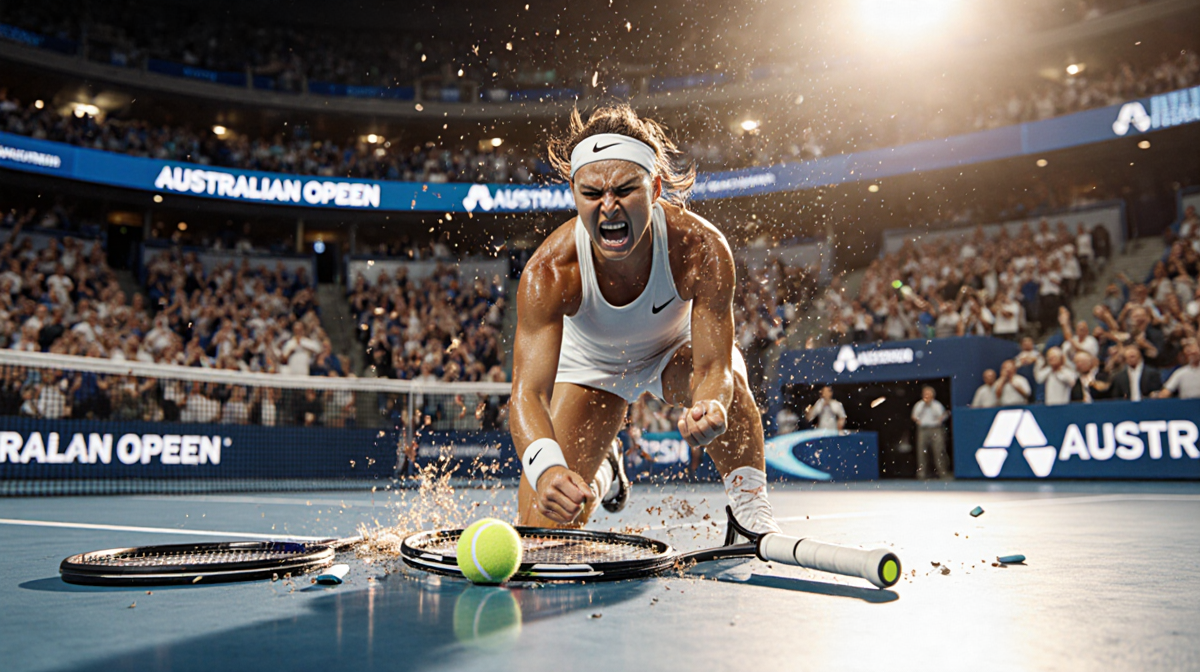

- Coco Gauff smashed her racket on the concrete after a 6-1, 6-2 defeat.
- She recorded five double-faults and only 26 unforced errors in a 59-minute match.
- The winner will receive $4.15 million, the runner-up $2.15 million.
Why it matters: The incident highlights the pressure top players face and the cost of a record-setting prize pool at the Australian Open.
Coco Gauff’s quarterfinal loss to Elina Svitolina ended her Australian Open run in a quick 59-minute match, leaving her visibly frustrated. The two-time major champion, who won her first Grand Slam at 19, chose to vent her emotions by smashing her racket on the concrete floor of Rod Laver Arena.
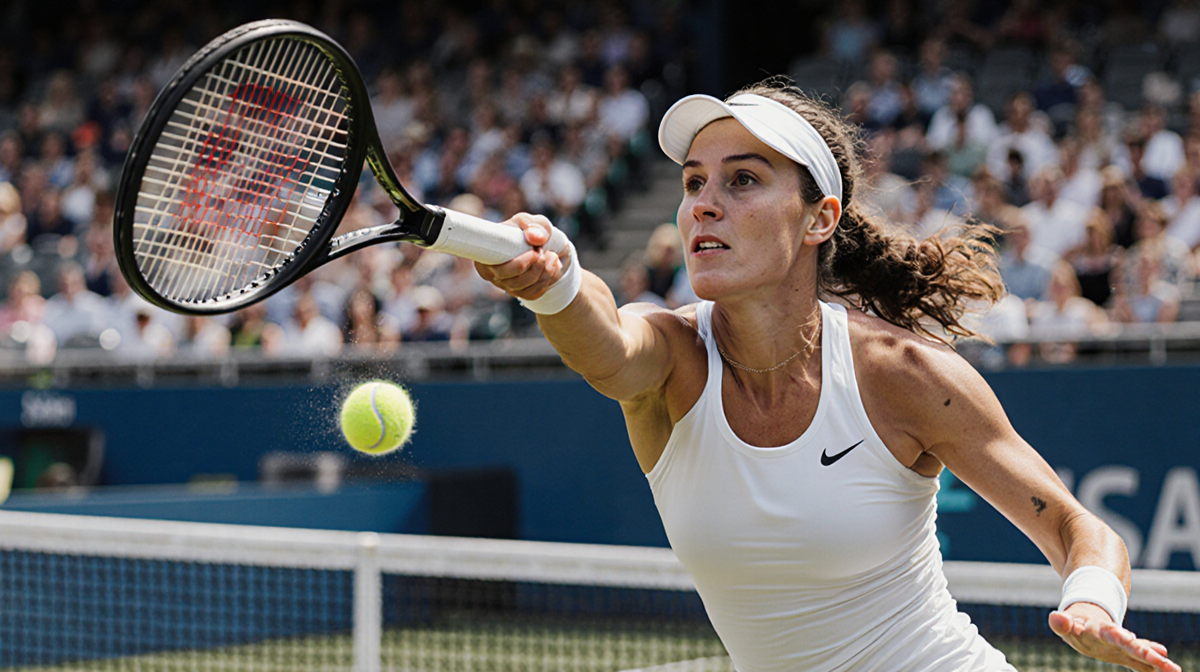
Match Overview
The match began with Gauff struggling to hold serve. She dropped her first serve four times in the first set and recorded five double-faults. Svitolina capitalized, breaking Gauff’s service game four times before the set ended 6-1.
In the second set, Svitolina broke again twice, pushing the match toward a decisive conclusion. Gauff’s performance dropped further: she hit only three clean winners across 15 games and made 26 unforced errors.
The final score was 6-1, 6-2, and the match was completed in 59 minutes.
Serve Breakdown
Gauff’s first-serve percentage was 74%, but she won only 41% of those points. On her second serve, she won just 2 of 11 points, a 18% success rate.
Key serve statistics:
- First-serve percentage: 74%
- First-serve points won: 41%
- Second-serve points won: 18%
- Total unforced errors: 26
These figures illustrate the challenges she faced on the court and explain why frustration boiled over.
Racket Smash Reaction
After the final ball landed, Gauff walked to the nearest concrete ramp and smashed her racket multiple times. She claimed she tried to find a private spot to vent, but the arena’s cameras covered almost every angle.
“Certain moments – the same thing happened to Aryna (Sabalenka) after I played her in the final of the U.S. Open – I feel like they don’t need to broadcast,” Gauff said during her post-match press conference. “I tried to go somewhere where I thought there wasn’t a camera because I don’t necessarily like breaking rackets.”
She added that she had broken a racket once before, at the French Open, and vowed never to do it again on court.
“I broke one racket (at the) French Open, I think, and I said I would never do it again on court because I don’t feel like that’s a good representation,” she explained. “So, yeah, maybe some conversations can be had.”
Gauff also reflected on her emotional state and her support team: “They’re good people. They don’t deserve that, and I know I’m emotional,” she said. “So, yeah, I just took the minute to go and do that.”
Aftermath and Prize Money
The Australian Open’s total prize pool reached a record high, with a 10 percent increase from the previous year. The winner’s purse is $4.15 million and the runner-up receives $2.15 million.
| Placement | Prize Money |
|---|---|
| Winner | $4.15 million |
| Runner-up | $2.15 million |
| All other singles and doubles players | Minimum 10% increase from last year |
The record prize pool underscores the growing financial stakes for top players, even as they navigate the mental and emotional demands of high-level competition.
Key Takeaways
- Gauff’s serve struggles were a major factor in her loss to Svitolina.
- The racket-smashing incident reflects the intense pressure on elite athletes.
- The Australian Open’s prize money continues to rise, highlighting the sport’s expanding economic impact.
The incident will likely prompt discussions about player mental health and the role of media coverage in high-pressure moments.