
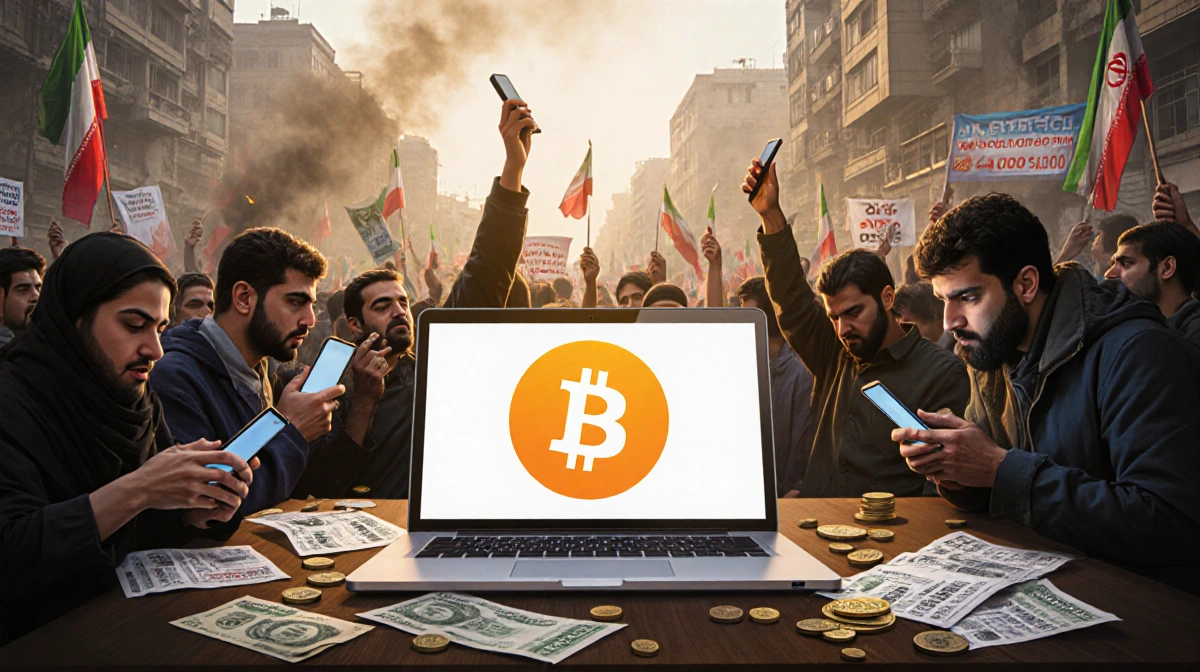

Iranians are racing into Bitcoin as nationwide protests shake the country, with large-value withdrawals from exchanges jumping 262 percent since unrest began, according to new data from Chainalysis.
The spike shows citizens abandoning government-controlled banks for self-custodial wallets, a move the blockchain firm links to the collapsing Iranian rial and the need to move money beyond state reach.
At a Glance
- Large Bitcoin withdrawals in Iran up 262% since protests started
- Citizens shift to self-custody as rial plummets and banks falter
- IRGC still dominates overall crypto flow, handling half of Iran’s $7.78 billion volume
- Why it matters: Protesters and the regime now rely on the same decentralized tool for opposite goals
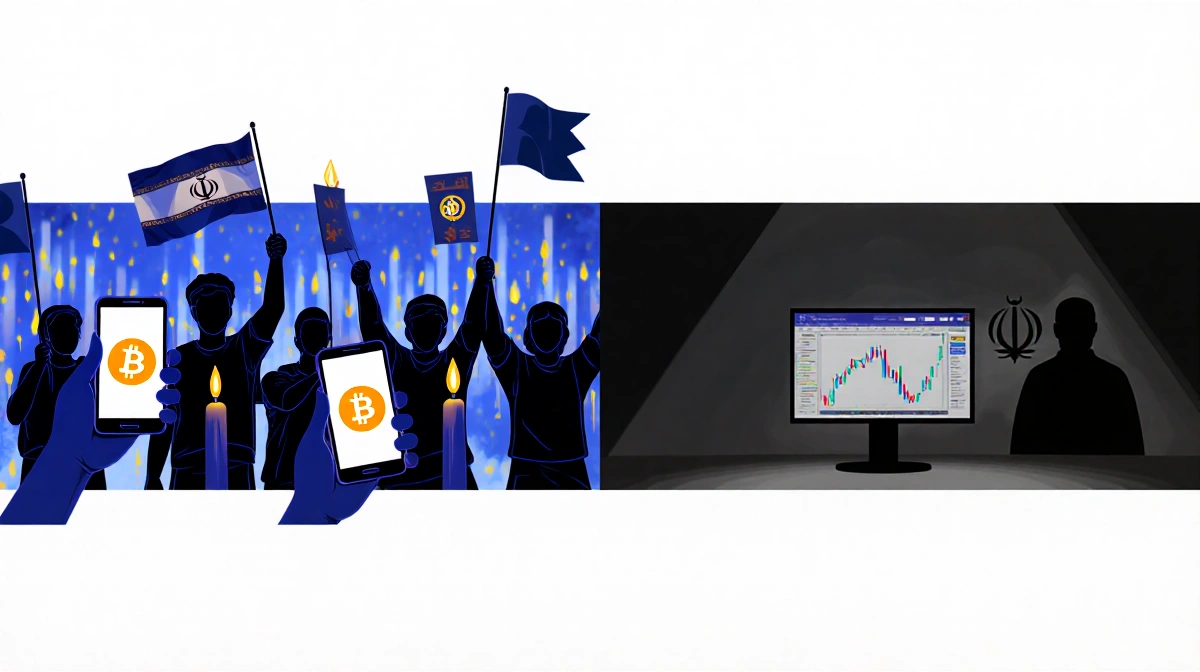
The Chainalysis report, reviewed by News Of Fort Worth, focuses on transfers over $10,000 from exchanges to wallets where individuals hold their own private keys. The volume of those transfers has more than tripled in the past month, dwarfing levels seen before the demonstrations that began in late December.
Protest-Driven Bitcoin Boom
Nationwide anger over the rial’s collapse, corruption and economic mismanagement has kept demonstrations alive since late December. In response, many Iranians are sidestepping the domestic banking network entirely.
Chainalysis ties the 262% rise in big-ticket Bitcoin withdrawals to:
- Rapid devaluation of the Iranian rial
- Fear of government seizure or account freezes
- Need to fund activities outside official channels
“This pattern of increased BTC withdrawals during times of heightened instability reflects a global trend we’ve observed in other regions experiencing war, economic turmoil, or government crackdowns,” the report states.
Similar spikes appeared during:
- January 2024 Kerman bombings
- October 2024 Iranian missile strikes on Israel
- The 12-day war that followed
During that last event, Nobitex-Iran’s largest exchange-lost $90 million in a hack that briefly froze local trading.
Regime Still Controls the Larger Flow
While protesters turn to Bitcoin for freedom, Iran’s powerful Islamic Revolutionary Guard Corps continues to exploit the same asset class. Chainalysis calculates the IRGC accounts for roughly half of all crypto activity inside Iran, valued at $7.78 billion over the measurement period.
Separate investigations have shown the Guard using crypto to:
- Skirt U.S. sanctions
- Launder energy proceeds
- Move state funds through overseas shell exchanges
TRM Labs recently identified two U.K. exchanges acting as fronts for Tehran, and Elliptic traced state-backed bitcoin-mining operations designed to monetize excess energy.
Global Echoes of Crisis Adoption
Iran is not an isolated case. Chainalysis has logged parallel surges in:
- Ukraine-crypto donations and personal savings during Russia’s invasion
- Argentina & Venezuela-citizens hedging against peso and bolívar collapses
- Russia & Venezuela-state actors routing reserves into bitcoin and Tether’s USDT to blunt sanctions
The firm’s broader 2024 review credits sanctions-driven maneuvers for a record $154 billion in illicit crypto use worldwide.
Tech Tools Keep Information Flowing
Beyond finance, decentralized tech is helping Iranians stay connected. Starlink terminals-smuggled in despite bans-remain one of the few ways videos and messages escape government-imposed internet blackouts.
A forked version of the mesh-networking app Bitchat, dubbed Noghteha, has also gained traction, though critics flag its closed-source code and donation-collection features as security risks.
Key Takeaways
- 262% jump in large Bitcoin withdrawals signals Iranians voting with their wallets against the rial
- $7.78 billion in total Iranian crypto volume shows the regime still dominates the space
- The dual use of Bitcoin-by protesters for freedom and by the state for sanctions evasion-underscores the currency’s neutral, permissionless design
- Past spikes during bombings and missile strikes confirm crypto’s role as a crisis utility, not just a speculative asset