


A federal judge has allowed President Donald Trump’s $300 million White House ballroom project to proceed, dismissing the National Trust for Historic Preservation’s request to temporarily stop construction.
Legal Backdrop
Last week the preservation group filed a lawsuit against the Trump administration, alleging that the White House revamp began before plans were submitted to the National Capital Planning Commission and before Congress approved the work, as required for construction on federal park land in Washington, D.C. The suit claims the administration broke ground in violation of federal procedures.
On Tuesday, the Trump administration told U.S. District Judge Richard Leon that it expects to meet with the National Capital Planning Commission and the Commission of Fine Arts within the next “two weeks” to review plans that Justice Department attorney Adam Gustafson said were not yet finalized. Tad Heuer, the national trust’s attorney, quipped, “It’s always going to happen in the next two weeks.” The judge replied, “They have until the end of this month.” He added that a hearing for a preliminary injunction will be held in January.
Court’s Decision and Conditions
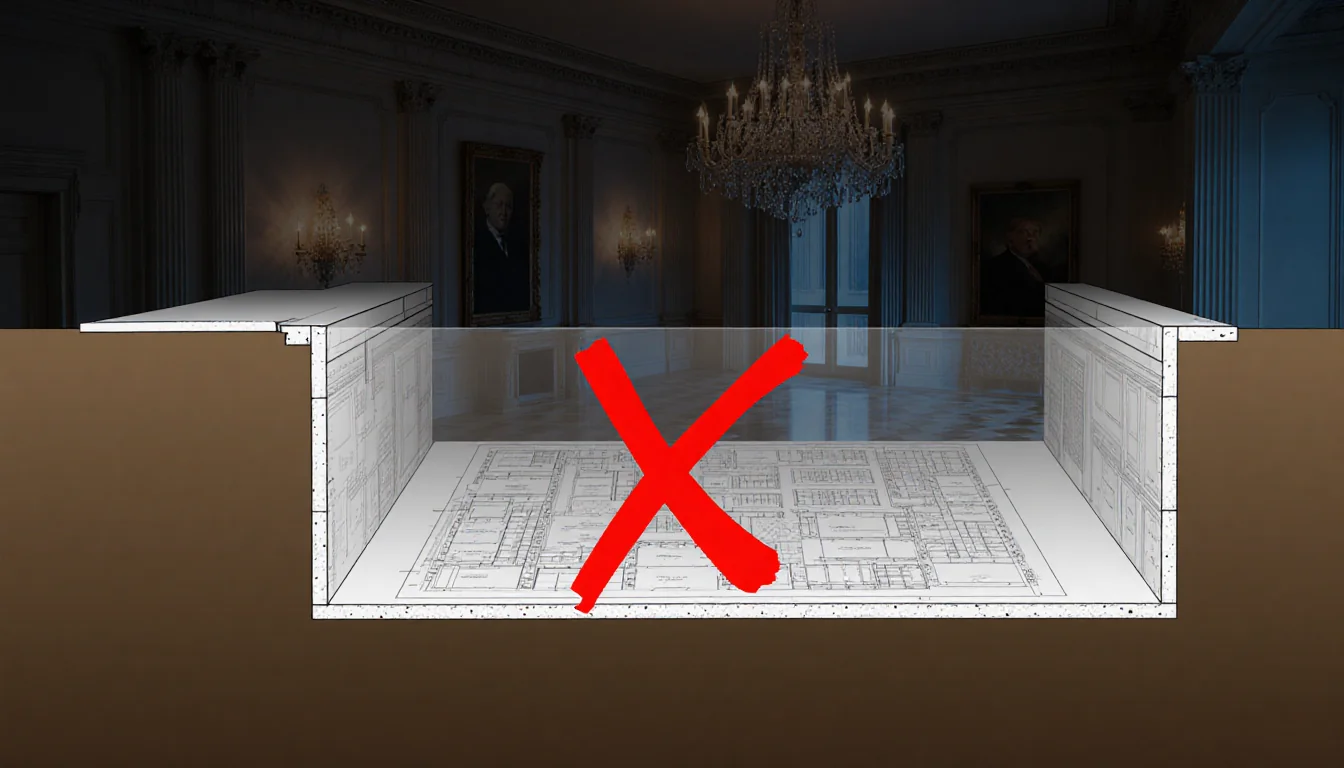
The judge’s ruling rejected the preservation group’s request for a temporary halt. He emphasized that if any underground construction prevents the court from ordering changes to the above‑ground plans, “the government should be prepared to take it down.” This condition reflects the judge’s concern that progress below ground could lock in design decisions that might otherwise be altered.
Both sides admitted they are not architectural experts. The discussion centered on whether the work already progressing underground would preclude modifications to the ballroom’s design.
Project Details and Timeline
President Trump has shared new images of the planned ballroom, which is expected to serve as a venue for official events. The administration stated in a filing Monday that “above‑ground structural work” on the ballroom is expected to begin in April “at the earliest,” with the overall project slated for completion by summer 2028.
Trump argues the new building will allow future presidents to host large events indoors instead of on the South Lawn. The East Wing of the White House was demolished in October to make way for a 90,000‑square‑foot structure that will house the ballroom.
Commission of Fine Arts and Oversight
The Commission of Fine Arts, an independent federal agency, would normally review Trump’s ballroom project. NBC News reported that a White House official said the administration was “preparing to appoint a new slate of members.” However, Trump fired all six members of the commission in October and has not reappointed new members, leaving the agency without a quorum to make official decisions.
Key Takeaways
- Judge Richard Leon has allowed the ballroom project to proceed, rejecting the National Trust’s request for a temporary halt.
- The administration plans to meet the National Capital Planning Commission and the Commission of Fine Arts within two weeks to review unfinished plans.
- The judge warned that if underground work locks in design decisions, the government must be ready to remove it.
- Above‑ground construction is slated to start in April, with completion aimed for summer 2028.
- The Commission of Fine Arts currently lacks a quorum due to the dismissal of all six members.
The ruling marks a significant step for the Trump administration’s ambitious White House renovation, while the preservation group prepares for a January hearing on a preliminary injunction. The outcome of that hearing will determine whether the project can continue as planned or face further legal challenges.
Closing
The judge’s decision clears a major obstacle for the Trump administration’s $300 million ballroom project, but the legal battle is far from over. The upcoming January hearing will decide whether the court can impose additional restrictions or if the construction can proceed unimpeded. The White House, the Commission of Fine Arts, and the National Trust for Historic Preservation will all be watching closely as the case unfolds.