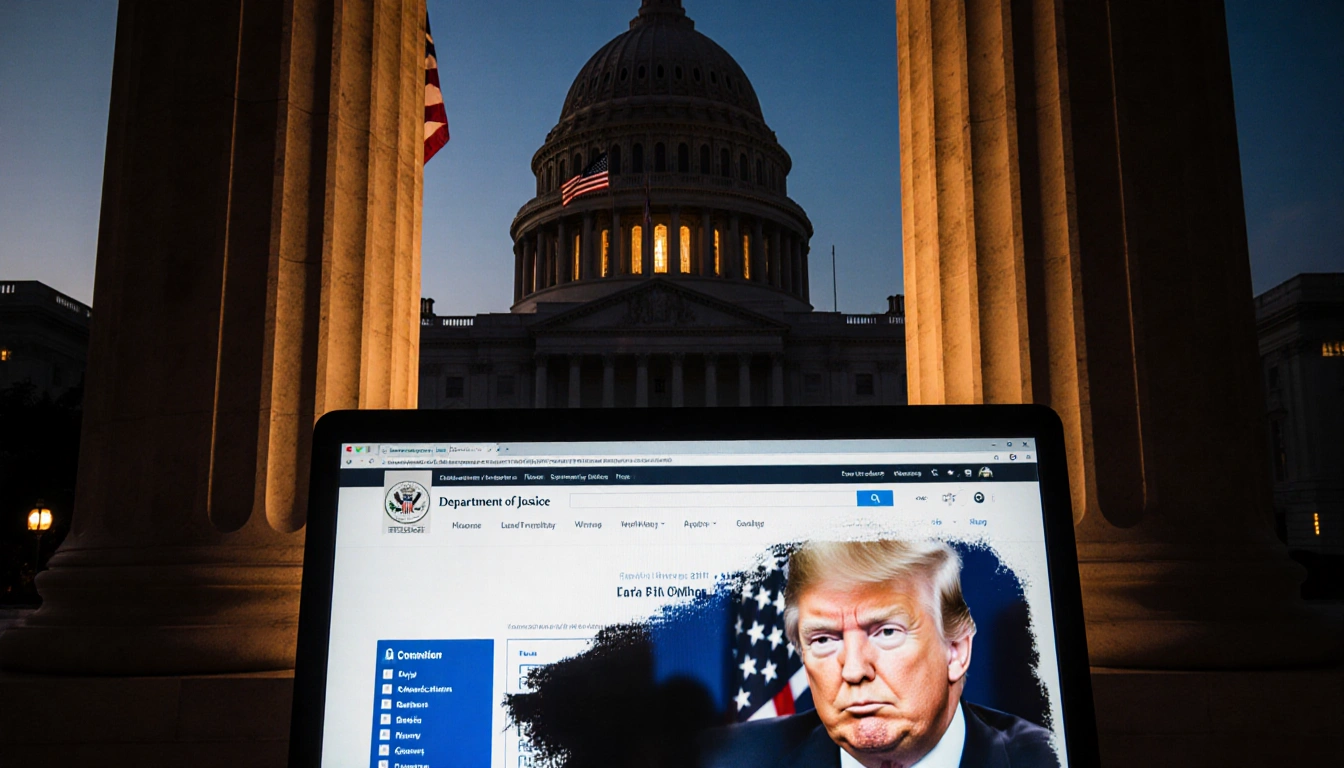

Less than a day after the Justice Department posted a batch of documents related to Jeffrey Epstein, 16 files vanished from its public website, including a photograph of President Donald Trump.
Missing Files
The files that disappeared were available Friday and were no longer accessible by Saturday. They included images of paintings depicting nude women and a photo of a credenza with photos in drawers. Inside a drawer, among other pictures, was a photograph of Trump alongside Epstein, Melania Trump, and Ghislaine Maxwell.
Department Response
The Justice Department did not say why the files were removed or whether the disappearance was intentional. A spokesperson for the department did not immediately respond to a request for comment. Online speculation grew as the public was not notified.
Congressional Reaction
Democrats on the House Oversight Committee posted on X, writing: “What else is being covered up? We need transparency for the American public.” Their post highlighted the missing Trump photo and called for clarity.
Context of the Release
The initial disclosures span tens of thousands of pages, but several key records are missing. FBI interviews with survivors and internal Justice Department memos on charging decisions are not included. The documents also provide little reference to powerful figures such as Prince Andrew, raising questions about the breadth of the release.
New Information That Was Released
The documents reveal that the Justice Department abandoned an investigation into Epstein in the 2000s, which allowed him to plead guilty to a state-level prostitution charge in 2008. A previously unseen 1996 complaint accused Epstein of stealing photographs of children. The release is heavy on images of Epstein’s homes in New York City and the U.S. Virgin Islands, with some photos of Bill Clinton and a few of Trump.
Release Process and Public Reaction
The Justice Department said it plans to release records on a rolling basis, blaming the delay on the time-consuming process of obscuring survivors’ names and other identifying information. No notice is given when more records might arrive. The approach angered some accusers and members of Congress who fought to pass the law that forced the department to act.
Comments from Affected Parties
Marina Lacerda, who alleges Epstein started sexually abusing her at his New York City mansion when she was 14, said: “I feel like again the DOJ, the justice system is failing us.”
Details of the Released Records
Deputy Attorney General Todd Blanche said Manhattan federal prosecutors had more than 3.6 million records from sex-trafficking investigations into Epstein and Maxwell, though many duplicated material already turned over by the FBI. A 119-page document marked “Grand Jury-NY” was entirely blacked out. Photos of Clinton with Michael Jackson and Diana Ross, and of Epstein with actors Chris Tucker and Kevin Spacey, were released without captions or explanations.
Insights into the 2007 Case
Transcripts of grand jury proceedings, released publicly for the first time, included testimony from FBI agents who described interviews with several girls and young women who described being paid to perform sex acts for Epstein. A 21-year-old testified that Epstein hired her at 16 to perform a sexual massage and that she recruited other girls. The documents also contain a transcript of an interview with U.S. Attorney Alexander Acosta about his decision not to bring federal charges. Acosta cited concerns about whether a jury would believe Epstein’s accusers and noted that the case straddled the border between sex trafficking and soliciting prostitution.
Key Takeaways
- 16 Justice Department files, including a Trump photo, disappeared without explanation.
- The initial release omits FBI interviews, internal memos, and references to several powerful figures.
- The documents reveal a 2000s investigation abandonment and a 1996 complaint against Epstein.
The episode underscores ongoing concerns about transparency in the Justice Department’s handling of Epstein’s case and the completeness of the records released to the public.