
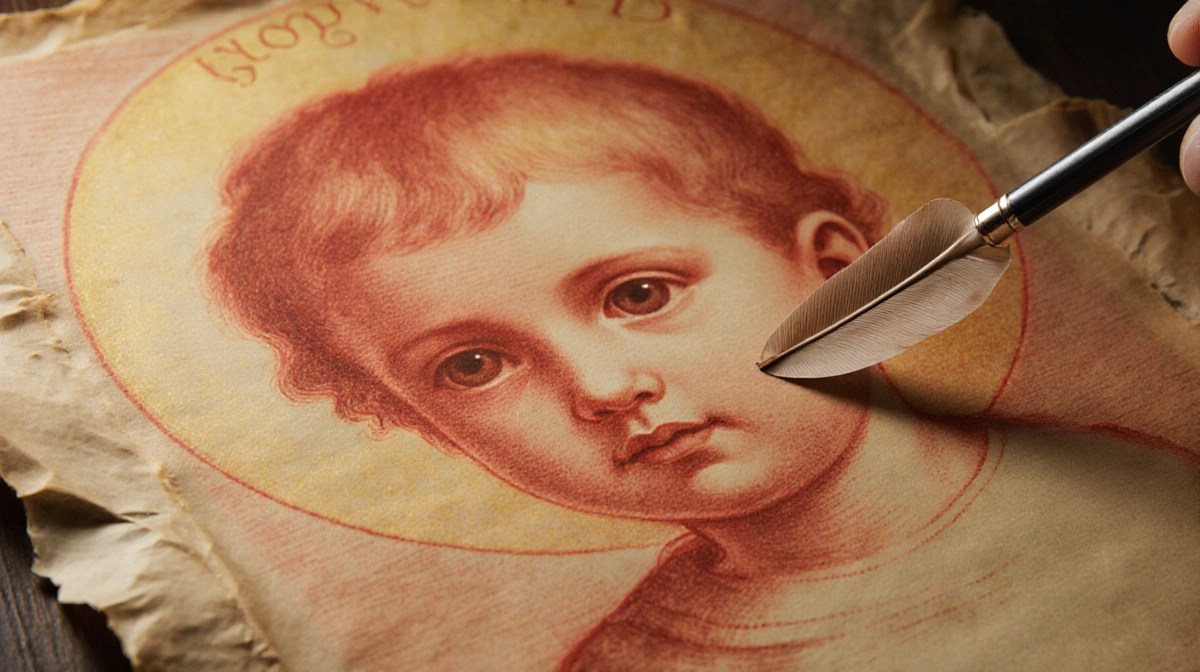

Researchers may have retrieved DNA traces from Leonardo da Vinci for the first time, using a non-invasive swabbing technique on centuries-old artifacts linked to the Renaissance master.
> At a Glance
> – Researchers recovered sparse male-specific human DNA from da Vinci-associated items
> – Y chromosome signals belong to the E1b1b lineage common in southern Europe, Africa, and the Middle East
> – No confirmed da Vinci DNA exists for comparison, so identity remains unverified
> – Why it matters: The method opens a new, minimally invasive path to probe the biological history behind priceless cultural heritage
The Leonardo da Vinci DNA Project team gently swabbed a drawing of the Holy Child and letters penned by a da Vinci relative, extracting heterogeneous DNA mixtures. Amid mostly non-human genetic debris, they detected faint but consistent male human signals across multiple samples.
Breakthrough Technique
The group employed an ultra-soft swabbing protocol designed to avoid damage or modern contamination. By coupling metagenomics with targeted human DNA marker analysis, they could flag male-line sequences without harming the artifacts.
Genetic Lineage Clue
Key findings include:
- Y chromosome markers align with the E1b1/E1b1b clade
- This lineage clusters in Tuscany, Leonardo’s 1452 birthplace
- Mixed modern DNA signatures also appeared, underscoring contamination risks
> David Caramelli, University of Florence anthropologist and project member, cautioned:
> > “Establishing an unequivocal identity … is extremely complex.”
Next Steps
Because da Vinci left no verified tissue samples and has no known direct descendants, the team cannot perform a conclusive match. His tomb was also disturbed during 19th-century construction work, eliminating the option of authenticated burial DNA.
Encouraged by these early data, the researchers now plan to request permission from museums and archives to sample additional works attributed to Leonardo, aiming to strengthen the statistical link and refine contamination controls.
Key Takeaways
- First potential recovery of da Vinci DNA using gentle, artifact-safe methods
- Results point to Tuscan-linked E1b1b Y chromosome haplogroup
- Absolute confirmation awaits more sampling and comparison data
- Approach sets a workflow for future heritage-authentication studies
If custodians grant broader access, the project could move from tantalizing clue to genetic certainty-offering science and art historians an unprecedented look at the biological footprint of history’s quintessential polymath.