
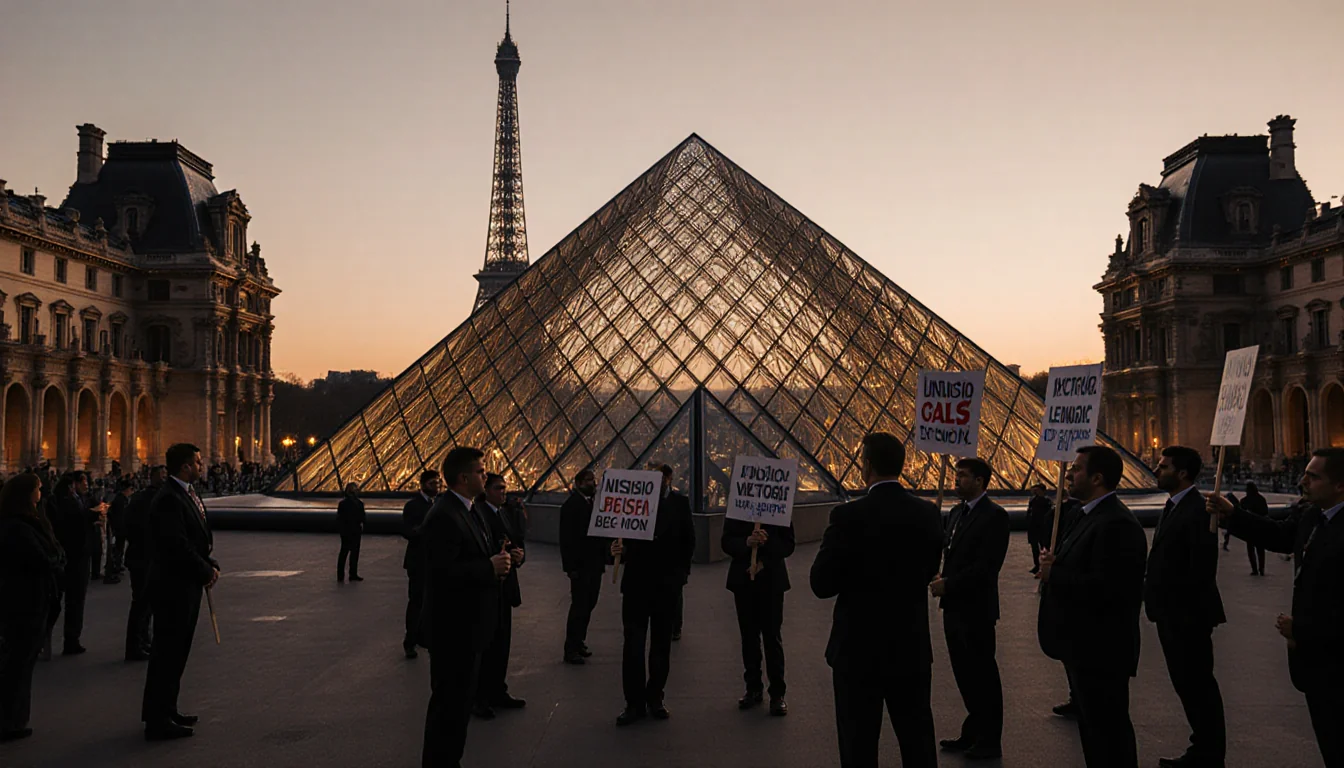

On Monday, workers at the Louvre Museum voted to strike, shutting down the world’s most-visited cultural institution after a jewel heist shook its security.
The CFDT union reported that 400 workers met in the morning and decided to strike for the day. The museum remained closed, and a notice on its website read, “the museum is closed for the moment.” The decision followed talks last week between labor unions and government officials, including Culture Minister Rachida Dati.
Labor leaders said the discussions had not resolved all worries about staffing and financing for the museum. They highlighted long-standing concerns that crowding and thin staffing undermine security and working conditions. These issues had been exacerbated by the recent robbery.
Alexis Fritche, the general secretary of the culture wing of the CFDT union, said, “Visiting the museum has become an obstacle course.” He pointed to the daily challenges faced by employees in maintaining safety for millions of visitors each year.
In October, thieves used a basket lift to reach the Louvre’s façade, forced a window, smashed display cases, and fled with pieces of the French crown jewels. The robbery took place during daylight hours, exposing vulnerabilities in the museum’s security system.
A Senate inquiry released last week found that the thieves escaped with barely 30 seconds to spare. The report cited broken cameras, outdated equipment, understaffed control rooms, and poor coordination that initially sent police to the wrong location.
The strike prevented the museum from opening as scheduled, turning away thousands of would‑be visitors. The museum’s status as the world’s most-visited attraction meant that the closure had a significant impact on tourism and the local economy.
A police car parked in the Louvre’s courtyard on October 26, 2025, a week after the robbery, underscored the heightened security concerns. The presence of law enforcement in the courtyard was part of the museum’s response to the recent theft.
During the Monday morning meeting, 400 workers discussed the strike’s scope and timing. The decision to strike for a single day reflected the urgency of addressing immediate working‑condition grievances. The decision to strike for a single day was also intended to avoid a full shutdown that could disrupt the museum’s annual schedule.
Culture Minister Rachida Dati attended the talks that preceded the vote, but the union leaders felt that their concerns about staffing and financing remained unaddressed. The minister’s involvement highlighted the government’s interest in resolving the museum’s operational challenges.
The robbery and subsequent Senate inquiry findings have raised questions about the adequacy of the Louvre’s security protocols. Employees and union representatives argue that the museum’s thin staffing has contributed to lapses in surveillance and response.
The strike is a clear signal that workers are demanding better conditions and more robust security measures. It also illustrates the broader tension between cultural institutions and the state over funding and staffing levels. The strike is also a protest against what workers see as insufficient investment in staff training and security infrastructure.
The union plans to continue negotiations with government officials to address the staffing and financing issues that led to the strike. The museum’s management will need to respond to the concerns raised by both workers and the Senate inquiry.
The accompanying photo, taken by AP Photo/Thomas Padilla, shows a police car parked in the Louvre’s courtyard, a visual reminder of the security challenges faced by the institution.
As the Louvre remains closed, the strike and the recent robbery underscore the urgency of improving security and working conditions. The outcome of these negotiations will shape the museum’s future and its ability to safeguard its priceless collections. The outcome of these negotiations will determine whether the Louvre can continue to operate safely and efficiently while protecting its invaluable heritage.
The strike has highlighted low morale among staff, who feel their concerns are not being adequately addressed. The union’s decision to strike for a single day reflects a strategic attempt to bring attention to these issues without causing prolonged disruption.
The Louvre’s visitor statistics show that it welcomes millions of visitors each year, making it the world’s most-visited museum. The institution’s role as a cultural landmark means that any interruption can have wide-reaching effects on tourism and the local economy.
The museum’s collection spans centuries and includes some of the world’s most famous artworks, drawing tourists worldwide. The theft of crown jewels in October was a stark reminder of the museum’s vulnerability.