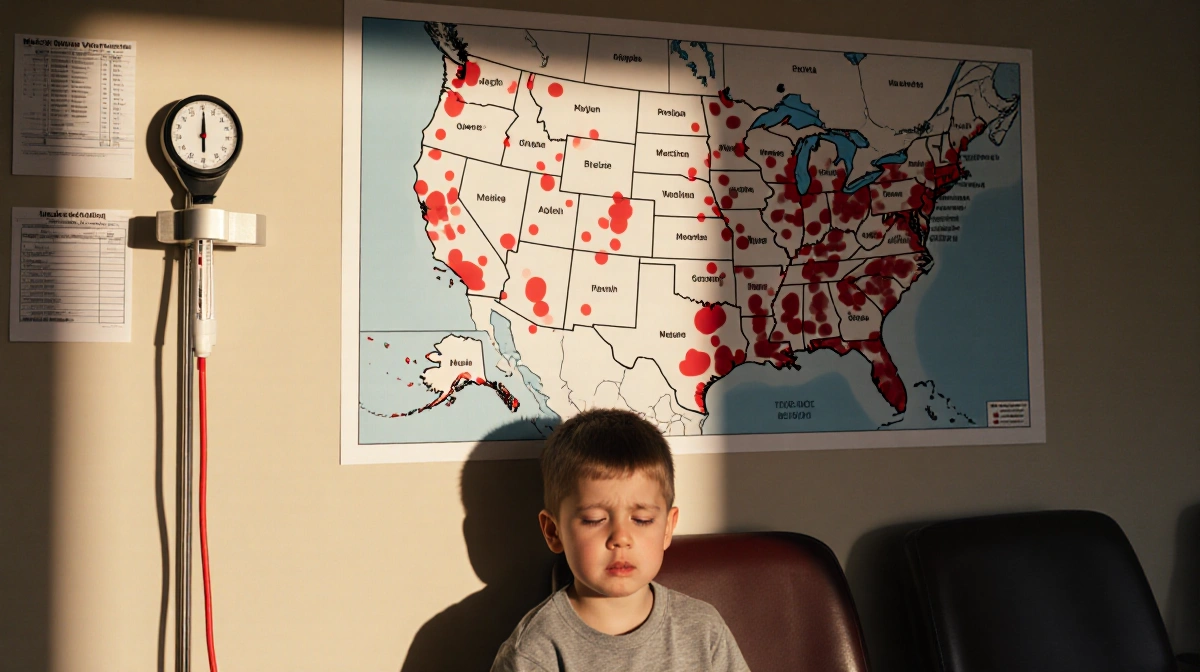

Measles outbreaks have rattled the United States, prompting an international review that could strip the country of its long-held elimination designation.
At a Glance
- 762 people infected in Texas alone, with 2 deaths.
- The U.S. has seen 2,144 cases nationwide, the highest since 1991.
- An April 13 meeting will decide if the U.S. remains measles-free.
Introduction
A year after a measles outbreak erupted in West Texas, health officials and international bodies are preparing to evaluate whether the United States still qualifies as measles-free. The decision hinges on whether a single transmission chain has persisted for 12 months. With rising case counts across multiple states, the stakes are higher than ever.
Background
The Centers for Disease Control and Prevention (CDC) confirmed 2,144 measles cases across 44 states last year, marking the most outbreaks since 1991. Nearly 50 separate outbreaks were recorded, reflecting a resurgence tied to lower vaccination rates, parental waivers, and misinformation.
Key Factors
- 95% vaccination coverage is required for herd immunity.
- National coverage sits at 92.5%, but many communities fall far below.
- The virus infects 9 out of 10 unvaccinated individuals exposed.
Texas Outbreak Timeline
| Date | Event |
|---|---|
| Jan. 20, 2025 | First case rash appears in Texas |
| March 2025 | 182 potential cases in Gaines County remain unconfirmed |
| April 2025 | 762 total cases reported, 2 deaths |
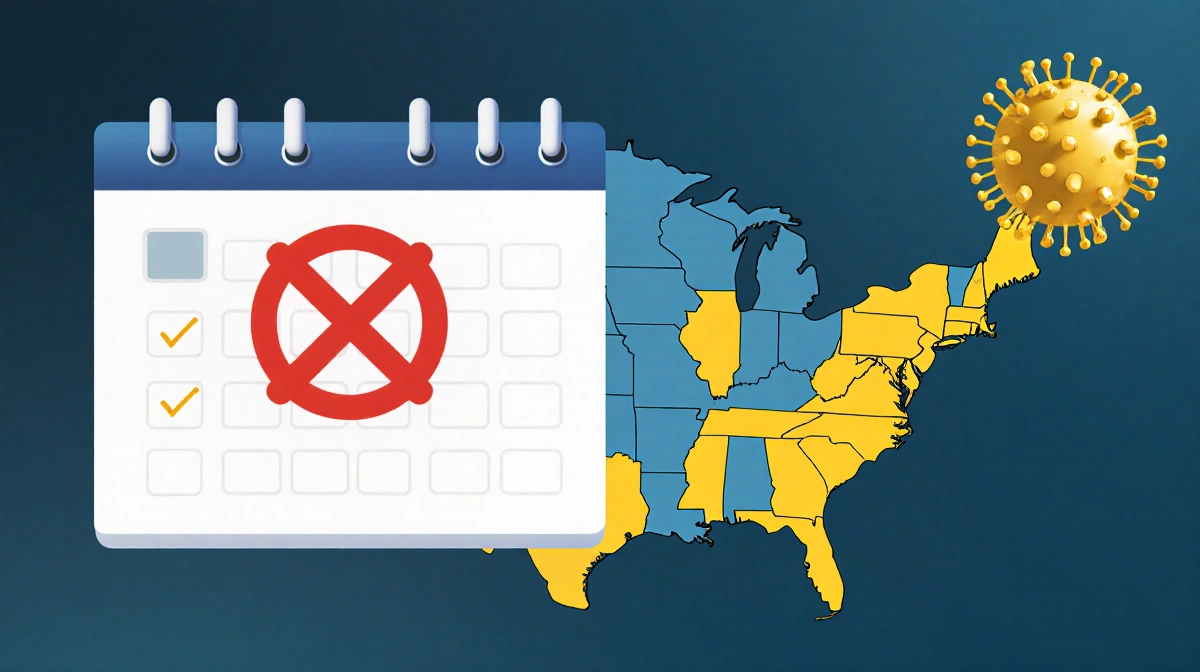
The first known case in Texas presented a rash on Jan. 20, 2025, according to state health data. From that point, the outbreak expanded rapidly, primarily in rural Gaines County. Official counts list 762 illnesses, including 2 fatalities. However, state officials noted that 182 potential cases among children were unconfirmed in March alone, indicating a possible 44% undercount.
National Spread
Beyond Texas, measles has surged in several states:
- New Mexico: 100 cases, 1 adult death.
- Kansas: nearly 90 cases across 10 counties, seven-month containment effort.
- Ohio: 40 confirmed cases.
- Montana, North Dakota, Wisconsin: 36 each.
- Utah, Arizona, South Carolina: more than 800 cases combined since late summer.
The CDC’s latest warning advises travelers to avoid flights unless vaccinated.
International Review
The Pan American Health Organization (PAHO) will convene on April 13 to decide whether the U.S. retains its measles-free status. PAHO’s criteria focus on uninterrupted transmission chains within a country for at least 12 months. If a case of unknown origin occurs in a country with ongoing local spread, PAHO’s standard is to treat it as part of the existing national transmission.
Mexico’s Parallel
Mexico’s measles-free status will also be examined. Its largest outbreak, rooted in Texas, began when an 8-year-old boy from Chihuahua visited Texas. Since February, 6,000 people have been infected in Mexico, with 21 deaths in Chihuahua alone. Under PAHO’s definition, cross-border spread could be considered a new transmission chain, but many experts view that standard as outdated.
Expert Perspectives
- Dr. Jonathan Temte, Wisconsin family physician, noted that the U.S. “is still in a situation where conditions allow many cases” and that this underscores the importance of maintaining vaccine confidence.
- Jennifer Nuzzo, director of Brown University’s Pandemic Center, emphasized the need for clear messaging: “The most important thing we can do is to make sure the people who aren’t vaccinated get vaccinated.”
- Noel Brewer, behavioral scientist and chair of the U.S. committee finalizing data for PAHO, warned that contact tracing is costly, with a single case costing departments “tens of thousands of dollars.”
- Dr. Andrew Pavia, Utah physician, expressed a strong likelihood that the U.S. will lose elimination status, citing tenuous evidence of continuous transmission.
- Sebastian Oliel, PAHO spokesperson, explained that when a case of unknown origin appears, the most conservative approach is to consider it part of existing national transmission.
Challenges
- Data Gaps: Underreporting and delays make tracking difficult.
- Genetic Similarity: The measles virus does not mutate rapidly, so genetic sequencing alone cannot confirm linkages.
- Public Health Funding: Reduced investment hampers case-tracking capabilities.
- Community Trust: Vaccine hesitancy fueled by misinformation and health care access issues.
Looking Ahead
The April meeting will determine whether the U.S. remains measles-free. If the decision is negative, it would align the U.S. with Canada, which lost its designation earlier. The CDC continues to urge vaccination and is working to increase coverage, but the path to elimination may be longer than anticipated.
Key Takeaways
- The U.S. faces a potential loss of measles-free status.
- Over 2,000 cases nationwide signal a significant resurgence.
- International review hinges on evidence of continuous transmission.
- Vaccine coverage remains below the 95% threshold in many communities.
- Expert consensus leans toward a likely loss of elimination status.
Final Thoughts
Measles remains a highly contagious threat that thrives where vaccination rates dip. The upcoming PAHO meeting will be a watershed moment, reflecting the broader challenges of maintaining public health gains in the face of misinformation, funding cuts, and evolving epidemiology.
Categories
Breaking News, Health News, World News