

At a Glance
- A sick astronaut and three crewmates splashed down early Thursday, ending a mission that had been cut short by a medical emergency.
- The early return leaves the International Space Station with only three crew members, barring any spacewalks until fresh astronauts launch in February.
- Why it matters: NASA has never before shortened a flight for medical reasons, raising questions about how the agency handles in-orbit health crises.
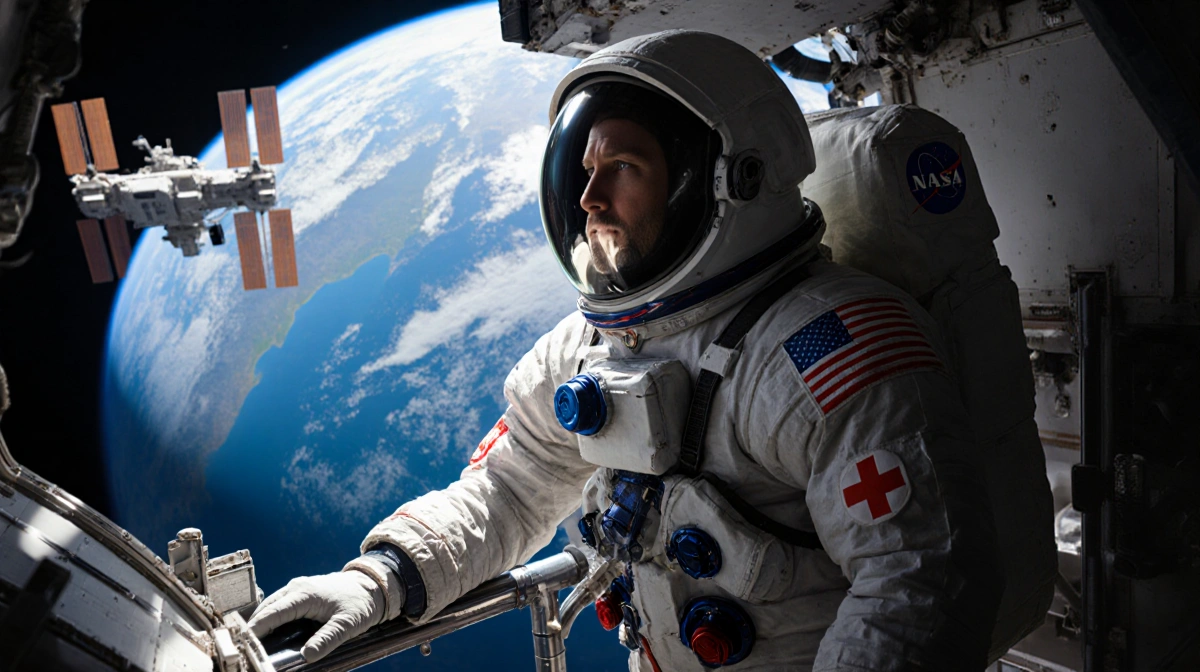
A NASA astronaut stricken by an undisclosed medical condition returned to Earth early Thursday alongside three colleagues, marking the agency’s first in-flight medical evacuation and leaving the International Space Station with its smallest crew in years.
SpaceX’s Dragon capsule touched down in darkness near San Diego at 1:17 a.m. local time, less than 11 hours after the hatches closed on the orbiting laboratory.
“It’s so good to be home,” said NASA astronaut Zena Cardman, who commanded the capsule during re-entry.
The Mystery Illness That Ended a Mission

The four-person crew-Cardman, veteran NASA flier Mike Fincke, Japanese astronaut Kimiya Yui, and Russian cosmonaut Oleg Platonov-had launched in August for a planned six-month tour. That timeline collapsed on January 7, when one of them fell ill or was injured. NASA has refused to identify the patient or describe the condition, citing federal medical-privacy rules.
Within 24 hours of the incident, managers scrubbed a scheduled spacewalk by Cardman and Fincke. Within days, they decided to bring the entire crew home weeks ahead of schedule.
- Astronaut was reported stable in orbit.
- NASA wanted Earth-based diagnostics “as soon as practical,” officials said.
- No special re-entry procedures were required; splashdown and recovery unfolded normally.
A Historic First for NASA
The agency has aborted Soyuz flights for technical glitches and once evacuated the station when a Progress cargo craft spun out of control, but it had never cut short a crew rotation for medical reasons. The only comparable precedent came decades ago, when the former Soviet Union brought a cosmonaut home early from the Salyut station program.
NASA Administrator Jared Isaacman, on the job just weeks, monitored the descent from Houston’s Mission Control. Agency spokespeople reiterated that the situation “never rose to the level of an emergency,” yet the speed of the decision underscored the limited treatment options 250 miles above Earth.
What Happens Next
Recovery divers hoisted the scorched capsule onto the deck of the GO Navigator shortly after splashdown. Cameras showed the astronauts exiting one by one, smiling and waving before lying down on stretchers for initial checks by a team that included flight surgeons and critical-care nurses.
- All four were flown to a nearby hospital for additional tests.
- Cardman, Fincke, and Yui will then travel to Johnson Space Center in Houston.
- Platonov’s return itinerary to Moscow remains unclear.
Station Left Shorthanded
The abrupt departure leaves the station with a skeleton crew of three: NASA’s Don Pettit and Russian cosmonauts Alexey Ovchinin and Ivan Vagner. That headcount is above the two-person minimum NASA and Roscosmos have sometimes accepted, but it is well below the seven residents typically on board.
- No spacewalks can be performed, even for urgent repairs, until the next crew arrives.
- Launch of the replacement team-NASA astronauts Anne McClain and Nichole Ayers, France’s Thomas Pesquet, and Russia’s Nikolai Chub-is targeted for mid-February but could be moved up.
Key Takeaways
- NASA’s first medical evacuation in 24 years of continuous human spaceflight signals a shift toward more conservative risk management.
- The incident also highlights the limits of telemedicine when life-support systems, radiation exposure, and micro-gravity complicate diagnosis.
- With commercial stations still years away, crews remain reliant on rapid return vehicles-currently SpaceX Dragons and Russian Soyuz craft-for any serious health scare.
Megan L. Whitfield reported this story. The AP Health and Science Department receives support from the Howard Hughes Medical Institute’s Department of Science Education and the Robert Wood Johnson Foundation. The AP is solely responsible for all content.