
> At a Glance
> – Pamela Smart, 57, petitions for habeas corpus relief in New York and New Hampshire
> – Lawyers claim constitutional violations tainted her 1991 trial amid wall-to-wall media coverage
> – First-time admission of responsibility for husband’s 1990 murder by teen lover
> – Why it matters: Case could set precedent for challenging decades-old convictions over media influence and jury instructions
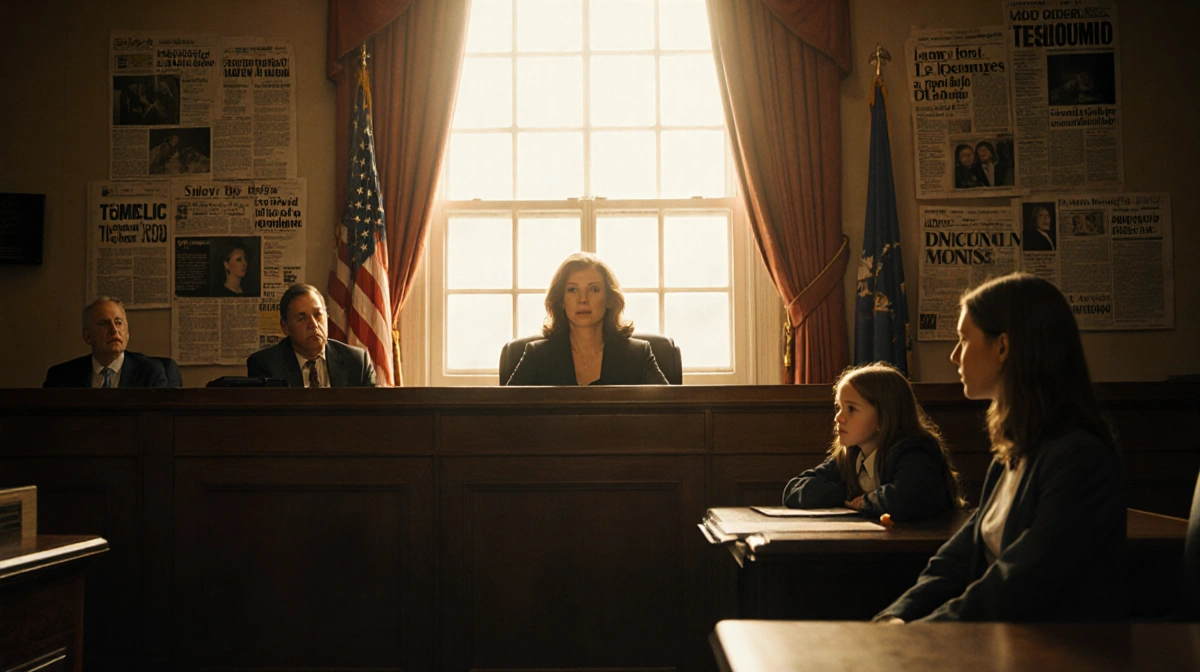
Pamela Smart, whose 1990 trial became a media sensation, has launched a fresh legal battle to overturn her life sentence for orchestrating her husband’s murder by her teenage student lover.
Constitutional Violations Claimed
Smart’s legal team filed the petition Monday in both New York, where she’s imprisoned at Bedford Hills Correctional Facility, and New Hampshire, where the murder occurred.
Jason Ott, part of Smart’s legal team, stated:
> “Ms. Smart’s trial unfolded in an environment that no court had previously confronted – wall-to-wall media coverage that blurred the line between allegation and evidence. This petition challenges whether a fair adversarial process took place.”
The petition argues prosecutors provided jurors with inaccurate transcripts of secretly recorded conversations, including words not actually audible:
- “killed” in “you had your husband killed”
- “busted” in “I’m gonna be busted”
- “murder” in “this would have been the perfect murder”

Matthew Zernhelt, Smart’s attorney, explained:
> “Modern science confirms what common sense has always told us: when people are handed a script, they inevitably hear the words they are shown. Jurors were not evaluating the recordings independently – they were being directed toward a conclusion, and that direction decided the verdict.”
Trial Conduct Issues
Lawyers argue the conviction should be overturned due to:
- Media contamination of the verdict
- Faulty jury instructions – jurors were told they must find premeditation but not to consider only trial evidence
- Mandatory life sentence imposed despite New Hampshire not requiring it for accomplice to first-degree murder
The Crime That Shocked America
Smart, then 22, was a high school media coordinator who began an affair with 15-year-old William Flynn. In May 1990, Flynn and 17-year-old Patrick Randall entered the Smarts’ Derry condominium, forced Gregory Smart to his knees, and Flynn shot him in the head.
All four teens cooperated with prosecutors and have been released:
| Participant | Sentence | Status |
|---|---|---|
| William Flynn | 28 years to life | Paroled 2015 |
| Patrick Randall | 28 years to life | Paroled 2015 |
| Two other teens | Varied | Released |
After 34 Years, An Admission
For the first time since her husband’s death, Smart has accepted responsibility. In a June 2024 video, she admitted spending years deflecting blame “almost as if it was a coping mechanism.”
The case inspired Joyce Maynard’s 1992 book To Die For and the 1995 Nicole Kidman film of the same name.
New Hampshire Gov. Kelly Ayotte rejected a sentence reduction request seven months ago, stating the case didn’t merit a hearing after review.
> “The State maintains Ms. Smart received a fair trial and that her convictions were lawfully obtained and upheld on appeal,” said a spokesman for New Hampshire’s attorney general.
Key Takeaways
- Smart’s petition claims constitutional violations including misleading transcripts and media-contaminated jury
- The 1991 trial occurred during unprecedented media coverage that lawyers argue prevented fair proceedings
- Smart’s mandatory life sentence is challenged as legally inappropriate for an accomplice
- After 34 years, Smart has publicly accepted responsibility for her role in the murder plot
- The case could impact how courts review decades-old convictions amid changing standards for fair trials
The petition represents Smart’s latest attempt to challenge a conviction that has become one of America’s most infamous true-crime stories.