
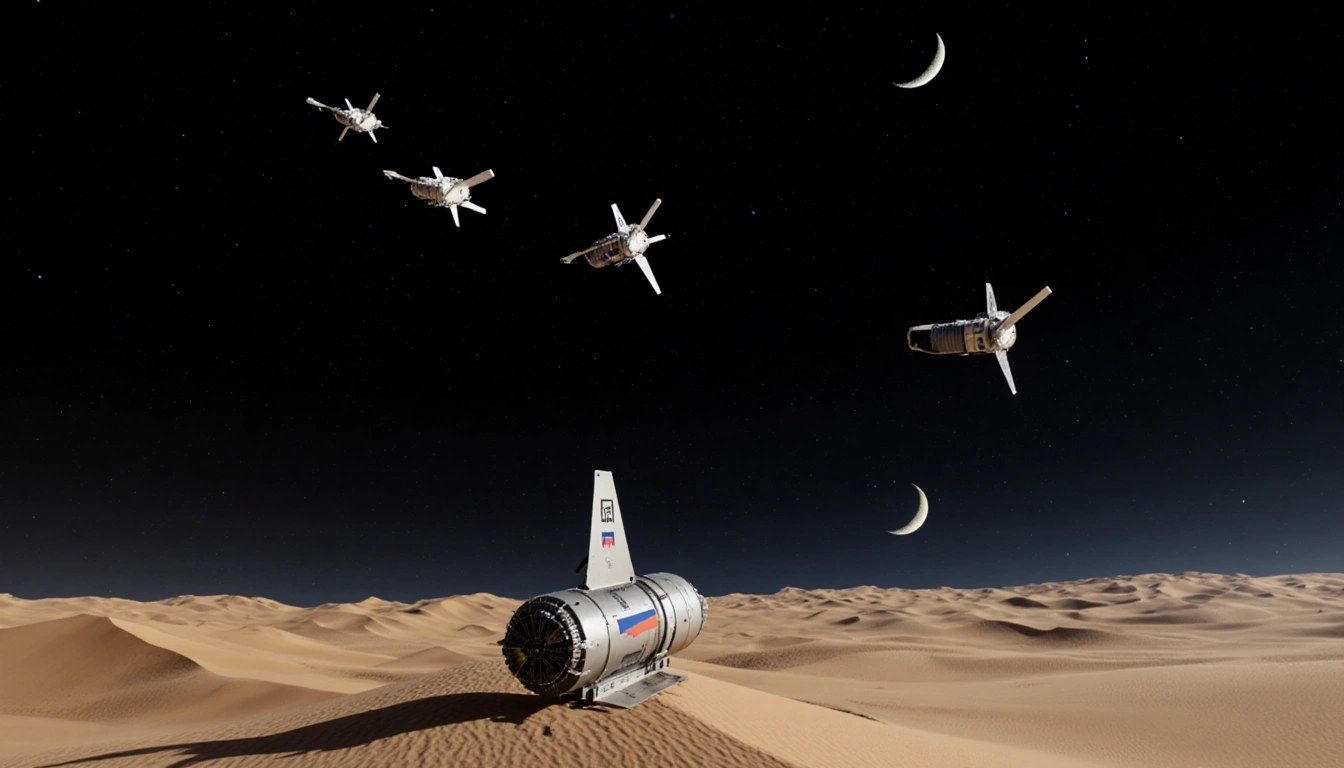

Two NATO-nation intelligence services say Russia is working on a new anti-satellite weapon that could flood Starlink orbits with shrapnel.
The Weapon Concept
The so-called “zone-effect” system would release hundreds of thousands of tiny, high-density pellets into Starlink’s 550-km orbit. The pellets, each a few millimeters across, could disable multiple satellites at once while risking collateral damage to other orbiting assets.
Expert Opinions
Victoria Samson, a space-security specialist at the Secure World Foundation, dismissed the idea: “I don’t buy it. Like, I really don’t.” She added that the weapon might simply be an experimental thought-experiment.

Brig. Gen. Christopher Horner, commander of Canada’s Space Division, said the work cannot be ruled out, citing earlier U.S. allegations that Russia pursues an indiscriminate nuclear space weapon. He noted, “If the reporting on the nuclear weapons system is accurate… it wouldn’t strike me as shocking that something just short of that, but equally damaging, is within their wheelhouse of development.”
Clayton Swope of the Center for Strategic and International Studies said the pellets’ small size would make them hard to track, complicating attribution, but that damage could be inferred if satellites “start winking out.” He noted that most damage would likely hit solar panels, potentially taking a satellite offline.
Russian Stance and Context
Kremlin spokesman Dmitry Peskov did not respond to AP requests for comment. Russia has previously called for UN efforts to stop orbital weapons deployment and President Vladimir Putin has said Moscow has no intention of deploying nuclear space weapons.
The intelligence findings also highlighted that Russia has fielded a new ground-based missile system, the S-500, capable of hitting low-orbit targets. Unlike a 2021 missile test that destroyed a defunct Cold War-era satellite, the new weapon would target multiple Starlinks simultaneously.
Potential Impact
If deployed, the pellets would eventually fall back toward Earth, posing risks to other orbiting systems such as China’s Tiangong space station and the International Space Station. Analysts warn that the chaos could serve as a deterrent, acting as a “weapon of fear” without actual use.
Samson cautioned that the drawbacks of an indiscriminate pellet weapon could steer Russia away from such a path, noting that using it would “effectively cut off space for them as well.”
Key Takeaways
- Russian intelligence is allegedly developing a pellet-based anti-satellite system aimed at Starlink.
- Experts doubt the weapon’s feasibility and warn of uncontrollable space debris.
- The system’s existence could heighten tensions over Ukraine’s reliance on Starlink for military communications.
The report underscores the growing complexity of space security and the potential for new weapons to disrupt global satellite infrastructure.